
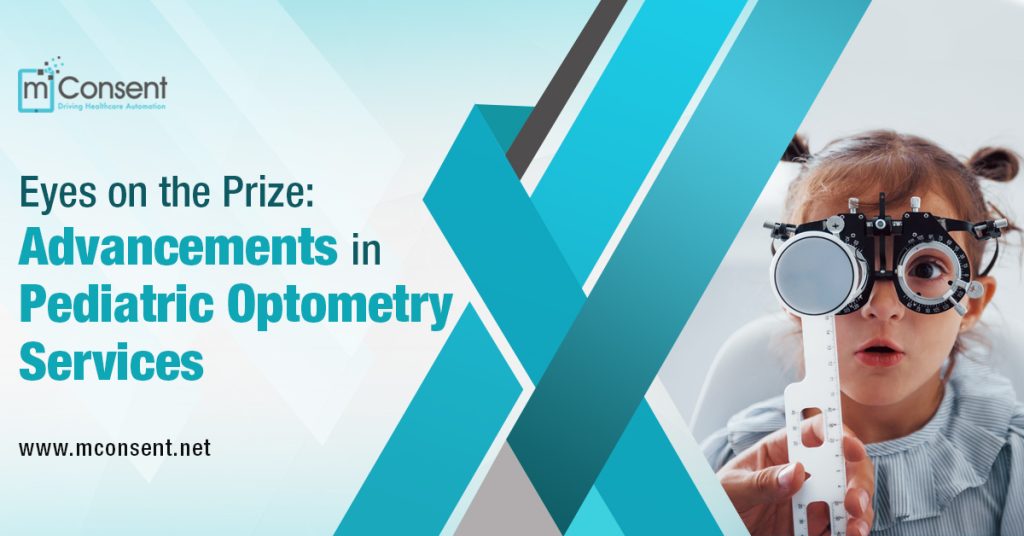




Providing comprehensive eye care to infants and children requires specialized approaches and tools. Pediatric patients have unique needs due to challenges with cooperation, communication, and accurate testing.
Fortunately, recent innovations are equipping optometrists with better technologies and techniques to enhance pediatric vision care.
Implementing these advancements will help optometrists detect issues sooner, slow progression of disorders, and improve vision outcomes for children.
1. Advanced Photoscreening Systems

Photoscreening devices provide a critical first vision screening for children as young as 6 months. The handheld devices use infrared cameras to photograph the eyes and detect several amblyopia risk factors within seconds without child cooperation.
This allows lifesaving early detection of issues like strabismus, high refractive errors, and media opacities that warrant further evaluation.
2.Enhanced Handheld Autorefraction
Devices now allow quick, portable autorefraction and keratometry testing on pediatric patients.
The animated displays with familiar shapes and characters keep children engaged and minimally distracted for more reliable readings even on pre-verbal patients. This aids early detection of significant refractive errors.
3. Myopia Control Methods

New techniques like overnight orthokeratology, low-dose atropine eye drops, and specially designed contact lenses have proven up to 60% reduction in myopia progression in children.
Starting these interventions promptly at the first signs of myopia allows prevention and slowing of pathologic high myopia severity later on.
4. Expanded Amblyopia Treatment Options
Traditional amblyopia treatment using eye patching has expanded to include new modalities like iPad apps, Bangerter filters, and office-based vision therapy activities.
These can improve compliance and outcomes by offering more varied stimulation and treatment engagement. This reduces long-term visual deficits.
5. Objective Accommodative Testing
Dynamic retinoscopy and handheld devices allow objective measurement of focus and accommodation abilities.
This aids early diagnosis of accommodation anomalies like deficiencies and infacilities that can significantly impact learning.
6. Immersive Binocular Testing
Virtual reality headsets allow advanced 3D testing of binocular vision function using immersive games and activities.
This allows earlier identification of issues like convergence insufficiency, lazy eye, and subtle depth perception problems that may be missed on static clinical testing.
7. Pediatric-Friendly Refraction Tools

Refraction apps on iPads allow game-like activities to keep pediatric patients engaged during the subjective refraction process for more accurate and efficient prescriptions. Automated phoropters also minimize the need to switch lenses manually.
8. Genetic Testing for Diagnosis
Genetic tests from dry blood samples can identify over 300 inherited retinal and optic nerve disorders. This allows earlier diagnosis and management guidance without requiring child cooperation for imaging procedures.
9. Specialized Contact Lens Fitting
Smaller contact lens diameters, customizable peripheral curves, and advanced fitting techniques accommodate children’s eyes as they grow. This expands contact lens correction options for pediatric patients.
Conclusion:
From photoscreeners to genetic tests, groundbreaking technological and clinical advancements are shaping the future of pediatric optometry.
Implementing these innovations will equip your practice to provide optimal eye care for infants and children. Leveraging the latest pediatric vision care tools and techniques demonstrates your commitment to helping every child see clearly and thrive.