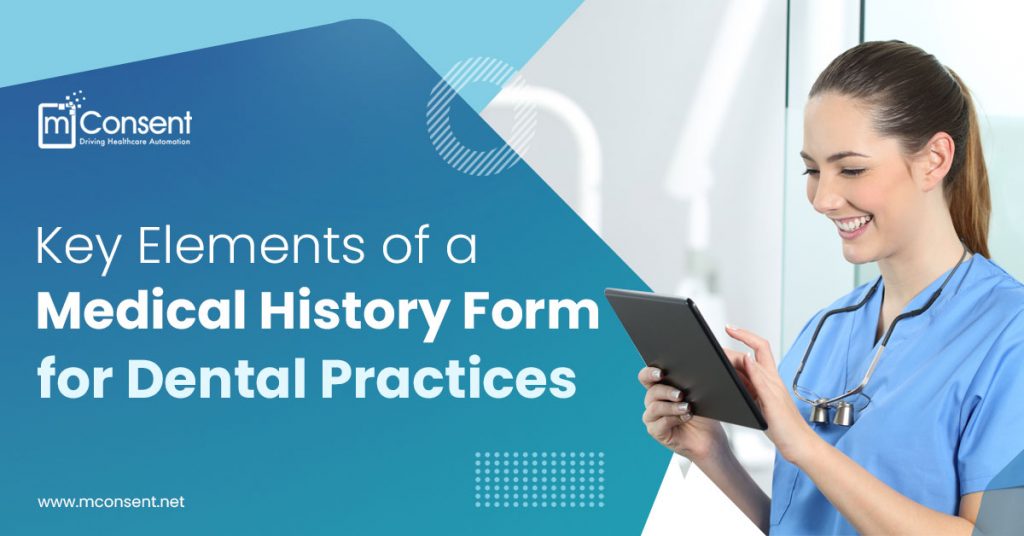



In the fast-paced world of dental practices, efficiency and accuracy are paramount. One area where these qualities are crucial is in the management of medical history forms.
These forms contain vital information that directly impacts patient care. In this blog, we will explore the essential elements of a medical history form, shed light on the pain points associated with traditional paper forms, and highlight the benefits of transitioning to a paperless solution.
 A well-designed medical history form should include essential elements such as patient demographics, medical conditions, medications, allergies, and past dental and surgical history.
These elements provide crucial insights into a patient’s overall health and help dentists make informed treatment decisions.
A well-designed medical history form should include essential elements such as patient demographics, medical conditions, medications, allergies, and past dental and surgical history.
These elements provide crucial insights into a patient’s overall health and help dentists make informed treatment decisions.
 Transitioning to a paperless solution, like mConsent’s digital medical history forms, offers significant advantages.
It streamlines the entire process by eliminating the need for manual data entry, reducing administrative burdens, and freeing up valuable time.
Digital forms allow for easy access, quick updates, and efficient sharing of patient information within the dental practice, ensuring enhanced collaboration and continuity of care.
Transitioning to a paperless solution, like mConsent’s digital medical history forms, offers significant advantages.
It streamlines the entire process by eliminating the need for manual data entry, reducing administrative burdens, and freeing up valuable time.
Digital forms allow for easy access, quick updates, and efficient sharing of patient information within the dental practice, ensuring enhanced collaboration and continuity of care.
 By embracing paperless medical history forms, dental practices can boost efficiency and productivity.
Digital forms enable automatic population of data, reduce redundant tasks, and provide real-time access to patient information.
This streamlined approach allows dental professionals to spend more time focusing on patient care, improving treatment outcomes, and enhancing the overall patient experience.
By embracing paperless medical history forms, dental practices can boost efficiency and productivity.
Digital forms enable automatic population of data, reduce redundant tasks, and provide real-time access to patient information.
This streamlined approach allows dental professionals to spend more time focusing on patient care, improving treatment outcomes, and enhancing the overall patient experience.
1. Key Elements of a Comprehensive Medical History Form:
A well-designed medical history form should include essential elements such as patient demographics, medical conditions, medications, allergies, and past dental and surgical history.
These elements provide crucial insights into a patient’s overall health and help dentists make informed treatment decisions.
2. Pain Points of Paper Medical History Forms:
Paper-based medical history forms come with numerous challenges. These include time-consuming data entry, physical storage requirements, difficulty in accessing and updating information, and the risk of loss or damage. Moreover, deciphering handwriting and manually transferring data can lead to errors or omissions that impact patient care.3. Benefits of Going Paperless:
Transitioning to a paperless solution, like mConsent’s digital medical history forms, offers significant advantages.
It streamlines the entire process by eliminating the need for manual data entry, reducing administrative burdens, and freeing up valuable time.
Digital forms allow for easy access, quick updates, and efficient sharing of patient information within the dental practice, ensuring enhanced collaboration and continuity of care.
4. Improved Efficiency and Productivity:
By embracing paperless medical history forms, dental practices can boost efficiency and productivity.
Digital forms enable automatic population of data, reduce redundant tasks, and provide real-time access to patient information.
This streamlined approach allows dental professionals to spend more time focusing on patient care, improving treatment outcomes, and enhancing the overall patient experience.