



Every patient leaving without accepting a treatment plan means lost revenue and missed opportunities for better oral health. This is not just a catchy phrase-it’s a wake-up call for every dental practice striving to blend clinical excellence with business success.Treatment case acceptance is a critical metric for financial growth and a cornerstone of enhanced patient care. In today’s competitive healthcare landscape, practices that master the art of communicating treatment plans are reaping the rewards in both patient satisfaction and profitability.We will discuss the innovative strategy that may transform responses into enthusiastic approvals. On this journey, we will introduce you to mConsent, a tool aimed at streamlining communication while enhancing patient understanding without turning our story into a sales pitch. Instead, we will build the case with storytelling, practical strategies, and actionable insights helping to transform your practice.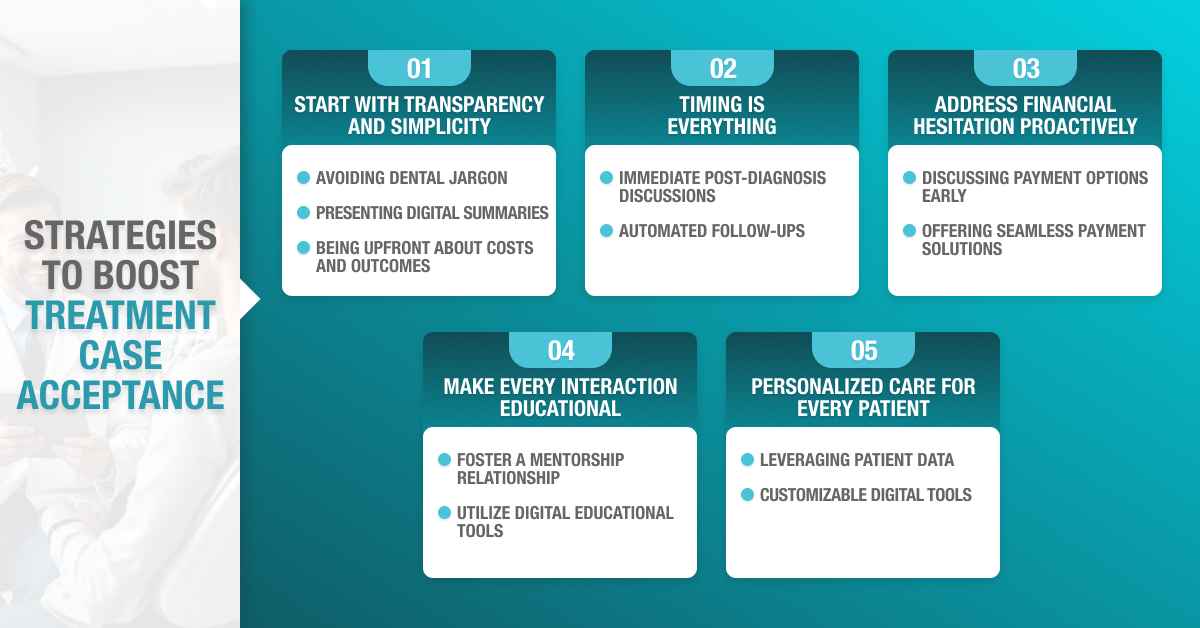 The journey to higher case acceptance begins with a shift in how you communicate and interact with your patients. Here are some innovative strategies to consider:
 Here’s a quick visual checklist to help you implement these strategies effectively:
A Day in the Life: The Struggles Behind Low Case Acceptance
Imagine this: You’ve spent hours crafting the perfect treatment plan for a patient whose smile is a blend of potential and apprehension.You explain the benefits, detail the procedures, and outline the cost. Yet, the patient leaves with a non-committal “Let me think about it.” Days, sometimes weeks, pass, and that patient never returns.This scenario is all too common in dental practices. The hesitation often stems from a few recurring pain points:- Unclear Communication: Jargons related to dental practices and overly technical explanations confuse patients about the requirements or benefits of the proposed treatment.
- Financial Concerns: The sticker shock from treatment costs can overwhelm patients before they even grasp the long-term benefits of the procedure.
- Missed Follow-Ups: In the absence of systematic follow-up strategies, even interested patients may drift away and forget to schedule the much-needed care.
Breaking the Cycle: Innovative Strategies to Drive Acceptance
The journey to higher case acceptance begins with a shift in how you communicate and interact with your patients. Here are some innovative strategies to consider:1. Start with Transparency and Simplicity
Patients can feel overwhelmed by too much technical information. Simplify your communication by:- Avoiding Dental Jargon: Use everyday language to explain the treatment process and its benefits.
- Presenting Digital Summaries: Tools like mConsent offer digital treatment plan summaries that break down complex procedures into easily digestible chunks of information.
- Being Upfront About Costs and Outcomes: Transparency builds trust. Clearly outline the expected outcomes and the associated costs right from the start. When patients know what to expect, they’re more likely to feel comfortable committing to a treatment plan.
2. Timing is Everything
The timing of your treatment discussion can significantly influence acceptance rates. Consider these tips:- Immediate Post-Diagnosis Discussions: Right after diagnosing a condition, patients are often more alert to the urgency and benefits of treatment.
- Automated Follow-Ups: Implement systems that send automated reminders. mConsent’s follow-up feature ensures that no patient falls through the cracks, keeping the conversation alive even after they leave your office.
3. Address Financial Hesitation Proactively
Financial concerns are one of the leading causes of declined treatment plans. Address these head-ons by:- Discussing Payment Options Early: Introduce the topic of financing and payment plans during the consultation. This preempts financial anxiety and helps patients plan for the cost.
- Offering Seamless Payment Solutions: Utilize tools like mConsent’s integrated payment solutions. These simplify the process of offering financing or installment options but also present the information in a clear, concise manner that reassures patients.
4. Make Every Interaction Educational
Empowering patients through education is a powerful strategy:- Foster a Mentorship Relationship: Position yourself not just as a dentist but as a mentor who guides patients toward better health. When patients understand the ‘why’ behind a treatment, they are more inclined to commit.
- Utilize Digital Educational Tools: Platforms like mConsent offer digital forms and educational modules that can illustrate the importance of timely care. Making every interaction informative builds a stronger, trust-based relationship with your patients.
5. Personalized Care for Every Patient
No two patients are alike. Tailor your approach to meet individual needs by:- Leveraging Patient Data: Use customized intake forms to gather detailed insights into each patient’s history, preferences, and concerns. This data allows you to craft personalized treatment plans that resonate on a personal level.
- Customizable Digital Tools: mConsent’s customizable features enable you to adjust communication based on the patient’s unique profile, ensuring that every interaction feels personal and relevant.
The ROI of Better Patient Experiences
Improving treatment case acceptance isn’t solely about boosting your bottom line. It’s about enhancing the overall patient experience, which in turn has a positive ripple effect on your practice. Consider the benefits:- Increased Patient Trust-Transparency and empathic communication would always lead to gaining the patient’s trust to undergo the suggested treatment.
- Referrals and Long-Term Loyalty: Satisfied patients become ambassadors for your practice. Their positive experiences lead to referrals and repeat visits, further solidifying your reputation.
- Enhanced Operational Efficiency: Streamlined communication processes reduce administrative burdens, so your team can focus more on patient care rather than chasing down follow-ups.
FAQs from Patients
Addressing common patient questions upfront can significantly improve case acceptance. Here are a few FAQs and how you can answer them proactively:1. “Why is this treatment important right now?”Answer: Explain the potential long-term consequences of delaying treatment and the benefits of addressing the issue. Use visual aids and simple language to reinforce your points.2. “Are there flexible payment options?”Answer: Inform patients about the various financing and payment plans available. Highlight how these options can make treatment more affordable without compromising on quality.3. “How long will the procedure take?”Answer: Provide a clear timeline, including any preparatory and recovery phases. Setting realistic expectations helps reduce anxiety and builds confidence in your care.Preparing answers for these common queries helps alleviate patient concerns and demonstrates that you’ve anticipated their needs and are ready to support them every stepChecklist: How to Boost Treatment Case Acceptance in Your Practice
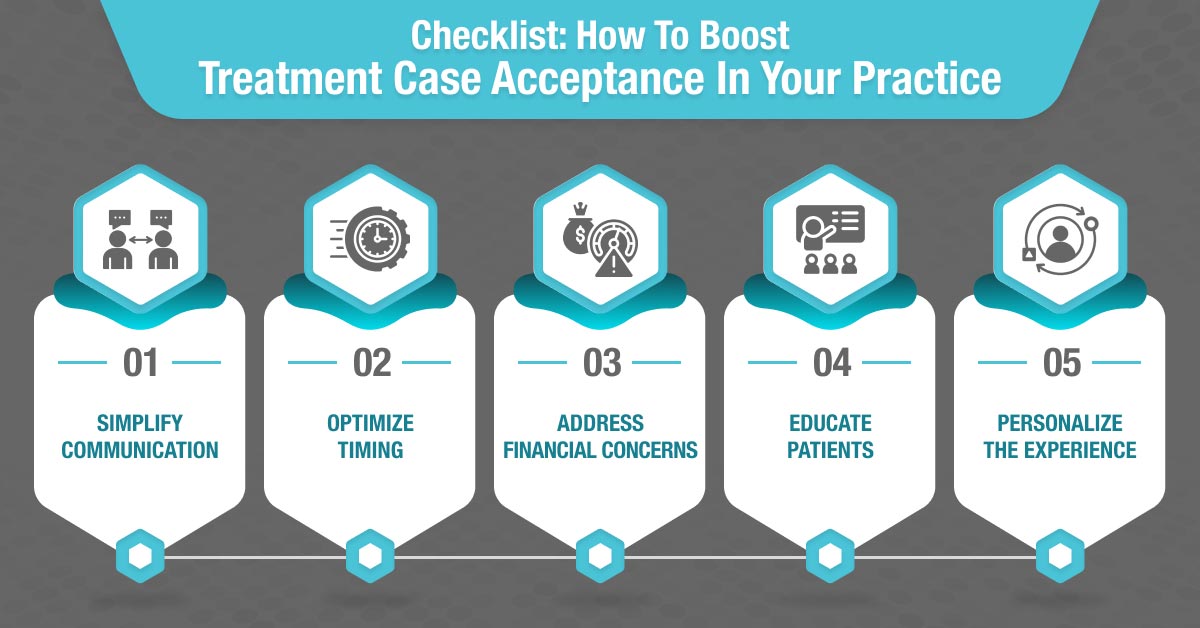
Here’s a quick visual checklist to help you implement these strategies effectively:- Simplify Communication:
- Optimize Timing:
- Address Financial Concerns:
- Educate Patients:
- Personalize the Experience: