

A patient leaves their appointment and says they'll call to schedule the next one.
They don't.
Another patient was recommended a crown six weeks ago. They said they needed to think about it. Nobody followed up. The treatment is still sitting in their chart, unscheduled, while the practice wonders why production is soft this month.
A third patient has a $200 balance. They got one statement. Then silence. Now it's 90 days out and someone on the front desk is about to have an uncomfortable phone call that probably won't go anywhere.
None of these are clinical failures. The dentistry was fine. The problem is everything that happens after the appointment, and in most practices, that part of the process runs on good intentions and not much else.
The dental practices consistently outperforming their peers on retention, collections, and production aren't necessarily better at dentistry. They're better at follow-up. And they've stopped treating follow-up as something staff does when they have time.
Why Follow-Up Is a Revenue Strategy, Not an Administrative Task
Most practice owners think about follow-up as a courtesy. Remind patients about their appointment. Send a statement. Maybe call if someone misses a cleaning.
The actual financial stakes are higher than that.
Every unscheduled treatment recommendation represents production that was earned clinically but never converted to revenue. Every no-show without immediate reengagement is a patient who may or may not come back. Every unpaid balance that doesn't get a timely, consistent follow-up sequence is money that ages into a write-off.
Dental patient retention is one of the most important drivers of long-term practice revenue, and follow-up is what drives retention. Hygiene recare, treatment follow-up, post-visit communication, payment reminders: all of it shapes whether a patient keeps coming back or quietly drifts to another practice.
The hidden math here is significant. A single lost patient, over the course of a decade, represents thousands of dollars in missed lifetime value. Multiply that by the number of patients who lapse every year in a typical practice because nobody followed up, and the revenue impact is massive.
Where Dental Follow-Up Systems Break Down
Understanding the problem is half the solution. Most practices don't have a follow-up strategy. They have a collection of individual efforts that are inconsistent by design.
Manual processes create gaps at scale
When follow-up depends on someone remembering to make a call or send a message, it works reasonably well when the practice is slow and falls apart completely when things get busy. The patients who need follow-up most often don't get it during the periods when the front desk is most stretched.
Phone calls alone don't reach modern patients
Dental communication automation research consistently shows that a large percentage of patients, particularly under 45, will not answer calls from numbers they don't recognize and rarely check voicemails. Phone-only outreach isn't just inefficient. It's an approach that structurally misses a significant portion of the patient base.
No central tracking means patients fall through the cracks
Without a system that logs follow-up history and surfaces patients who need attention, the follow-up process is only as good as someone's memory. Patients who said "I'll call back" three weeks ago don't show up on anyone's radar. Unscheduled treatment recommendations sit in charts with no trigger to act on them.
Delayed outreach loses patients permanently
Timing matters enormously in patient follow-up software for dental practices. The window for re-engaging a no-show patient is short. The moment to follow up on unscheduled treatment is when the recommendation is fresh. Every day of delay reduces the probability of a response.
Staff burnout undermines consistency
Asking front desk teams to manually manage appointment reminders, treatment follow-up, payment reminders, and hygiene recall simultaneously is how you get inconsistent execution and exhausted staff. The tasks compete with each other and with everything else happening in the office.
What a Real Dental Follow-Up System Looks Like
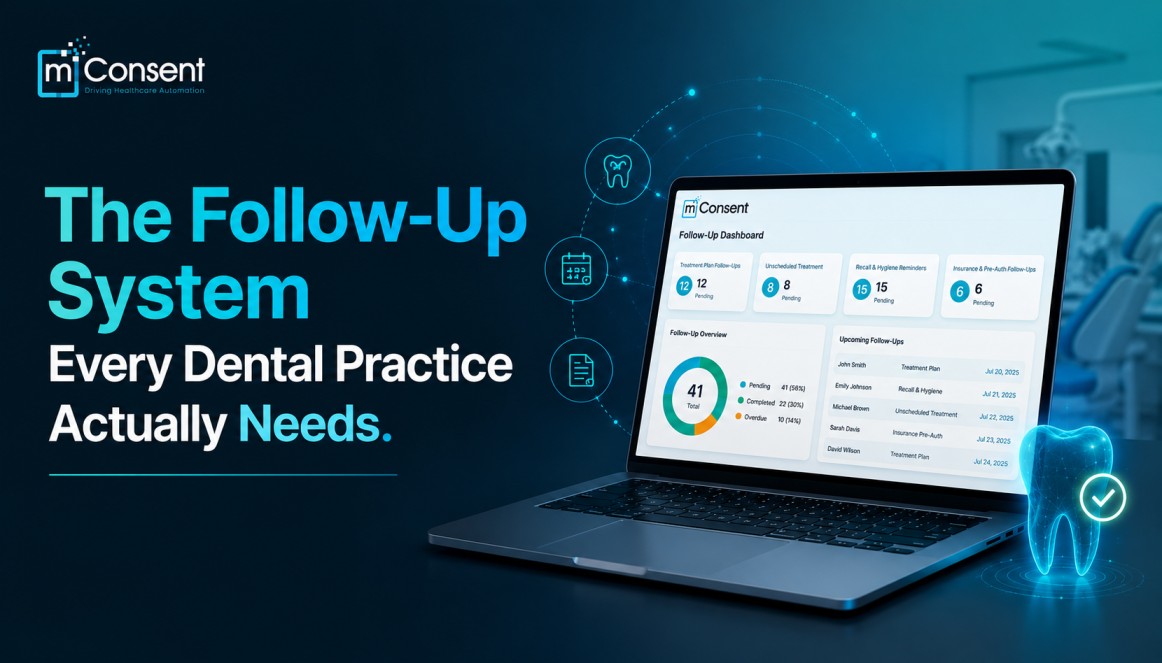
A follow-up system that actually works has a few non-negotiable characteristics. It runs automatically so consistency doesn't depend on bandwidth. It communicates through multiple channels because different patients respond to different touchpoints. It covers every stage of the patient journey rather than just appointment reminders. And it gives the practice visibility into what's happening so gaps can be spotted and addressed.
Here's what that looks like across the seven areas where follow-up matters most.
1. Appointment Reminder Automation
The most basic and highest-impact follow-up a dental practice can implement is automated appointment reminders. The case for this has been made thoroughly by every piece of research on dental patient engagement: automated reminders through SMS and email reduce no-shows, improve confirmation rates, and do it without requiring staff to spend hours on outbound calls.
The sequence matters. A reminder several days before the appointment gives patients time to reschedule if needed. A day-before confirmation creates accountability. A same-day reminder reduces the "I forgot" cancellations.
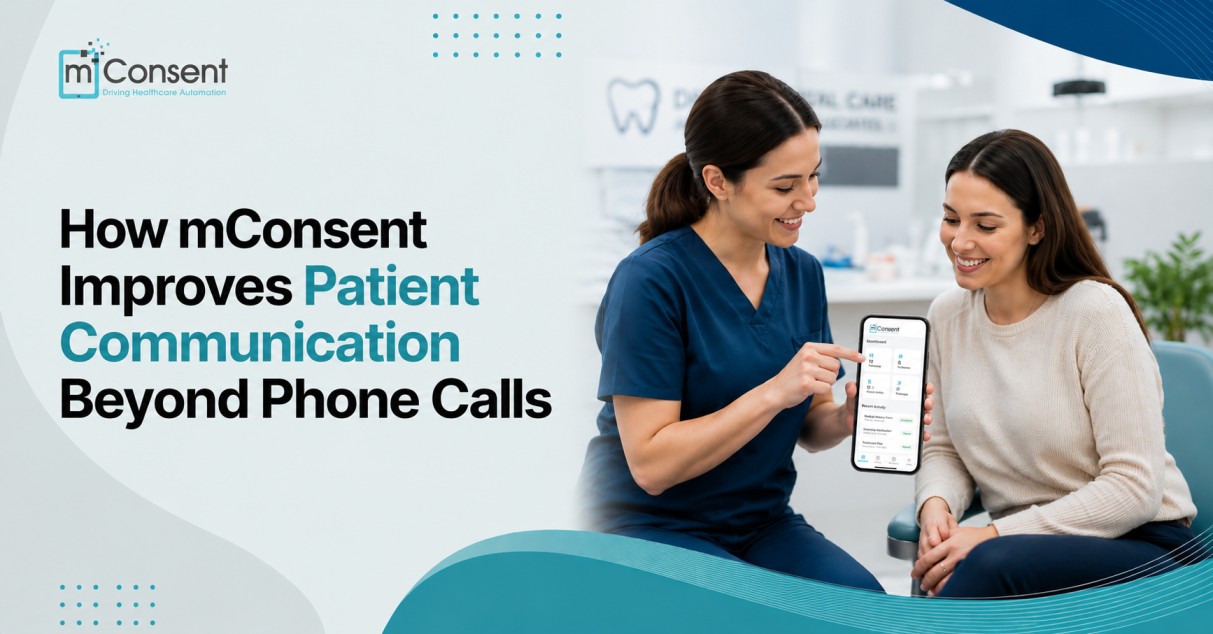
mConsent automates this entire sequence across SMS, email, and digital notifications. Confirmations come back directly. Patients who need to reschedule can do so without calling. The front desk gets a real-time view of schedule status without managing the communication manually.
2. Unscheduled Treatment Follow-Up
This is the follow-up category most practices handle worst, and it's one of the biggest dental revenue cycle management opportunities sitting in most practices right now.
A dentist recommends a crown. The patient says they'll think about it and schedule later. If no one follows up with a targeted, timely message, that treatment recommendation will sit in the chart until the patient either eventually schedules on their own or needs emergency treatment because they waited too long.
Effective unscheduled treatment follow-up does a few things well. It comes quickly, while the recommendation is still fresh. It's educational rather than pushy, reminding patients why the treatment matters without pressure. It addresses the financial friction that often causes hesitation by surfacing payment plan options. And it makes scheduling easy with a direct link rather than a phone number to call during business hours.
Dental communication automation through mConsent handles this with automated messaging workflows triggered by unscheduled treatment status. Patients get the right message at the right time, treatment acceptance improves, and production revenue that would have disappeared gets recovered.
3. Hygiene Recare Follow-Up
Hygiene is the foundation of dental patient retention. Regular recare appointments keep patients connected to the practice, create opportunities for early diagnosis, and generate the recurring revenue that stabilizes practice finances.
The problem is that patients forget. Life gets busy. Six months feels abstract. Without a proactive, persistent recall system, a meaningful percentage of patients will simply not book their next hygiene appointment until they have a problem.
A strong dental recall system doesn't send one reminder and give up. It starts early, follows up consistently, and continues until the patient schedules. The tone stays friendly. The message stays simple. And the process runs automatically so the hygiene schedule stays full without the front desk managing individual recall campaigns.
mConsent automates hygiene recare communication with recurring reminder sequences that keep patients engaged and make rebooking as frictionless as possible.
4. Missed Appointment Recovery
When a patient no-shows, the window for recovery is short. Practices that reach out the same day, with a friendly and easy-to-act-on message, recover a significant portion of those patients. Practices that wait, or rely on a staff member to remember to call when they get to it, lose most of them.
The messaging here matters as much as the timing. A "we missed you" text with a direct rebooking link lands differently than a missed call and voicemail. It's low-pressure, easy to respond to, and meets patients where they are.
mConsent triggers missed appointment workflows automatically when an appointment is not checked in. The patient gets an immediate follow-up. Rebooking is one click. The practice recovers chairs that would otherwise stay empty.
5. Payment and Billing Follow-Up
Outstanding balances are a universal problem in dental practices, and the core issue is almost never that patients refuse to pay. It's that the follow-up is inconsistent, the billing is confusing, and paying requires more effort than most patients are willing to put in when there are competing demands on their attention.
Automated payment reminders sent through SMS, with a direct mobile payment link, outperform paper statements and phone calls on both response rate and speed of collection. Patients pay when it's easy and timely, not when it requires finding a checkbook or calling during business hours.
A well-designed dental payment collection sequence starts early, before the balance ages, and continues at appropriate intervals with escalating urgency. It reduces the need for uncomfortable conversations, speeds up collections, and cuts accounts receivable days without adding to the front desk workload.
mConsent handles payment reminders through automated SMS sequences with mobile payment links integrated directly. Collections happen faster. AR days drop. The practice gets paid for work it already did.
6. Post-Visit Patient Engagement
The appointment ending is the beginning of the relationship, not the end of it. What happens in the hours and days after a visit shapes how patients feel about the practice, whether they leave a review, and whether they feel confident coming back.
A thank-you message after the appointment is simple and almost universally appreciated. Care instructions sent digitally after a procedure reduce calls to the office and improve patient outcomes. A satisfaction check-in a day or two later gives patients a channel to raise concerns before they turn into a negative review.
Review requests, sent at the right moment to patients who are clearly satisfied, drive the online reputation that influences every new patient decision. This doesn't require a dedicated marketing effort. It requires an automated touchpoint that goes out consistently after every visit.
mConsent automates post-visit communication including review generation, patient satisfaction outreach, and follow-up messaging, turning the end of every appointment into the beginning of the next engagement.
7. Long-Term Patient Reactivation
Every practice has a segment of patients who came in once, twice, maybe a few times, and then went quiet. They're not lost. They're inactive. And inactive patients represent a significant revenue recovery opportunity that most practices never pursue systematically.
Reactivation campaigns for dental practices work when they're personalized, low-pressure, and easy to act on. A message acknowledging the gap and making it simple to come back, perhaps with a relevant offer or a reminder of what's overdue, converts a meaningful percentage of inactive patients back into active ones.
The economics of reactivation beat new patient acquisition almost every time. The patient already knows the practice. The relationship already exists. What's needed is a reason to return and a frictionless way to do it.
mConsent supports patient reactivation workflows with automated, personalized outreach campaigns designed to re-engage inactive patients at scale.
Why Automation Is the Foundation, Not a Feature
The individual components above aren't complicated. Most practices know they should be doing most of them. The reason they don't is that doing all of them manually, consistently, across hundreds or thousands of patients, is not sustainable.
Dental communication automation removes the sustainability problem. When follow-up runs on a system rather than on individual effort, it happens consistently regardless of how busy the practice gets, which staff members are working that day, or whether anyone remembered to pull the list.
Automation also enables personalization at scale. A system can send a different message to a patient who hasn't been in for 18 months than to one who missed last Tuesday's appointment. It can time messages based on patient behavior rather than a fixed schedule. It can adjust based on whether a patient has responded or not.
Manual follow-up, by contrast, tends to be generic because customization at scale is impossible without automation.
The Metrics That Tell You If Your Follow-Up Is Working
A follow-up system you can't measure is a follow-up system you can't improve. The numbers worth tracking:
- Appointment performance: No-show rate, confirmation rate by channel, average time to rebook after a cancellation.
- Treatment pipeline: Unscheduled treatment value by provider, conversion rate from recommendation to scheduled appointment, average time between recommendation and scheduling.
- Financial health: Collection rate as a percentage of adjusted production, AR days by aging bucket, payment completion rate after first reminder.
- Patient engagement: SMS response rate, hygiene recall completion rate, reactivation rate among inactive patients, online review volume and rating trend.
Most of this data exists in the practice management system and in the communication platform. The practices improving fastest are the ones reviewing it regularly and adjusting their workflows based on what they see.
Follow-Up Mistakes That Cost Practices Revenue
- Waiting too long to follow up on anything. The response rate curve drops steeply with time. Same-day follow-up on no-shows, same-week follow-up on unscheduled treatment, and immediate post-visit engagement all outperform delayed outreach significantly.
- Using only one communication channel. Some patients respond to text. Others check email more reliably. A multi-channel approach, SMS plus email with appropriate spacing, reaches more patients than either channel alone.
- Sending generic messages. "We'd like to schedule your next appointment" performs worse than a message that references the specific treatment recommended, the patient's name, and a clear, easy next step. Personalization in dental patient engagement software doesn't require much, but it matters.
- Letting reactivation campaigns sit on the to-do list. The inactive patient segment in most practices is large enough that a single well-executed reactivation campaign can generate meaningful production. It gets deprioritized because active patients feel more urgent. That's a costly mistake.
Where Follow-Up Is Heading
AI-powered patient engagement is moving from a future concept to a current reality. Predictive tools that identify which patients are likely to go inactive before they do, smart treatment follow-up journeys that adapt based on patient behavior, and fully automated communication ecosystems that require minimal human management are already emerging in the better dental software platforms.
Practices building solid automated follow-up infrastructure now will integrate these capabilities more easily as they mature. Practices still managing follow-up through sticky notes and spreadsheets will find the gap harder to close.
Conclusion
The appointment is the easy part. The patient showed up, the dentistry happened, the relationship started. What determines whether that patient stays, pays, and refers is everything that happens afterward.
Most dental practices are leaving revenue on the table not because of what happens in the operatory but because of what doesn't happen after the patient walks out the door. Unscheduled treatment that no one followed up on. Recall appointments that never got booked. Balances that aged into write-offs because the reminders were inconsistent.
A real dental follow-up system closes those gaps. It runs automatically, reaches patients through the channels they actually respond to, and covers every stage of the patient journey from appointment confirmation to long-term reactivation.
With mConsent, that system is already built. The workflows are there. The automation is ready. The question is whether your practice is ready to stop leaving money in the follow-up gap and start capturing it.
FAQs
1. Why do follow-up systems matter so much for dental patient retention?
Because most patient attrition isn't deliberate. Patients don't decide to leave a practice. They just never rebook, and nobody reached out to bring them back. A consistent follow-up system prevents the quiet drift that costs practices thousands in lost lifetime value per patient.
2. How does dental communication automation improve follow-up without making it feel robotic?
Personalization and timing. Automated messages that reference the patient's name, the specific treatment or appointment context, and arrive at the right moment feel relevant rather than generic. The automation handles the consistency. The message design handles the human feel.
3. Can a follow-up system actually reduce no-shows significantly?
Yes. Multi-touch automated reminder sequences with SMS confirmation requests consistently outperform single-reminder or phone-only approaches. The combination of an early reminder and a day-before confirmation tends to produce the best results across dental practices.
4. What's the best channel for payment reminders?
SMS with a direct mobile payment link outperforms paper statements and phone calls on both response rate and speed of collection. The key is making the payment itself frictionless, not just sending a reminder that something is owed.
5. Is this realistic for a smaller practice without dedicated admin staff?
More realistic, actually. The value of automation scales with how stretched the team is. A smaller practice where one or two people are managing everything benefits enormously from follow-up that runs in the background without requiring manual management.
"
![HIPAA Release Form – All you Need to Know [Instant Download]](https://mconsent.net/blog/wp-content/uploads/2021/09/HIPAA-Release-Form-All-you-Need-to-Know-Free-Release-Form.jpg)