



Facing resistance from patients when presenting treatment plans? You’re not alone. Surveys show that case acceptance remains a major struggle for many dental practices – often hovering around 50%.
Low case acceptance directly impacts your bottom line and ability to provide optimal care. But with the right strategy and scripting, you can dramatically boost patients saying “yes” to treatment.
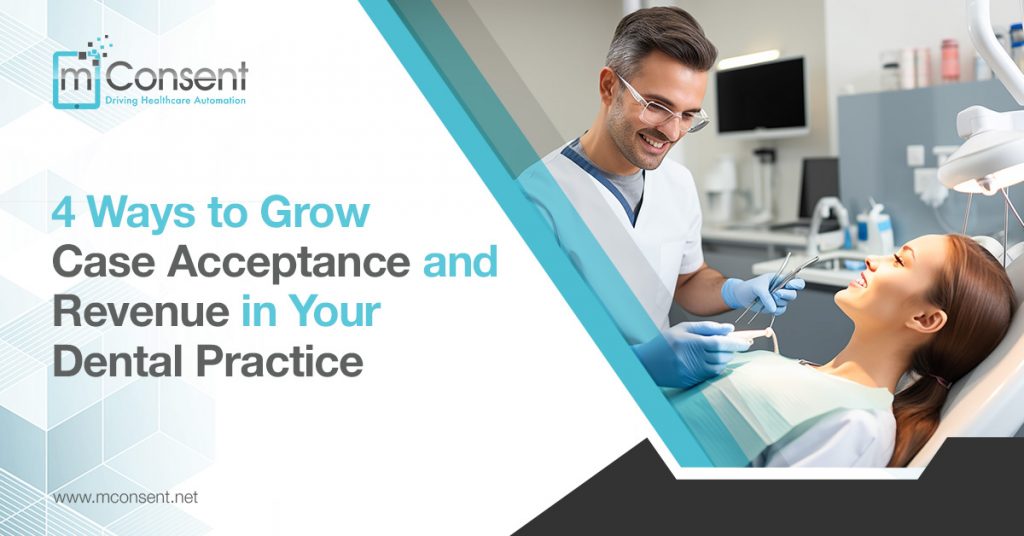
In this comprehensive guide, we’ll explore 4 proven approaches to grow case acceptance and revenue in your dental practice.
1. Start With a Clear Diagnosis And Communication

The foundation of case acceptance is effective communication of the patient’s dental problems and needs. Take the time to perform a thorough exam, clearly explain all findings, and emphasize the benefits of addressing issues proactively.
Utilize visual aids like charts, models and imaging. For example, zoom in on x-rays to point out areas of concern. These tools make dental problems tangible for patients.
Invite patient questions and reservations. Then address concerns directly with empathy. Once a patient feels heard and understands the “why”, they are primed to accept treatment.
2. Present With Confidence And Clarity
How you present the treatment plan is just as important as what you present. The right approach can boost case acceptance significantly.
Start by having an open discussion instead of immediately listing procedures. Ask patients what their goals are for their smile and dental health. Listen closely then connect treatment to achieving those goals.
When presenting the plan, avoid complex dental terminology. Use easy-to-understand language to explain recommended treatments, costs, timelines etc.
Speak confidently about your clinical recommendations and avoid tentative language like “maybe” or “might need”. This instills trust and assurances you are prescribing necessary care.
Emphasize the benefits of treatment simply and compellingly. For example, crowns preserve healthy teeth structure vs extraction and implants. Point out how treating small problems now prevents pain, complex procedures or expense down the road.
Welcome all questions and concerns. Then address them clearly and thoroughly until the patient grasps the importance of following your recommendations.
3. Utilize Decision Aids And Visuals
Studies consistently show that decision aids improve case presentation and acceptance. These tools educate patients on dental conditions, treatment options, risks and benefits.
Decision aids include:
- Printed handouts with detailed information on procedures, costs and FAQs. These allow patients to learn at their own pace.
- Pro/con charts outlining the advantages and disadvantages of treatment vs no treatment. This simplifies complex decisions.
- Interactive presentations on a tablet. These hold attention better than static brochures.
- 3D animations showing how procedures work. Help patients visualize the process.
- Pictures of before/after treatment results. Show examples of successful outcomes.
Visuals are particularly key for higher cost treatments like implants and orthodontics. Seeing models and images makes the benefits more concrete.
Decision aids arm patients with knowledge to say “yes” to optimal care. Keep several types on hand to suit different learning styles.
4. Offer Flexible Financial Options

Affordability is one of the top barriers to case acceptance. If treatment seems out of financial reach, patients will likely decline or postpone.
Offer payment plans to fit every budget. Work with third party financing companies to provide longer term plans, if needed. The goal is to remove money concerns from the equation.
Clearly explain costs and available payment/financing options when presenting the plan. Provide written estimates detailing payment breakdowns.
Emphasize that dental insurance is meant to assist with costs, not cover everything. Review out of pocket expenses and discuss options to close gaps.
Reassure patients you’ll partner with them to map out a plan that works for their budget and needs. This financial collaboration builds trust and gets more patients to say “yes”.
Educate patients that accepting treatment now is a wise investment that saves money and dental issues down the road. Better health and prevention of larger expenses makes treatment worthwhile.
Implement A Systematic Approach
Improving case acceptance takes strategy, scripting, visuals and financial creativity. But implementing a systematic approach in your practice is key to driving lasting improvements. Here are some best practices:
- Hold regular training for your team on case presentation skills, addressing objections, payment options etc. Role play to practice techniques.
- Standardize case presentation protocol with scripts, checklists and visual aids. This ensures consistency amongst providers.
- Set case acceptance goals and regularly track rates for different procedures and providers. Identify gaps and opportunities.
- Gather patient feedback through surveys and reviews. Learn why patients decline treatment and what communication works best.
- Refine your process continuously. Fine tune scripts, add new decision tools, update financial options etc. to boost acceptance.
With a strategic, teamwide focus on case presentation, your practice can achieve acceptance rates of 70-90%. Patients will say “yes” to the optimal treatment plans they need – leading to healthier smiles, greater care, and a thriving practice.
Conclusion
Implementing a systematic approach to case presentation, utilization of visual aids, clear communication, and financial flexibility are key strategies for improving acceptance. With dedication across your team to mastering these techniques, your practice can achieve excellent case acceptance rates.
Additionally, leveraging technology like mConsent’s Automated Treatment Plan Reminders can help streamline case presentation and boost acceptance.
With guided workflows and built-in patient education, treatment plans are presented more clearly and patients are better informed to make decisions. This means more patients saying “yes” to optimal treatment and healthier, happier smiles.