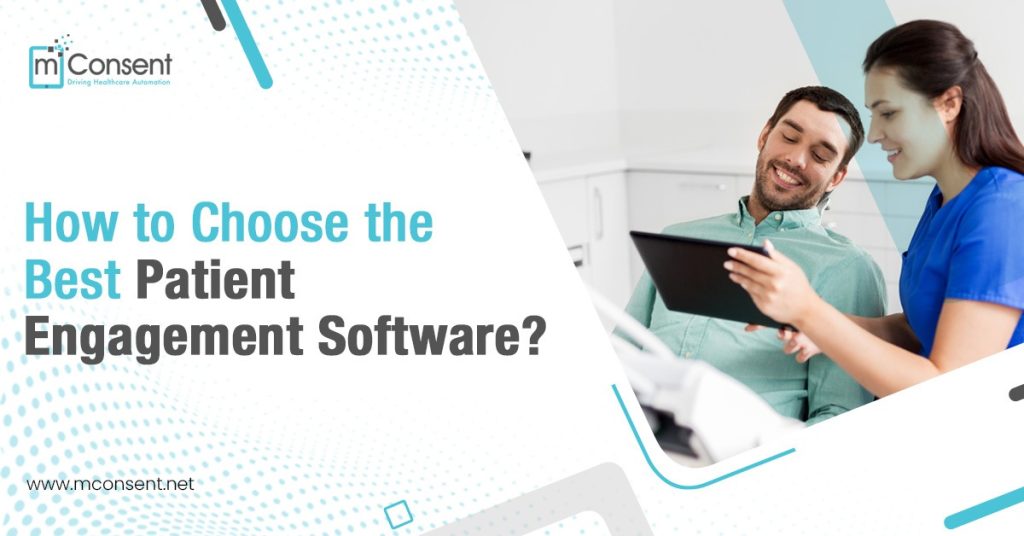



Patient engagement software has increasingly become essential for delivering better patient outcomes, improving communication, and increasing efficiency in an ever-changing healthcare environment.
This requires the proper selection of patient engagement software to integrate technology with minimal frustration. This detailed guide focuses on the main considerations in choosing patient engagement software for healthcare organizations nowadays to serve diverse needs.
 The collection of patient education resources enables patients to self-direct their education about their own health and make informed choices. It may include articles, videos, and interactive tools to educate patients on conditions, treatments, and preventive care measures.
 Better patient engagement software offers a better patient experience through personalized interactions supported by more efficient and well-organized modes of communication, ensuring that patients stay for an extended period of time.
 While looking for the right software for patient engagement, make sure the one you select is compliant to standards such as HIPAA to safeguard the patients’ confidentiality and secure their health information. Some of this requires robust data encryption schemes, access controls, and regular security auditing.
Comprehending the Function of Software for Patient Engagement
Patient engagement software is a diversified set of digital technologies to enhance and promote communication between patients and health care professionals. These resources extend from the simplest, offering only appointment requests and reminders, to the more complex, including secure messaging, telemedicine abilities, access to patient education materials, and functionality for managing patient feedback. These software solutions are designed to enhance patient satisfaction, speed up workflows, and enhance health results by enabling the availability of health information and facilitating seamless communication.Key Features to Look For:
Appointment Management:
The scheduling aspect of appointment management should be robust, offering good scheduling functionalities that work in conjunction with automated reminders, calendar scheduling, and the intuitive capability to customize scheduling rules based on practice work patterns and patient demand.Secure Messaging:
Facilities for sending confidential messages between patients and healthcare providers in a HIPAA-compliant secure messaging platform. This feature helps share sensitive information, such as lab results and treatment plans, that fosters trust and compliance from the patient.Capabilities in Telehealth:
In this dominant era of digital care, patient engagement software with telehealth capabilities helps health service providers conduct virtual visits, consultations, and follow-ups. Integrating with video conferencing tools and EHRs ensures seamless continuity and access to care for patients with mobility issues or in far-flung areas.Patient Education Resources:
The collection of patient education resources enables patients to self-direct their education about their own health and make informed choices. It may include articles, videos, and interactive tools to educate patients on conditions, treatments, and preventive care measures.
Feedback and Survey Tools:
Such tools collect patient feedback and satisfaction surveys that shed light on patients’ experiences and perceptions. Healthcare providers analyze this information to identify opportunities to improve service delivery, enhance areas in the process, and develop strategies for increased patient engagement.Integration with EHR/EMR Systems:
The system integrates easily with existing Electronic Health Record/ and Medical Record systems to ensure comprehensive management of patients and interoperability of relevant data. It interfaces with existing Electronic Health Record (EHR) or Electronic Medical Record (EMR) systems to help ensure zero entry duplication, optimize the clinical decision support, and care coordination across different healthcare settings.Digital Forms and Intake:
Digital form and intake functionalities allow digital patient registration, enabling patients to fill out various forms necessary before their appointment. This helps reduce paperwork, enhance data accuracy, and make front-office operations efficient.Advantages of Good Patient Engagement Software:
The adaptation of a comprehensive patient engagement software can provide several benefits to the facility, such as:Better patient experience:
Better patient engagement software offers a better patient experience through personalized interactions supported by more efficient and well-organized modes of communication, ensuring that patients stay for an extended period of time.
How it Helps in Operation:
Increased administrative efficiency, minimized no-show rates, that is, by reminding patients about scheduled appointments, and optimized staff workflows are elements that help improve practice efficiency and productivity.Enhanced Care Coordination:
Informed sharing between patient and provider is enabled through improved communication, better continuity, and reduced medical errors.Experience Seamless Engagement!
Schedule Your Free Demo Today!Selecting the Right Software: Considerations and Best Practices
Customizability and scalability:
The important aspects that health providers should consider when searching for or considering patient engagement software solutions. A good piece of software should be able to accommodate specific needs or preferences unique to their practice. Scalability becomes important as the software should grow with their future growth and emerging patient engagement strategies.Ease of Use and Adoption:
A friendly user interface and intuitive navigation—realization factors—are important for healthcare staff and patients. An easy-to-use platform allows users to adopt software more efficiently and integrate it into workflows.Data Security and Compliance:
While looking for the right software for patient engagement, make sure the one you select is compliant to standards such as HIPAA to safeguard the patients’ confidentiality and secure their health information. Some of this requires robust data encryption schemes, access controls, and regular security auditing.