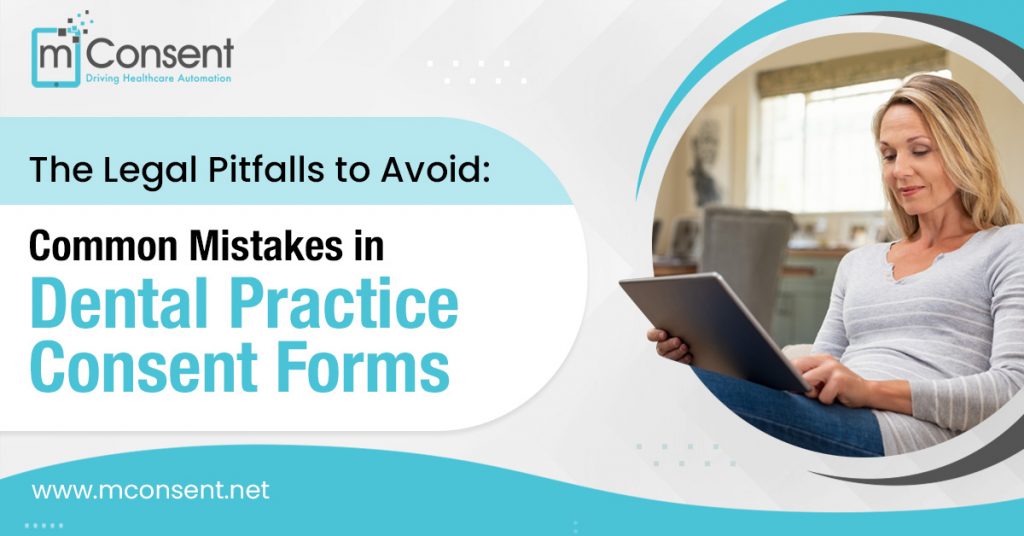



As a dental practice owner, ensuring compliance with legal regulations is paramount to protecting your practice and providing the highest standard of care to your patients. One crucial aspect of compliance is the proper handling of dental practice consent forms.
These forms serve as legal documents that inform patients about their treatment options, potential risks, and other important considerations. However, there are common mistakes that dental practice owners must avoid to prevent legal pitfalls. In this blog, we will explore some of these mistakes and provide insights on how to steer clear of them.
 Using generic or outdated consent forms is a common mistake that can lead to legal issues. Each patient’s treatment plan is unique, and consent forms should reflect the specific procedures and risks associated with their treatment. Avoid using one-size-fits-all consent forms and instead tailor them to each patient’s situation to ensure accuracy and relevance.
 Proper documentation is essential for legal protection. Inconsistencies in documenting patient consent can create confusion and lead to legal disputes. Ensure that all consent forms are properly completed, signed, and stored securely. Implement a system to maintain organized and easily accessible consent records, including electronic backups when applicable.
Inadequate or Inaccurate Information
One common mistake is failing to include all the necessary information in consent forms or providing inaccurate information. It is essential to ensure that consent forms are comprehensive and include details about the treatment procedure, risks, benefits, alternatives, and any post-treatment care instructions. Take the time to review and update consent forms regularly to maintain accuracy and completeness.Failure to Obtain Proper Consent
Obtaining proper consent from patients is critical. This includes ensuring that patients understand the information provided in the consent form and voluntarily give their consent without any coercion or pressure. Avoid rushing patients through the consent process or assuming their consent without explicit acknowledgment. Obtain patient signatures to document their informed consent and understanding.Lack of Customization
Using generic or outdated consent forms is a common mistake that can lead to legal issues. Each patient’s treatment plan is unique, and consent forms should reflect the specific procedures and risks associated with their treatment. Avoid using one-size-fits-all consent forms and instead tailor them to each patient’s situation to ensure accuracy and relevance.
Failure to Address Patient Questions and Concerns
Patients may have questions or concerns regarding the treatment, risks, or alternatives outlined in the consent form. It is crucial to provide an opportunity for patients to ask questions and seek clarification before signing the form. Failure to address patient inquiries adequately can result in misunderstandings or claims of inadequate disclosure. Take the time to address patient concerns and ensure their understanding before proceeding with treatment.Inconsistent Documentation
Proper documentation is essential for legal protection. Inconsistencies in documenting patient consent can create confusion and lead to legal disputes. Ensure that all consent forms are properly completed, signed, and stored securely. Implement a system to maintain organized and easily accessible consent records, including electronic backups when applicable.
Neglecting Updates to Reflect Regulatory Changes
Regulations and legal requirements regarding consent forms may change over time. Failing to stay updated with these changes is a significant pitfall. Regularly review and revise consent forms to align with the latest regulations and industry best practices. Stay informed about any updates or revisions in dental consent form requirements to maintain compliance. In addition to avoiding these common mistakes, utilizing mConsent, a leading digital solution for consent forms, can greatly benefit your dental practice. mConsent allows you to streamline your consent form process by digitizing and customizing the forms. With mConsent, you can easily create and update consent forms to ensure compliance with legal requirements. The platform also provides a secure and organized system for storing and accessing consent records, simplifying the documentation process. By utilizing mConsent, you can enhance efficiency, improve accuracy, and maintain compliance with ease.Read Also: Don’t Overlook These Critical Elements in Your Dental Practice Consent Forms
By avoiding common mistakes in dental practice consent forms and utilizing mConsent’s digital solution, you can minimize the risk of legal pitfalls and protect your practice. Take the time to review and improve your consent form processes, seek legal guidance when necessary, and prioritize patient understanding and informed consent. Remember, well-drafted and properly executed consent forms are not only legally necessary but also crucial for building trust with your patients and providing them with the highest quality of care.