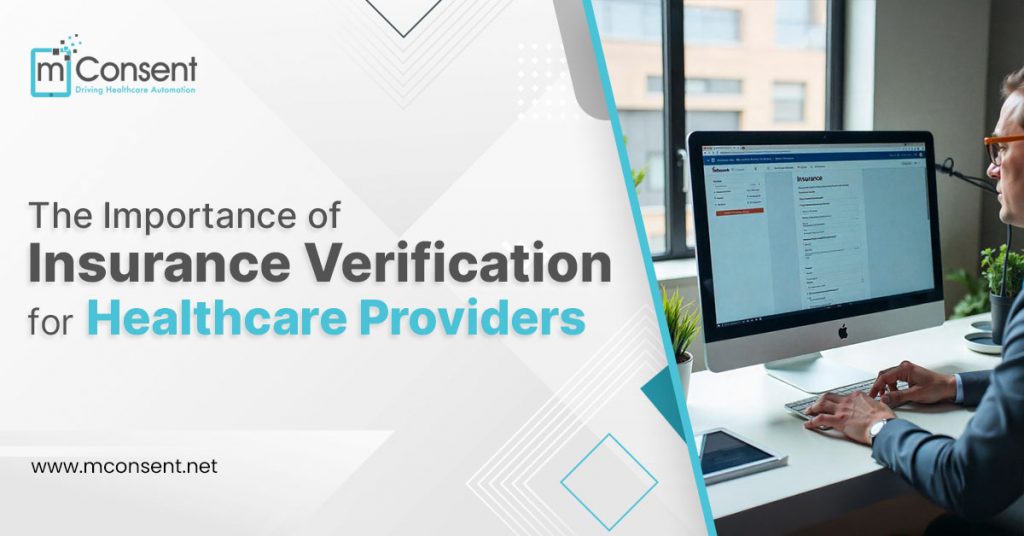




The healthcare sector is rapid, with integration of activities and ensuring sound. One such supporting process that has received relatively less attention is insurance verification, which enables and supports these objectives.
Why is this worth so much concern? Insurance verification is done to prevent surprise bills from patients and fully inform them of what payment they will be required to make out of their pockets. It ensures that money is received in a timely manner for healthcare providers, lowers administrative expenses, and heightens patient satisfaction.
This blog explores the nuances of insurance verification, its relevance, its issues, and how healthcare providers can progress in this field as per their practices and patients.
What is Insurance Verification?
Definition and Process
Insurance verification allows insurance benefits on behalf of a patient and assures that the patient has valid insurance coverage for their healthcare services. In most situations this includes:
- Determining the coverage eligibility.
- Determining if it’s in or out of the network.
- Determining fixed co-pays and annual deductibles, as well as overall limits of benefits.
- Determining the pre-authorization requirements.
Types of Information Verified
At the time of verification, healthcare providers must contact the insurer to determine some information, including the following during the policy verification:
- Coverage Status: Does the policy cover continuing or new treatment?
- Network Distinction: Is the patient’s provider part of the insurer’s network of providers or out-of-network?
- Co-pays and Deductibles: What will the patient have to pay?
- Benefit Limits: Are the treatments limited in any way, or are there maximum allowable amounts assigned?
These are all important since they allow patients to know how much they expect to owe and also allow healthcare providers to get paid for services they dispense.
Why is Insurance Verification Important for Healthcare Providers?
Financial stability

Insurance verification is fundamental to the provider’s financial well-being. This is how:
- Lower Denied Claims: Underwriting a policy minimizes the chances of claim denials, which are frequent concerns whenever there is too little or in wrong information.
- Faster Reimbursements: Accurate information assures that claims will be settled in the shortest time possible which in turn ensures that the practice’s cash flow is not disrupted.
- Cost Implication: Provider lose thousands of dollars in a year when claimende quests are not properly handled due to insufficient detailing of the policy.
Better Operational Efficiency
Insurance verification also enables streamlining of the administrative tasks such as:
- Confirm coverage before rendering the service. It reduces back and forth with insurers.
- Automated tools are used to save time and reduce manual errors.
- Enhance productivity so that staff can attend to other relevant duties including patient care and coordination.
Improved Patient Experience
For patients, this eliminates uncertainty regarding what is covered and amends any trust issues or dissatisfaction. Key benefits are:
- Accurate Cost Expectations: Out-of-pocket expenses can be planned to avoid nasty surprises.
- Transparent Discussions: Has verified information, which makes it possible for providers to talk confidently on how the patient can pay simp
Key Benefits of a Robust Insurance Verification Process
Reduces the Administrative Burden on Staff
- Applying an organized way, the members of the administration can:
- Focus on patient support and coordination services.
- Reduce the time spent on the resolution of claim discrepancies.
- Enhances the Billing Processes
Comprehensive and accurate insurance details guarantee accurate billing, thereby reducing the amount of time the patient spends notifying the institution of incorrect billings. This has a direct effect on the provider’s and patient’s reputations.
Increases Revenue and Money Owed Decreases
Earlier approvals of the claims provide for an earlier cash inflow, thereby reducing the amount of debts owed to a firm and increasing the amount of funds possessed by a provider.
Further Benefits
- Less Denials: Inherent checks of eligibility can greatly help to reduce the denial to some extent.
- Better resource allocation: Knowing the coverage beforehand improves the scheduling.
- Transparency for all parties engaged: It can also facilitate patients and providers understand the cost and coverage.
Challenges in the Insurance Verification Process
Complex Insurance Policies

There is so much variability in insurance policies. To ensure that providers are current, one must be aware of any changes to:
- coverage guidelines
- benefit limits
- in-network or out-of-network rules
Changeable Patient Coverage
Patients typically face changes in coverage at their jobs or with a new insurance policy. This has many implications, which includes:
- Delayed eligibility confirmation
- Greater administrative burdens
Proactive Steps, such as automated solutions and regular checks, aid in overcoming these challenges.
Addressing Denials and Delays
Denials due to incomplete verification are time-consuming. Some strategies to avoid delay are to:
- Use digital verification tools
- Thorough pre-appointment checking.
Best Practices for Effective Insurance Verification
Implementing Automated Verification Tools
Automation streamlines the verification process. EHR-integrated tools provide:
- Real-time eligibility checks.
- Less human error.
- Instant access to patient information.
- Resolve the issues.
- Explain to patients any gaps in coverage.
- Maintaining records that are accurate and current eliminates errors in billing and also makes subsequent claims solid references.
- Eliminating input errors by humans.
- Speeding up the process using real-time checks on eligibility.
- A central database for all patient information
- Improved Efficiency in workflow
- Real-time checks eliminate guesswork, allowing patients to receive accurate cost estimations and coverage information prior to visits.
Regular Training for Administrative Staff
Trained staff are more capable of handling complex policies and resolving differences. Regular workshops and updates ensure that the team is up to date with verification methods.
Pre-Appointment Verification Process
Checking a few days before appointments will give time to:
Record Insurance Information Correctly
How Technology is Revolutionizing Insurance Verification
Emergence of Digital Verification Tools
Advanced tools have transformed insurance verification by:
Advantages of Integration with EMR
Combining verification with EMR systems offers:
Real-Time Eligibility Checks
Conclusion
In the complex world of healthcare, the insurance verification process cannot be bargained with. It benefits providers and patients, from financial stability and operational efficiency to boosting patients’ trust.
.
To optimize their insurance verification processes, healthcare providers should embrace best practices, adopt automation, and maintain proper documentation. Investing in digital tools and training will lead to smooth workflows, fewer claim denials, and better patient outcomes.
Now is the time to focus on a comprehensive verification process by changing how your business functions—because in the healthcare industry, every point does matter.
“
”