

Do you ever wonder why some patients listen to their dentist’s recommendations like a law while others, who are good-intentioned, seem to flounder?
Dental care does not end when a patient leaves the chair; it is an ongoing process that depends on education and understanding. The challenge for the dental professional is getting the patient to understand what is being said and motivated to carry out the recommendations.
This blog is your guide to making patient education more effective, meaningful, and empowering. Whether you’re explaining the importance of flossing or walking someone through a complex procedure, the right strategies can make all the difference.
Why Patient Education Matters?
- Better Outcomes for Patients
- Education is the bridge between dental advice and improved oral health.
- Patients who understand the “why” behind their care are more likely to adopt habits that prevent issues rather than fix them later.
- Building Trust
- Patients who feel informed are more likely to trust their dentist.
- Trust leads to stronger relationships and repeat visits, which can help your practice thrive.
- Reducing Anxiety and Increasing Compliance
- A patient who understands his or her treatment plan is less likely to feel overwhelmed or anxious.
- Education breeds confidence, and patients are more likely to follow recommendations.
The Principles of Excellent Patient Education
- Know Your Audience
- Every patient is unique.
- Take the time to learn about their age, education level, cultural background, and prior knowledge.
- Adjust your communication style to meet them where they are.
- Keep It Simple
- Dental terms can sound like a foreign language. Translate them!
- Use analogies like “a sticky film like sugar syrup” to make it relatable.
- Do not give too much information at one time.
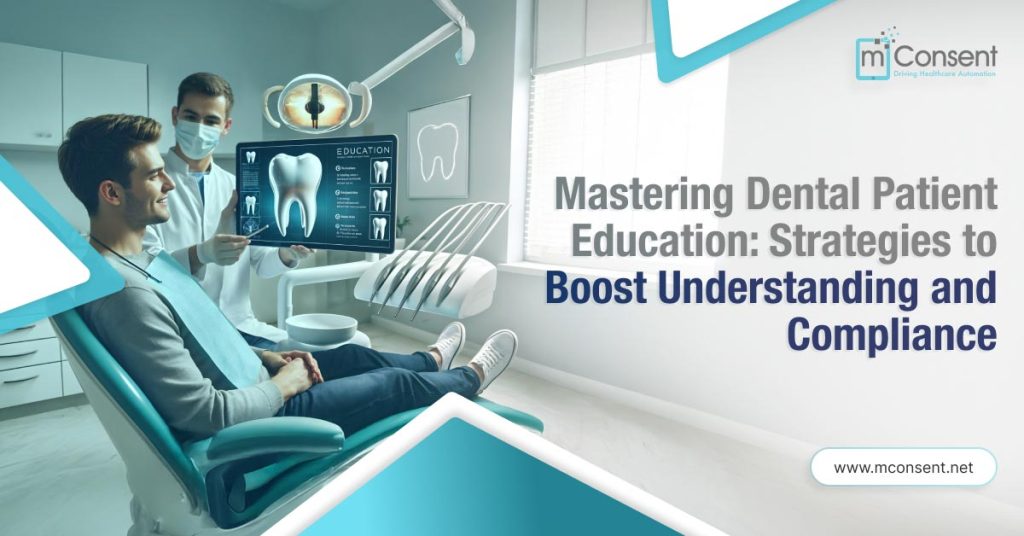
- Show, Don’t Just Tell
- Visual aids, such as models, diagrams, or videos, can help make even the most complicated procedures clearer.
- For instance, show how a cavity forms or how a crown is placed to help patients connect the dots.
- Leave Something Behind
- Verbal explanations are great, but patients forget.
- Give them a brochure or send them the link to a video to refer to later.
- Blogs, FAQs, or downloadable guides are all types of digital content.
- Engage and Empower
- Make the patient a partner in their care.
- Ask them questions: “What’s bothering you about this treatment?”
- Offer them choices to help them feel in control.
Communicating Effectively
- Listen First
- Ask open-ended questions, “How do you feel about flossing?”
- Actively listen to understand their concerns before jumping into explanations.
- Use the Teach-Back Method
- After explaining something, ask the patient to repeat it in their own words.
- It’s not a test; it’s a way to confirm the information clicked.
- Encourage Positivity
- Celebrate small wins: “You’ve been brushing regularly; that’s fantastic!”
- A little encouragement goes a long way in building motivation.
Customizing Education for Every Patient

Understanding each patient’s needs is essential for effective communication.
- For Kids: Use bright visuals, games, or stories about “cavity monsters.”
- For Adults: Highlight practicality and long-term benefits.
- For Elderly Patients: Speak clearly and use accessible materials.
- Patients with Special Needs: Adjust communication styles and use sensory-friendly tools.
Embracing Technology
- Digital Resources: Share apps, videos, and educational websites.
- Telehealth Opportunities: Follow up virtually to resolve lingering questions.
- Interactive Content: Add quizzes or animations to your practice’s website.
Success Stories in Action
Here are some inspiring patient education success stories:
- A little girl who transitioned from fearing the dentist to proudly showing her clean teeth.
- An anxious adult who completed a procedure after understanding each step.
- An elderly patient maintaining excellent hygiene despite physical limitations.
Conclusion: The Power of Knowledge
Effective patient education isn’t about passing on information but connecting with patients, building trust, and empowering them to take ownership of their oral health.
Start small: Try one new strategy from this blog in your next patient interaction. You’ll be amazed at how even a small shift in communication can lead to a bigger smile, both theirs and yours.
“
”