




A new patient walks into your dental practice for their first appointment. Are you prepared with the right tools to collect comprehensive health and dental history to provide them with safe, effective care?
This scenario underscores the importance of an accurate and detailed dental patient history form. These are not just pieces of paper; they lay the foundation of quality care as they ensure you understand a patient’s medical and dental background before starting treatment.
Still, dealing with these types may be difficult for most practices if the systems are already aged and on paper. This is where mConsent steps in: giving streamlined, paperless solutions that make your workflow easier while improving your patient’s experience.
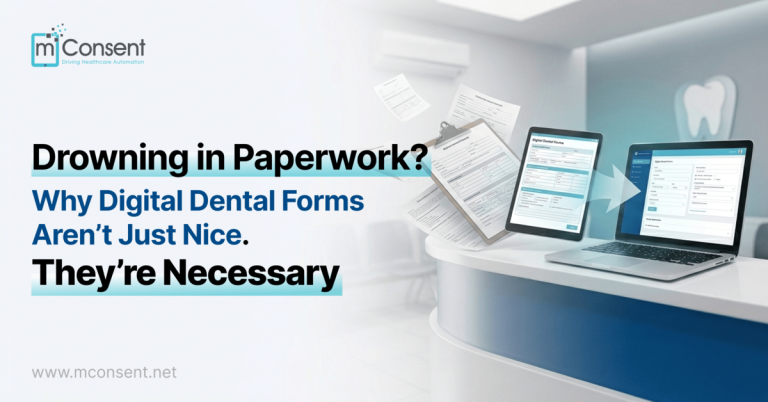
 Let’s admit it: paper forms are inefficient. The paper forms cause displacement; transcription errors tend to happen a lot; more often than not, the paper forms will give patients longer minutes in the waiting room. Following are the benefits of introducing the digital dental form-a game changer for modern-day dental practice
Why Upgrade to Digital
Let’s admit it: paper forms are inefficient. The paper forms cause displacement; transcription errors tend to happen a lot; more often than not, the paper forms will give patients longer minutes in the waiting room. Following are the benefits of introducing the digital dental form-a game changer for modern-day dental practice
Why Upgrade to Digital
1. Role of Dental Patient History Forms in Patient Care
A dental patient history form is not just a formality but the cornerstone of excellent patient care. Here’s why:- Patient Safety Comes First: Collecting medical history ensures you know of any allergies, medications, or chronic conditions that could affect treatment.For example, knowing if a patient has a heart condition or takes blood thinners can prevent complications during procedures.
- Personalized Treatment Plans: History of dental: including previous treatments or current concerns will tailor the treatment for that patient’s need.This ensures your care is consistent with their objectives and health condition
- Legal and Ethical Compliance: Accurate record-keeping keeps your practice compliant with regulations and avoids liability. Consent forms, such as dental treatment consent forms or procedure consent forms, protect both you and the patient.
2. Essential Elements of a Comprehensive Dental Patient History Form
To provide the best care, your form should be comprehensive but not difficult for patients to fill out. The following are the main areas every dental patient history form should have:- Personal Information: Name, age, contact details, and emergency contact information.
- This basic information helps you reach the patient when needed and keeps your records tidy.
- Medical History: Chronic conditions, including diabetes, heart disease, or asthma.
- Present medications, which include non-prescription drugs and supplements.
- All known allergies, especially to medications or anesthetics.
- Past dental treatments, such as fillings, root canals, or implants.
- Oral hygiene habits, including brushing and flossing frequency.
- Complaints or concerns, including pain, sensitivity, or cosmetic goals.
- Consent Section
- It has consent forms for treatment, data collection, and sharing of medical records.
- This section creates trust between the dentist and the patient while informing them of procedures and policies.
3. Revolutionizing the Process with Digital Forms
Let’s admit it: paper forms are inefficient. The paper forms cause displacement; transcription errors tend to happen a lot; more often than not, the paper forms will give patients longer minutes in the waiting room. Following are the benefits of introducing the digital dental form-a game changer for modern-day dental practice
Why Upgrade to Digital
- Saves patients’ time-Fill up at home
- Reduces potential errors due to ‘bad handwriting’ and incomplete forms
- Decreases clutter and improves record-keeping efficiency.
How mConsent Takes the Lead
- Provides printable new patient dental forms in PDF to suit your dental practice.
- It provides an effortless patient experience, whether on a tablet in your office or at home.
- Provides strong security features to protect patient data while maintaining HIPAA standards.
4. Procedure-Specific Consent Forms for Dental Procedures
Treatments are not all alike, and neither are their corresponding consent forms. Specific procedures call for particular consent forms to ensure an utterly aware patient before any specific procedure.Examples of Procedure-Specific Consent Forms
- Dental Implant Consent Form
- Lists the risks, benefits, and aftercare instructions for implant procedures.
- Dental Treatment Consent Form.
- Covers general treatments such as fillings, cleanings, or extractions.
Why Are These Forms Important?
- They protect both the patient and your practice by documenting informed consent.
- They set clear expectations, reducing misunderstandings or legal disputes.
5. How mConsent Transforms Form Management
Let patient history and consent forms become an issue for your dental practice. mConsent is here the solution: the way to an easy workflow while working with your actual dental practice management software, so you get custom templates for both dental patient history forms and consent forms that can be easily set according to your practice’s requirements, secure digital storage- Safely stores all forms to meet HIPAA compliance standards.
- Additional Solutions
- Reminders for appointments to decrease no-shows.
- Payment processing to make it easier for patients.
- Telehealth solutions to reach more patients.