



More than 100 million Americans battle with medical debt, over 40% of people postpone treatment just because they cannot pay it. This goes beyond simply expensive healthcare bills to include how the system manages inefficiencies and payments that cause unwarranted financial burdens.
Patients pay unanticipated medical costs; providers struggle with sluggish collections; and everyone engaged in the process finds it to be generally unpleasant. What follows? Patients delay important treatment, while healthcare facilities battle to be cash flow positive.
The system is obviously malfunctioning. But supposing there was another way? Imagine if medical expenses could be as simple and stress-free as ordering a cup of coffee or an Uber trip.
Here is where fintech is helping to give solutions that keep providers financially steady while allowing patients to afford treatment more easily.
The Payment Problem in Healthcare
The problem is not only with the expense of treatment but also with the antiquated payment mechanisms hospitals and clinics still depend on.
Many doctors still apply conventional billing systems, which can lead to delayed payments, unexpected charges, and medical mistakes. Often unsure of what they are being charged for, patients get invoices weeks or even months after their treatment.
This lack of openness and efficiency frustrates individuals, results in unpaid bills, and deters people from getting care when they most need it.
For medical professionals, this antiquated system presents serious financial difficulties. Billing departments deal with difficult insurance claims, write off delinquent amounts, and spend many hours hunting down payments. Revenue cycles are slow, cash flow suffers, and practices fight to be financially viable as a result.
Why Should Healthcare Payments Be Different?
Consider the most recent Uber ride you had or the coffee you got from your preferred cafe. In what manner did you pay? You most likely handled the transaction in seconds using a mobile payments system. Ask yourself now why healthcare should be any different.
Actually, it should not be. As fintech has grown, healthcare practitioners now have access to contemporary payment options that simplify, speed, and friendliness of transactions.
Fintech Solutions for Healthcare
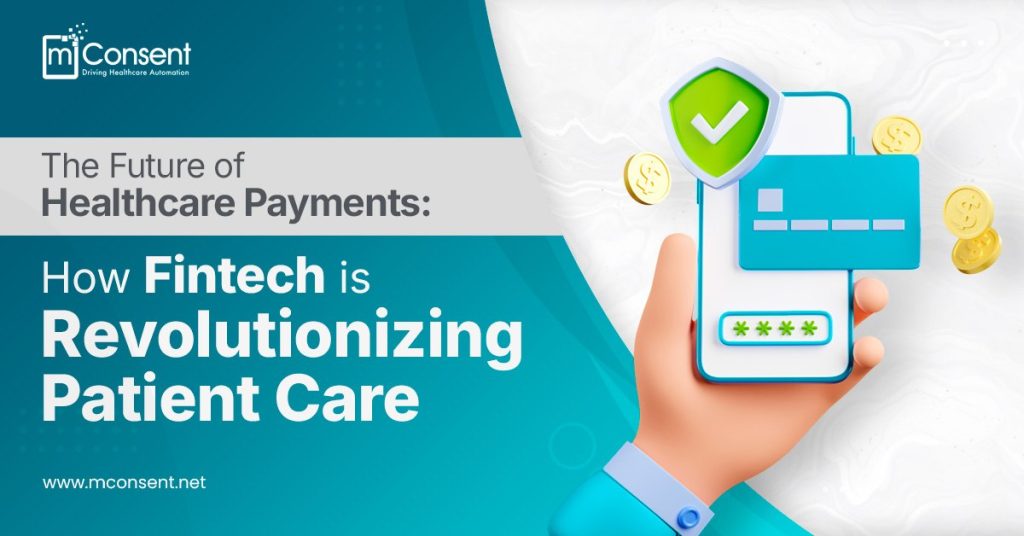
By providing alternatives such as mobile payments, buy now, pay later (BNPL) programs, and AI-driven automation, fintech is changing healthcare payments. These instruments guarantee providers flexible payment options, get paid on time and enable individuals to split out big medical expenditures into smaller, more reasonable installments. Here’s how:
- Digital wallets and mobile payments: Patients can promptly pay their medical bills using smartphone apps, just like they would for any other service. This lessens the chance of late or lost payments and removes the headache of paper billing.
- Buy Now, Pay Later: BNPL options let people divide their medical costs into reasonable chunks. This enables patients to consent to treatment without hesitation due to the lump-sum payment.
- AI-Driven Automation: AI-powered payment solutions simplify billing procedures, therefore lightening administrative tasks for medical professionals. These technologies minimize mistakes, process claims more quickly, and issue automated reminders; therefore, they reduce write-offs and accelerate collections.
The Impact of Fintech on Case Acceptance
The rise in case acceptance rates is among fintech-driven payment systems’ main advantages. Practices using payment plans or BNPL choices reportedly experience a 25–30% increase in case acceptance in recent studies. More people can thereby get the required therapy free from financial obstacles.
The result translates for clinicians into better patient outcomes, more satisfaction, and a stronger bottom line. By providing flexible and open payment choices, healthcare institutions can keep patients rather than losing them to financial considerations.
The Role of Policy and Regulation
Policymakers and legislators are driving this change towards modernized healthcare payments, not just with regard to simplicity. New pricing transparency rules mandate that medical professionals and hospitals reveal expenses up front so that patients are aware of their expected charges prior to treatment.
Patients nowadays demand more flexibility and clarity on how they pay for medical treatments. Those that neglect to adjust run the danger of losing customers to rivals with simpler and more open payment policies.
The Future of Healthcare Payments
The issue now is whether healthcare professionals will welcome these developments or drive people to look for treatment elsewhere. The response should be unambiguous: the healthcare sector has to change how it handles payments.
Healthcare providers can:
- Provide flexible payment options via fintech technologies, therefore increasing the accessibility of treatment.
- Automate data collection to increase effectiveness and lower administrative expenses.
- Improve openness so patients know their financial responsibilities from the start.
- Less financial worry for providers as well as for patients
Fintech is More Than Just Convenience
Fundamentally, fintech payment in healthcare is about removing financial obstacles so that patients may get the necessary treatment, not only about processing payments more conveniently. Medical debt should not be the reason someone delays or avoids treatment. Modern payment options can help us to design a healthcare system accessible for patients and financially viable for providers.
Healthcare payment system are headed here. The only question is whether providers will embrace this change or risk falling behind. Now is the moment to act, carry out improvements, and guarantee that patients-free from financial constraints—may say “yes” to the treatment they so deserve.
FAQ’s
1. How is fintech (financial technology) helping to solve these problems in healthcare?
Fintech is introducing modern payment options like mobile payments, Buy Now, Pay Later (BNPL) programs, and AI-driven automation to make transactions simpler, faster, and more patient-friendly.
2. How does AI-driven automation benefit healthcare providers in payments?
AI automates billing procedures, minimizes errors, speeds up claim processing, and issues automated reminders, reducing administrative tasks, write-offs, and accelerating collections.
3. What are examples of specific fintech solutions being used in healthcare payments?
Examples include digital wallets for instant payments, BNPL options for breaking down large costs, and AI-driven automation for simplified billing, faster claims, and automated reminders.
4. What does the future hold for healthcare payments with fintech?
The future involves more accessible treatment through flexible payment options, increased efficiency and reduced administrative costs through automation, improved transparency for patients, and less financial worry for all involved.
“
“