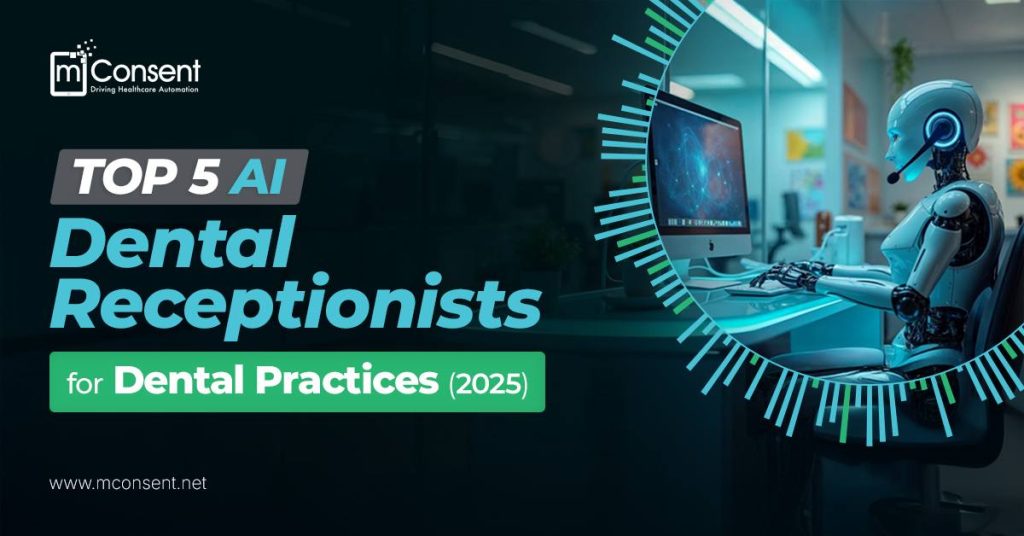



Every missed call is a lost opportunity in all industries, and dentistry is no different. All unanswered calls are a missed opportunity. Sometimes, overwhelmed front desks cannot attend all calls, especially during peak hours, lunch breaks, holidays, and after closing time. That’s why AI dental receptionists have become more than just a convenience they’re a necessity.
In 2026, these AI-powered assistants are changing the way dental offices operate. They don’t just pick up calls they schedule appointments in real time, follow up to reduce no-shows, and even answer questions with the poise of a trained receptionist. But with so many tools on the market, how do you know which one is right for your practice?
In this guide, we explain what an AI dental receptionist is and how it works, compare the top 5 dental virtual receptionist tools of 2026 side by side, and share what to check before you choose one, with a spotlight on the industry leader making the most significant impact.
What Is an AI Dental Receptionist and How Does It Work?
An AI dental receptionist is voice and text software that answers a dental office’s phone calls and messages 24/7. It understands each patient’s needs, books or reschedules appointments directly in the practice management system (PMS), and answers common questions about hours, insurance, and directions. Urgent or clinical calls are handed to a human team member, along with a summary of the call.
An AI dental receptionist is also called a dental AI virtual receptionist, an AI front desk assistant or an AI phone agent for dental offices. It doesn’t replace your front desk team. It covers the calls your team can’t take: during lunch, at peak hours, after hours, on weekends and on holidays.
1. Zaha AI – The AI Receptionist of mConsent
Zaha AI is at the top of the list, not just because it is smart but also because it is comprehensive. mConsent’s Zaha AI is a fully functional virtual dental receptionist that does more than simply answer the phone. With the ability to handle 24/7 communication, Zaha acts on behalf of your front office. Whether it’s booking a patient at midnight, or following up on cancellations, Zaha never misses it.
Key Benefits:
- Real-Time Scheduling: Patients can book appointments instantly no waiting.
- Insurance Built-In: Say goodbye to tedious eligibility checks.
- No-Show Management: Smart follow-ups help retain patients who might otherwise be lost.
- Full Integration with Google Calendar
- Part of a Larger Ecosystem: mConsent offers a range of additional patient engagement solutions, in addition to Zaha.
Why Zaha is number one:
Zaha was built from the ground up for dental practices. That means fewer bugs, fewer third party issues, and a lot more peace of mind. Offices using Zaha report a 95% call answer rate, a 40% increase in booked appointments, and a significant drop in front desk burnout.
Zaha doesn’t just support your team. It empowers it.
How an AI dental receptionist works, step by step
- Answers instantly. The AI picks up on the first ring, or after a set number of rings when your team is busy. It greets the caller with your practice name.
- Identifies itself as AI. A clear disclosure (“I’m the practice’s AI assistant”) is now best practice and is expected under emerging state AI laws and FTC guidance.
- Understands the request. Natural language processing (NLP) detects the caller’s intent: booking a cleaning, rescheduling, asking about insurance, or reporting a toothache.
- Looks up the patient and the schedule. The AI matches the caller to their patient record and checks real-time openings in your PMS, such as Dentrix, Eaglesoft, Open Dental or Dolphin. It follows your rules for provider, appointment type and length.
- Completes the task. It books, reschedules or cancels the appointment, answers FAQs from your approved knowledge base, or takes a message.
- Confirms by text. The patient receives a confirmation and can also get intake forms or a payment link.
- Escalates when needed. Transfers emergencies, clinical questions, and upset callers to staff or flags them for urgent follow-up.
- Logs everything. It saves a call summary, transcript, and outcome, so your team can review the call in seconds.
Dental Virtual Receptionist Comparison Table: Top 5 Tools for 2026
The top 5 dental virtual receptionists for 2026 fit different practices:
- Zaha AI by mConsent: Dental practices that want 24/7 AI answering connected to intake, insurance verification and payments.
- Arini: DSOs and multi-location groups that need customizable call flows.
- TrueLark: Growing practices that want unified calls, texts and analytics.
- Annie AI: Relationship-focused practices.
- HeyGent AI: Solo practices that need affordable after-hours coverage.
Meet Zaha – The #1 AI Dental Receptionist of 2026!
2. Arini – Smart, Scalable, and Reliable
Trusted by DSOs and multi location practices across the United States and Canada, Arini delivers scalability and intelligence in a seamless package. It’s a strong contender for practices that want a plug and play solution that can be deeply customized.
Highlights:
- Omnichannel Communication: Handles both calls and texts naturally.
- Customizable Call Flows: Define exactly how your receptionist should respond.
- Analytics Dashboard: Gives visibility into call metrics, bookings, and performance.
- Multilingual Support: Offers smooth communication across language barriers.
Best For:
Large practices looking for flexibility without complexity. Arini allows dental teams to configure responses, integrate with practice software, and stay notified about every booking or missed call.
3. TrueLark – The AI Control Center for Growing Practices
If your clinic is looking for a robust AI system that integrates marketing, operations, and scheduling, TrueLark is worth exploring. This platform positions itself as an AI communications control center, providing you with tools not only to manage appointments but also to measure and optimize every patient interaction.
Highlights:
- AI-Powered Booking: Automatically schedules based on service needs, provider availability, and patient preferences.
- Unified Inbox: Streamline calls, texts, and chats in one place.
- Multi location Support: Compare performance across locations to drive better results.
- Automation without limits: Effortlessly optimize workflow, employee, and customer relations with potent AI that removes tedious activities, boosts productivity, and guarantees dependable operations.
Why It Works:
TrueLark is like having a data analyst, marketer, and receptionist rolled into one. Practices love the insightful dashboards and campaign performance tracking.
4. Annie AI – Friendly, Focused, and Familiar
Annie is a name many in the dental world have come to trust. Annie is a user friendly AI receptionist who prioritizes the patient relationship above all else.
Highlights:
- Direct Scheduling to PMS: Annie integrates with your calendar to fill open slots as well as schedule, reschedule, and confirm appointments.
- Smart FAQ Handling: From insurance to office hours, Annie answers with confidence.
- Patient Onboarding: Captures necessary forms and info from new patients without involving staff.
- Fully Customized Responses: Annie “learns” your office voice, policies, and protocols.
Great For:
It’s beneficial for practices that focus on building relationships rather than just filling schedules.
5. HeyGent AI – Affordable Power for Solo Practices
HeyGent AI is ideal for small dental practices looking to plug communication gaps.
Highlights:
- 24/7 Automated Booking: Keeps your calendar full, even when you’re asleep.
- Multilingual Support: Includes Spanish and other major languages.
- Call Forwarding Simplicity: Simply redirect your line HeyGent takes care of the rest.
- Smart Rescheduling & Reminders: Reduces no-shows and keeps patients informed.
Best For:
Small to mid sized clinics need a cost effective solution to manage communication gaps. HeyGent doesn’t try to do everything but what it does, it does well. Think of it as your reliable weekend and after hours receptionist who never gets tired.
Benefits of Using an AI Dental Virtual Receptionist
An AI dental virtual receptionist helps a practice in seven main ways:
- It answers every call, 24/7.
- It books new patients who would otherwise call a competitor.
- It cuts no-shows with automatic confirmations and rescheduling.
- It takes repetitive calls off the front desk.
- It keeps patient experience consistent.
- It scales across locations without extra hires.
- It turns calls into measurable data.
1. Never miss a call, even after hours
Many dental calls arrive when no one can answer: during lunch, while the front desk is checking patients in, after closing, and on weekends. Callers who reach voicemail often hang up and call the next practice on their search results. An AI dental receptionist answers on the first ring, at any hour, so those patients reach your schedule instead of a competitor’s.
2. Book more new patients
New patients are the callers least likely to leave a voicemail and most likely to keep searching. An AI receptionist can book them into the right appointment type and provider in your PMS during the call. It then texts them a confirmation and intake forms, so they arrive ready.
3. Reduce no-shows and fill cancellations
AI receptionists confirm appointments, handle reschedule requests at any hour, and can offer newly opened slots to waiting patients. A cancellation becomes a rebooked appointment instead of an empty chair.
4. Lower front-desk workload and burnout
Many calls are repetitive: office hours, directions, “Do you take my insurance?”, and appointment changes. When an AI front desk assistant handles these, your team can focus on patients in front of them, treatment coordination, and insurance and billing work.
5. Give every patient a consistent experience
The AI follows your approved scripts, policies and tone on every call. Patients get accurate answers whether they call at 9 a.m. on a Monday or 9 p.m. on a Saturday. Multilingual support helps practices serve patients who prefer Spanish or other languages.
6. Scale without adding headcount
Phone volume can grow with a new location, a marketing campaign or a busy season. An AI phone agent for dental offices absorbs that volume without overtime or new hires, which matters most for growing practices and DSOs.
7. Turn every call into data
Each call is logged with a transcript, a summary and its outcome. Practice owners can see call volume by hour, booking rates, common questions and missed opportunities. That data shows where to adjust staffing and marketing.
Benefits for the whole practice
- Practice owners: more booked production, predictable coverage, and fewer staffing gaps.
- Front desk teams: fewer interruptions and less phone pressure, plus more time for patients in the office.
- Patients: instant answers, easy booking at any hour, and text confirmations.
When the AI receptionist is part of a complete front-desk system, as with Zaha AI and mConsent, the same call can lead straight into digital intake, insurance verification and payment. The benefits then carry from the first call through to checkout.
2026–2027 Trend Watch: How to Choose the Right AI Dental Receptionist
Looking ahead, the AI dental receptionist market is shifting fast, and 2026-2027 is shaping up around a few clear signals: AI disclosure moving from optional to expected under FTC guidance and state-level AI laws, PMS-native booking replacing basic calendar sync, and go-live windows shrinking from weeks to days. When comparing an AI receptionist for dental office or multi-location use, weigh it against a few practical questions: does it disclose itself as AI on every call, does it connect directly to your PMS rather than just a calendar, how fast can it actually go live, and does it hand off cleanly to a human for anything clinical or urgent. Practices that choose against these markers now will be better positioned as both the technology and the regulations around it keep evolving.
What’s changing in 2026-2027
- AI disclosure is becoming standard. In February 2024, the FCC ruled that AI-generated voices count as “artificial” voices under the Telephone Consumer Protection Act (TCPA), so outbound AI calls need the same prior consent as robocalls. California’s AB 3030, in effect since January 2025, requires health care providers to label AI-generated patient communications about clinical information and tell patients how to reach a person. Texas’s Responsible AI Governance Act (TRAIGA), effective January 2026, requires health care providers to disclose when AI is used in a patient’s care. Rules differ by state and keep changing, so choose a tool that says it’s AI at the start of every call.
- PMS write-back is replacing calendar sync. Early tools booked into a separate calendar or sent a message that staff had to re-enter. Newer tools read live openings and write the appointment into the PMS. Ask each vendor which details the AI writes back to your PMS and which still need your team.
- Go-live is getting faster. Many vendors now quote days instead of weeks. Ask what that timeline includes: call-flow design, your knowledge base, the PMS connection and test calls.
- AI receptionists are moving into full front-office platforms. Weave’s 2025 acquisition of TrueLark is one sign. Practices increasingly want the call to lead into intake, insurance verification and payment without switching systems.
- Calls, texts and chat are merging. Patients reach out on whichever channel is easiest. A dental virtual receptionist that handles all three from one inbox keeps conversations from falling through the cracks.
- HIPAA is the baseline. Any AI that hears patient details handles protected health information. The vendor should sign a Business Associate Agreement (BAA), encrypt recordings and transcripts, and limit who can access them.
- Clinical guardrails matter more. As AI takes more calls, practices need clear rules for spotting emergencies and handing them to a person. The AI should never diagnose or give treatment advice.
Questions to ask before you choose an AI dental receptionist
- Does it say it’s AI at the start of every call, and can patients reach a person at any time?
- Does it write appointments directly into our PMS (Dentrix, Eaglesoft, Open Dental or Dolphin) or does it send requests for staff to enter?
- Will you sign a BAA, and where are call recordings and transcripts stored?
- How does it recognize and route dental emergencies after hours?
- Can it answer insurance questions, and does it connect to insurance verification?
- How long until go-live, and what does onboarding include?
- What reports will we get on calls answered, booked and transferred?
The Future of Front Desks is Now
Dentistry is evolving, and so are patient expectations. They want convenience. And they’re no longer waiting around when calls go unanswered. Whether you’re a solo practitioner trying to grow or a large group practice juggling hundreds of calls, AI dental receptionists aren’t just helpful they’re game changing.
Every tool in the evaluation has a specific role. However, only Zaha AI offers a comprehensive, all in one solution that is seamlessly integrated into a digital workflow specifically designed for dentistry.
It responds not just to phone calls but also to the demand for more intelligent, dependable, and quick patient involvement.
Ready to See Zaha AI in Action?
Stop losing patients after hours. Stop overloading your staff. Let Zaha take the pressure off your front desk so your team can get back to doing what they love: delivering excellent patient care.
Visit www.mconsent.net to schedule your free demo today.
FAQ
1. How does Zaha AI differ from other AI dental receptionist tools?
Zaha AI stands out because it was built exclusively for dental practices. Unlike generic AI tools, Zaha offers full integration with dental systems like Google Calendar, built-in insurance verification, smart cancellation follow-ups, and patient form management. It’s also part of the mConsent ecosystem, providing a comprehensive, all-in-one patient engagement solution.
2. What are the main benefits of using an AI receptionist in a dental practice?
- 24/7 availability (even after hours and during weekends)
- Increased appointment bookings
- Reduced no-shows with automated reminders
- Lower front desk workload and burnout
- Enhanced patient experience through prompt, consistent responses
3. How quickly can I implement an AI receptionist in my dental office?
Most AI receptionist platforms can be set up within a few days, depending on your current systems and the level of customization needed. Zaha AI offers quick onboarding with dedicated support, ensuring smooth integration with your dental workflow.
4. What is an AI dental receptionist, and how does it work?
An AI dental receptionist is a virtual assistant powered by artificial intelligence that handles front-desk tasks like answering calls, booking appointments, sending reminders, managing cancellations, and even verifying insurance. It uses natural language processing (NLP) and machine learning to understand and respond to patient queries just like a human receptionist would—only faster and available 24/7.
5. What is a dental AI receptionist, and how does it work?
An AI dental receptionist is a virtual assistant powered by artificial intelligence that handles front-desk tasks like answering calls, booking appointments, sending reminders, managing cancellations, and even verifying insurance. It uses natural language processing (NLP) and machine learning to understand and respond to patient queries just like a human receptionist would, only faster and available 24/7.
6. What is the best AI receptionist for a dental office that uses Open Dental?
The best AI receptionist for dental office teams on Open Dental reads your Open Dental schedule in real time and keeps patient records in sync, so staff don’t re-enter what the AI captured. Zaha AI works within mConsent, which integrates with Open Dental, so a call can lead straight into reminders, digital intake, and insurance verification. Ask for a demo using your own Open Dental setup to see exactly what syncs.
7. What is the best AI receptionist for endodontic practices?
Endodontic practices get a different mix of calls than general dentistry: referrals from general dentists, patients in acute pain, and questions about whether a root canal is covered. The right AI dental receptionist for endo should route urgent pain calls to a person right away, capture referral details accurately, and connect to insurance verification so coverage is checked before treatment. Zaha AI, paired with mConsent Insurance Verification, is built for that workflow.
8. Can an AI dental receptionist answer insurance questions?
Yes, for common questions. An AI receptionist can tell callers which plans the practice accepts, whether you’re in network, and what to bring to the visit. It can also collect insurance details before the appointment. Patient-specific coverage, such as remaining benefits or frequency limits, should come from a completed insurance verification and not from a general script. When the AI connects to a verification tool like mConsent Insurance Verification, the team has those answers before the patient arrives.