


For years, checking a patient’s insurance was just a routine task at the front desk before their appointment. That way of thinking won’t work in 2026.
Today, checking insurance directly affects:
- Accepting cases
- Correct payment
- Trust in the patient
- Predictability of revenue
Dental offices that still check insurance the old-fashioned way are under more pressure than ever. Delays, mistakes, staff burnout, and unhappy patients are no longer just one-time issues; they are part of a bigger problem with old workflows.
At the same time, a new type of insurance agent has appeared: the insurance concierge.
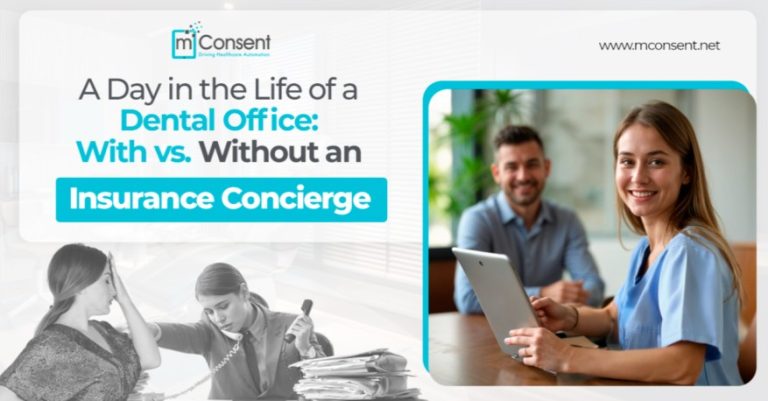
This article talks about the differences between traditional dental insurance verification and modern insurance concierge dental models. It also explains why platforms like mConsent Insurance Concierge are now the link between verification, transparency, and automated payments.
How Insurance Verification Has Traditionally Worked
Manual Eligibility Checks
Traditional insurance verification depends heavily on manual effort:
- Phone calls to insurance payers
- Logging into multiple carrier portals
- Screenshotting benefits and pasting notes into charts
Each verification can take 15–30 minutes longer during peak hours or when payers are understaffed.
Static Insurance Estimates
Traditional methods yield static estimates predicated on:
- Information about benefits that is out of date
- What we think about yearly maximums
- Frequency histories that are not complete
Result? Estimates that seem sure of themselves but often aren’t.
Front-Desk-Heavy Workflows
Front desk teams are expected to:
- Verify insurance
- Answer phones
- Schedule appointments
- Explain benefits to patients
Insurance verification becomes just one more task competing for limited time and attention.
The Hidden Costs of Traditional Insurance Verification
Time Drain and Staff Burnout
It takes hours every day to check dental insurance by hand. The job is boring, stressful, and doesn’t let you make mistakes, which can make you burn out.
Inaccurate Estimates and Payment Disputes
When estimates don’t match Explanation of Benefits (EOBs):
- Patients feel misled
- Offices spend time correcting balances
- Trust erodes
Disputes increase, and collections slow down.
Delayed Treatment Decisions
People are hesitant when they don’t have clear insurance information. Patients put off getting care while they “wait to confirm coverage,” which costs the hospital money and delays treatment.
What Is an Insurance Concierge Model?
Definition and Core Concept
An insurance concierge dental model centralizes insurance verification into a managed, technology-driven service.
Instead of fragmented tasks, verification, estimation, and communication happen in one connected flow.
How Concierge Models Evolved
Insurance concierge services came about because:
- Insurance is getting more complicated.
- More financial responsibility for patients
- Ongoing shortages of dental staff
Practices needed a way to get rid of verification without losing accuracy.
Why 2026 Is the Tipping Point
By 2026, expectations have shifted. Patients demand clarity. Teams need relief. Practices require predictable revenue. Traditional models simply can’t keep up.
Insurance Concierge vs Traditional Verification – Comparison
Speed and Turnaround Time
Traditional: Hours or days
Concierge: Near real-time verification
Accuracy and Reliability
Manual workflows lead to inconsistencies. Concierge models use automation and standardized processes to cut down on mistakes made by people.
Staff Involvement
Traditional: High front-desk dependency
Concierge: Minimal staff involvement
Patient Visibility
Traditional methods limit what patients see. Concierge models prioritize transparency.
Impact on Patient Experience
Traditional Method Experience
Patients experience:
- Uncertain costs
- Delayed answers
- Frustration at check-in
Concierge-Driven Experience
With an insurance concierge:
- Estimates are clear upfront
- Approvals move faster
- Patients feel confident moving forward
Financial Transparency and Case Acceptance
Why Insurance Confusion Kills Case Acceptance
Patients hesitate to get treatment, even when they need it, when they don’t understand the costs.
How Concierge Models Improve Acceptance
Concierge models present:
- Realistic estimates
- Clear separation of insurance coverage vs patient responsibility
mConsent’s Role in Financial Clarity
mConsent links insurance verification with financial consent, making sure that patients know and agree to their responsibilities before treatment starts.
Operational Efficiency and Front-Desk Relief
Traditional Verification Bottlenecks
- Peak call times
- Staffing gaps
- Endless follow-ups
Concierge Automation Benefits
- Fewer calls
- Fewer manual steps
- Predictable workflows
Reallocating Staff Time to Patient Care
Staff can focus on patients, not portals.
Payment Accuracy and Revenue Cycle Performance
Traditional Methods and Revenue Leakage
Poor estimates lead to:
- Under-collection
- Re-billing
- A/R volatility
Concierge Models Reduce A/R Volatility
Better estimates mean fewer arguments and easier collections.
Integration with Payment Automation (mPayr)
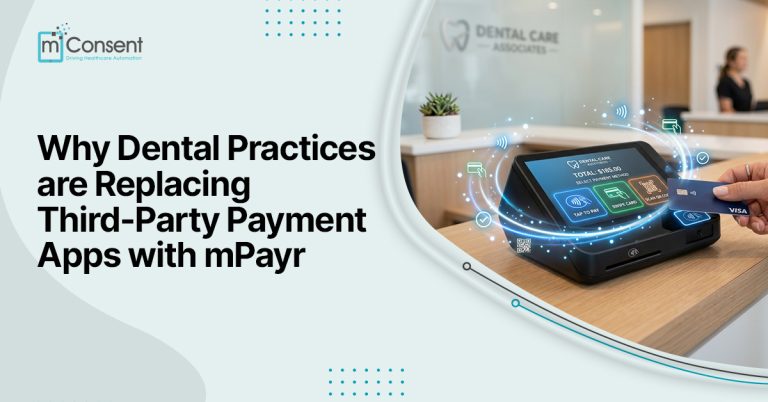
When insurance concierge workflows connect directly to payment automation tools like mPayr, collections become predictable and efficient.
Compliance, Documentation, and Audit Readiness
Risks with Manual Verification Records
- Incomplete notes
- Missing proof
- Audit vulnerability
Concierge Documentation Advantages
- Time-stamped records
- Centralized audit trails
How mConsent Strengthens Compliance
mConsent standardizes documentation across verification, consent, and payments.
Scalability – Why Traditional Methods Break at Growth
Adding Locations or Providers
Traditional workflows scale linearly more volume requires more staff.
Concierge Models Scale Without Linear Staff Increases
Managed services absorb growth without disruption.
DSO and Multi-Location Readiness
Concierge models help make things the same at all locations.
Technology Integration in 2026
Traditional Systems as Isolated Tools
Disjointed software creates inefficiencies.
Concierge Models as Connected Workflows
- Intake
- Verification
- Consent
- Payments
mConsent’s Unified Platform Advantage
mConsent combines these parts into a single, functional system.
When Traditional Methods Still Fall Short
- Staff shortages
- Rising insurance complexity
- Higher patient expectations
Choosing the Right Insurance Verification Model for 2026
Key Evaluation Criteria:
- Speed
- Accuracy
- Integration
- Compliance
- Patient experience
Why mConsent’s Insurance Concierge Is Built for 2026 Dentistry
mConsent Insurance Concierge was designed specifically for dental workflows to:
- Reduce administrative burden
- Improve financial transparency
- Seamlessly connect insurance to payments
Conclusion: 2026 Belongs to Practices That Modernize Insurance Verification
Modern dentistry is too fast for old-fashioned ways of checking insurance.
Insurance concierge models offer:
- Speed
- Correctness
- Believe
With mConsent, practices can cut down on chaos, make more money, and give patients confidence in every financial decision they make.
FAQ
1. What is the biggest downside of traditional insurance verification?
Manual effort leads to delays, errors, and burnout.
2. Does an insurance concierge replace front-desk staff?
No. It removes the most time-consuming tasks so staff can focus on patients.
Q3. How reliable are concierge insurance quotes?
Standardized processes and automation make it more accurate than doing it by hand.
Q4. Can small practices benefit from an insurance concierge?
Yes, especially those with limited staff.
Q5. How does mConsent combine payments with checking insurance?
By linking verification directly to financial consent and automated payment processes.
“