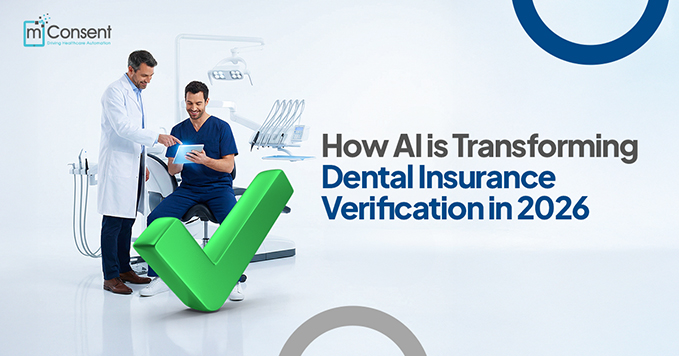



Dental insurance has never been harder to understand. In 2026, practices are dealing with more complicated payer rules, a lot of different PPO plans, stricter limits on how often they can see patients, downgrades, and problems with coordinating benefits (COB). All of this is happening while they are short-staffed and patients’ expectations are rising.
Patients want to know how much their treatment will cost before they get it. They want answers the same day. And they don’t want any surprises.
Still, most dental offices still use manual methods to check insurance.
That’s where AI dental insurance verification makes a big difference.
Today, AI is changing how dental practices check insurance eligibility, handle dental workflows, lower the number of claim denials, and boost revenue. Automation of modern dental insurance is not only a way to save time; it is also becoming a way to make more money.
Let’s look at how automated insurance verification dental systems are changing the way things are done in 2026 and why mConsent’s Insurance Concierge is at the forefront of these changes.
The Insurance Verification Crisis in Modern Dental Practices
Why Verification Has Become More Complicated Than Ever
- PPO variations within the same carrier
- Waiting periods for major procedures
- Frequency limitations for hygiene, X-rays, fluoride
- Downgrades and alternative benefits
- Coordination of benefits (COB) between dual plans
Each plan has unique rules. One missed detail can mean a denied claim. Manual systems simply can’t keep up.
The True Cost of Manual Verification
Manual verification typically takes 15-25 minutes per patient. That includes:
- Calling insurance companies
- Time spent on hold
- Incomplete breakdowns
- Spreadsheet tracking
- Manual data entry
- Human errors
Multiply that by 20 patients per day, and you’re looking at hours lost. But the bigger issue? Errors.
The Ripple Effect of Verification Errors
- Claim denials
- Billing disputes
- Negative patient reviews
- Cash flow disruption
- Staff stress
Verification errors directly impact your revenue cycle. This is why dental revenue cycle automation is no longer optional.
What Is AI-Powered Insurance Verification?
How AI Reads and Interprets Insurance Data
- Natural Language Processing (NLP) to interpret payer responses
- Automated eligibility checks
- Plan-specific rule recognition
- Coverage prediction modeling
AI doesn’t just confirm eligibility; it analyzes plan logic. That’s the power of AI dental insurance verification.
How AI Is Transforming Dental Insurance Verification in 2026
Real-Time Eligibility Checks
AI systems connect directly with payers to provide instant benefit confirmation.
- Faster scheduling
- Immediate treatment plan alignment
- Higher case acceptance
Same-Day Insurance Verification
With same-day insurance verification, practices can automatically check appointments and provide clear costs before visits. Patients now expect healthcare to be as fast as Amazon. It gets done by AI.
Intelligent Benefit Breakdown
- Flag frequency limits
- Identify downgrades
- Calculate patient responsibility
- Detect missing coverage details
Result? Fewer financial surprises at checkout and fewer disputes later.
Predictive Denial Prevention
- Identify high-risk procedures
- Alert staff before submission
- Suggest documentation requirements
- Prevent missing narratives or attachments
Automated Pre-Authorizations
- Fill out forms automatically
- Attach smart files
- Track status
- Send reminders
Continuous Plan Monitoring
- Update fee schedules
- Detect policy changes
- Adjust estimates automatically
- Prevent outdated coverage errors
The Revenue Impact of AI Insurance Automation
Increased Case Acceptance
When patients get clear estimates, there is less financial uncertainty and faster acceptance.
Faster Cash Flow
- Reduced claim delays
- Lower AR days
- Fewer denial rates
Reduced Write-Offs
- Accurate benefit breakdowns
- Correct fee application
- Minimized downgrade losses
How AI Reduces Front Desk and Billing Staff Stress
- Eliminates repeated phone calls
- Reduces error correction work
- Removes spreadsheet tracking
- Frees time for patient care
AI doesn’t replace teams; it supports them.
Patient Experience in the AI Era
Transparent Cost Estimates Before Treatment
- Digital treatment plans
- Instant breakdowns
- Clear out-of-pocket amounts
Fewer Billing Disputes
- Accurate expectations
- Clear communication
- Automated documentation
Higher Online Reviews
Patients leave better reviews when billing is clear and efficient.
Compliance & Security in AI Insurance Verification
- HIPAA compliance
- Encrypted integrations
- Secure patient portals
- Audit trails
- Role-based access control
How mConsent’s Insurance Concierge Uses AI to Transform Verification
mConsent’s Insurance Concierge delivers end-to-end automated insurance workflow support:
- Eligibility checks
- Intelligent benefit breakdown
- Pre-auth submission
- Status tracking
- Predictive denial prevention
It integrates with:
- Digital intake forms
- Treatment planning systems
- Payment collection tools like mPayr
- Patient communication platforms
All within a centralized dashboard featuring:
- Real-time insurance status
- Risk alerts
- Revenue impact tracking
Step-by-Step: How AI Insurance Automation Works
- Patient submits digital intake
- AI triggers eligibility check
- Benefits are analyzed
- Downgrades are flagged
- Estimate is generated
- Patient receives cost breakdown
- Pre-authorization auto-submitted
- Claim prepared with proper documentation
ROI Example: What AI Insurance Automation Saves
Think about a practice that does 20 verifications every day. Saving 15 minutes per verification gives back five hours daily.
- 100+ hours saved monthly
- Increased scheduling capacity
- Faster billing cycles
- Significant revenue growth
Signs Your Practice Needs AI Insurance Automation Now
- Frequent billing disputes
- High denial rates
- Staff burnout
- Long hold times with payers
- Treatment delays
- Increasing accounts receivable
The Future of AI in Dental Revenue Cycle Management
- Revenue forecasting
- Automated claim corrections
- AI-generated narratives
- Self-operating insurance workflows
- Real-time payer updates
Conclusion: Insurance Verification Is No Longer Administrative – It’s Strategic
Checking insurance used to be a normal back-office job, but by 2026 it had become a direct source of income and growth. AI dental insurance verification turns a reactive administrative task into a proactive, data-driven strategy that boosts financial performance.
Dental offices that use automated insurance verification systems work faster, file claims that are more accurate, get fewer denials, make more money, and let patients know what to expect in terms of costs. This makes patients happier and more likely to accept treatment.
This is the turning point, and the businesses that choose to automate are the ones that win.
FAQ
1: What does it mean to check dental insurance with AI?
AI dental insurance verification uses AI and automation to check eligibility, review benefits, and prevent claim errors without manual calls.
2: How does AI help lower the number of dental claims that get turned down?
AI identifies missing documentation, detects downgrades, and ensures claims are coded correctly before submission.
3: Does AI insurance verification follow HIPAA rules?
Yes. Platforms like mConsent use encrypted systems, secure integrations, and strict access controls.
4: How much time can AI save?
Most practices save 10–20 minutes per verification, totaling several hours per day.
5: Does AI replace dental billing staff?
No. AI supports staff by handling repetitive tasks, allowing teams to focus on patient communication and revenue growth.
“