

For years, dental practices leaned on whatever payment tools were easiest at the moment: card terminals, paper statements, and eventually, popular third-party payment apps. Venmo. PayPal. Square. Zelle. They were familiar, quick to set up, and patients already knew how to use them.
But convenience came at a cost.
As dentistry became more digital, regulated, and patient-experience driven, cracks began to show. Generic payment apps weren’t built for healthcare workflows. They didn’t integrate cleanly with dental systems, didn’t consider HIPAA realities, and often created more work behind the scenes than they saved up front.
Today, practices are rethinking their dental payment solutions entirely. Instead of forcing healthcare workflows into consumer tools, they’re adopting platforms designed specifically for dentistry.
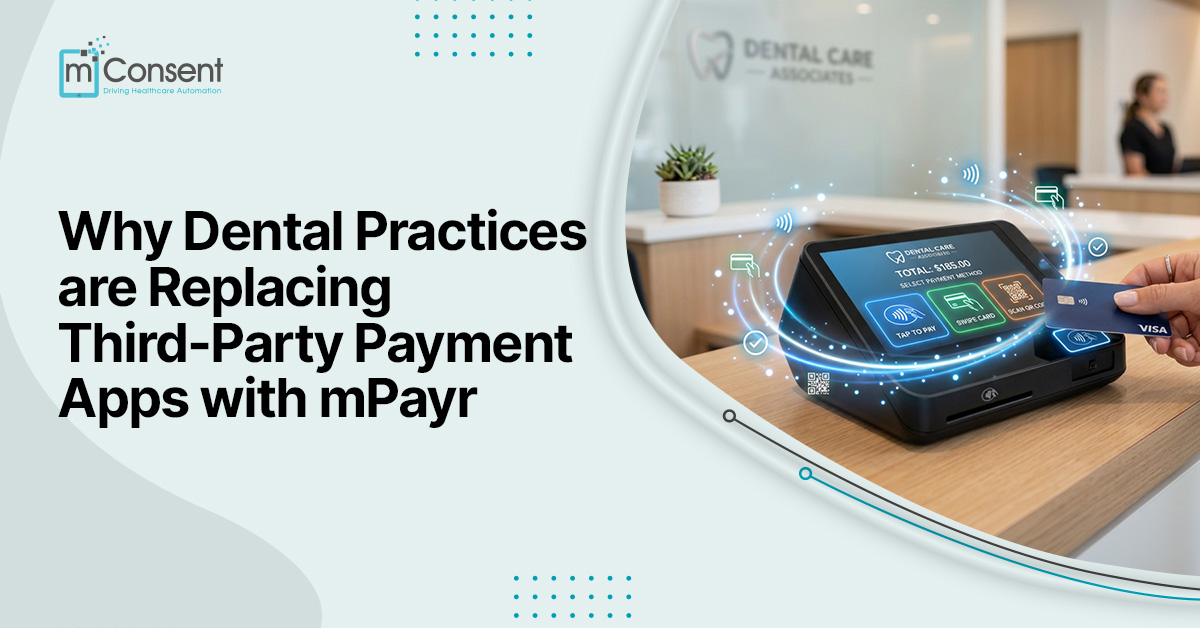
That's where mPayr comes in for dental payments.
mPayr is not just another way to get money. It's changing how practices handle cash flow, compliance, and patient trust without making things harder at the front desk.
The Current Landscape of Dental Payments
Traditional Payment Methods in Dentistry
For a long time, paying for dental work was easy but not very useful:
- Checks and cash at the front desk
- Card terminals that work on their own
- Invoices sent by mail weeks after treatment
These methods caused problems that were easy to see:
- A lot of payments are late or not made at all
- Long cycles for accounts receivable
- Time spent by staff on follow-ups and manual posting
These systems struggled to keep up as treatment plans grew more complex and patient expectations changed.
The Rise of Third-Party Payment Apps
To modernize quickly, many dental offices adopted third-party payment apps. Tools like PayPal, Venmo, Zelle, and Square promised:
- Easy setup
- Fast payments
- Familiar user interfaces
For a while, they worked, especially for small balances or one-off payments.
But as volume increased, so did complexity.
The Challenges of Generic Payment Tools
Generic apps weren't designed to work with third-party dental payment apps. Practices started to deal with:
- Payments that are not part of the practice management system
- Reconciliation by hand at the end of each month or day
- Limited reporting linked to patient records
- Concerns about following the rules for PHI and payment data
What seemed simple at first made billing, reporting, and audits more difficult without anyone noticing.
Introducing mPayr: Built for Dental
What is mPayr?
Within the mConsent ecosystem, mPayr is a payment system for dentists. It was designed to work like real dental offices do. It doesn't work as a standalone app for consumers; instead, it works with systems for managing patients, getting their consent, and communicating with them. Payments aren't handled separately; they go straight to patient records and existing workflows. This means that financial tasks happen naturally as part of everyday business instead of being an extra administrative burden.
The fact that mPayr is specifically designed for dentistry is what makes it different from other payment apps. Generic apps don't support dental workflows, don't integrate with patient records, and aren't built with HIPAA in mind, which means practices often have to manually reconcile payments after the fact. mPayr fills those gaps with a design that complies with HIPAA, supports automatic reconciliation, and is fully compatible with dental systems. This is why many practices now see consumer payment tools as a short-term fix instead of a long-term solution.
Why Practices Are Making the Switch
Enhanced Compliance & Security
Dental payments aren’t just financial transactions; they’re connected to protected health information. Many consumer apps were never designed for this reality.
mPayr supports:
- Encrypted payment processing
- HIPAA-aware workflows
- PCI-compliant handling of card data
This reduces risk while giving practices confidence during audits and reviews.
Improved Patient Payment Experience
The best payment experience for a patient is one that is easy and reliable.
With mPayr:
- Payments are embedded directly in dental communications.
- No need to download or choose between apps.
- Links arrive via text or email from the practice itself.
This improves the patient payment experience dentistry relies on to maintain trust.
Integrated Financial Workflows
Unlike third-party apps, mPayr connects payments to:
- Patient records
- Treatment plans
- Receipts and ledgers
Payments automatically post to supported PMS platforms, reducing errors and eliminating duplicate entries.
Reduced Administrative Burden
Staff no longer have to:
- Go after unpaid bills by hand
- Check that all of your payment dashboards are the same.
- Questions about field payments that came up because of the app
This lets the front desk focus on patients instead of numbers.
Better Tracking & Analytics
mPayr provides dashboards that show:
- Payment timing trends
- Outstanding balances
- Follow-up effectiveness
Compared to exporting CSV files from multiple apps, this visibility is a major upgrade for dental revenue cycle management.
Support for Dental-Specific Scenarios
Dental workflows aren't the same for everyone, and mPayr shows this by allowing co-pays at check-in or check-out, estimates before the visit, payments for treatment plans that happen again and again.
These kinds of things just don't happen on consumer payment platforms.
Real Challenges Practices Faced with Third-Party Apps
Manual Reconciliation Across Systems
- Staff manually matching names and amounts
- Errors creeping into bookkeeping
- Month-end close taking longer than necessary
Lack of Branding and Custom Receipts
Generic receipts don’t reinforce professionalism. mPayr receipts carry practice branding, reinforcing trust and clarity.
Patient Confusion
Patients often asked:
- “Which app should I use?”
- “Can I pay another way?”
mPayr removes that decision fatigue.
Security and Compliance Risks
Third-party apps weren’t built to handle healthcare data securely, increasing exposure when sensitive information traveled through unsecured channels.
mPayr Features That Drive Adoption
Embedded Payments in Dental Communications
- Text reminders
- Email notifications
- Secure portals
No logins. No external apps.
Flexible Payment Methods
- Credit and debit cards
- Digital wallets
- Installment options
- Custom payment links
Automated Reminders and Triggers
- Reduce no-shows
- Lower unpaid balances
- Remove awkward staff follow-ups
Detailed Reporting and Exports
- Export financial data for accountants
- View real-time dashboards
- Track trends without spreadsheets
How the Transition Works
Onboarding from Third-Party Apps
- Export summaries from existing apps
- Reconcile outstanding balances
- Close or limit legacy systems
Staff Training and Workflow Redesign
- Front desk workflows simplify
- Billing teams gain clarity
- Fewer systems to manage
Timeline to Full Adoption
Many practices move from sign-up to live payments in weeks, not months, with clear milestones along the way.
Financial Impact for Dental Practices
Cost Comparison
- Merchant fees
- Staff time
- Missed or delayed payments
ROI in Action
- Faster payments
- Reduced outstanding AR
- Automated reminders lowering delinquencies
Real-World Results
Some offices see up to a 40% reduction in unpaid balances after moving away from fragmented payment systems.
Addressing Common Concerns
Is mPayr Expensive?
Most practices find that mPayr delivers clear value over raw cost.
Will Patients Adopt It?
Yes, because patients don’t need to adopt anything new. They simply click and pay.
Is It Secure?
mPayr has encryption, HIPAA awareness, and PCI compliance that are right for dental settings.
The Future of Dental Payments
Embedded Payments as the Standard
Patients expect payments to be part of the digital front door, not a separate task.
Intelligent Automation
Future systems will predict payment behavior, automate nudges, and surface risks early.
Deeper Practice Integration
Payments will increasingly connect to scheduling, treatment planning, and forecasting.
Conclusion
Generic payment apps helped dentistry move into the modern age quickly, but they weren't designed to withstand the rigours of healthcare settings. As practices focus on patient experience, compliance, and efficiency, mPayr and other purpose-built platforms are replacing separate tools.
mPayr dental payments offer a smarter way forward by integrating payments directly into dental workflows. This helps staff, patients, and the bottom line.If your practice is still using third-party apps, it might be time to see how dental-first payment automation works in real life.
Frequently Asked Questions
1. What is mPayr?
mPayr is a payment solution for dentists within the mConsent suite. It replaces generic third-party payment apps with automated workflows that comply with HIPAA.
2: How does mPayr help people pay their bills?
You can reduce the number of unpaid bills and make things easier by adding payment links directly to reminders and messages.
3. Is it possible for mPayr to work with my PMS?
Yes. mPayr can connect to other systems and export data, keeping financial information in sync and reducing the need for manual reconciliation.
4. Is mPayr safe and legal?
Yes. It uses encryption and safe protocols that meet HIPAA and PCI standards.
5. What happens to payment data from third parties that already exists?
Before fully switching to mPayr, most practices export and reconcile their old data.
"![HIPAA Release Form – All you Need to Know [Instant Download]](https://mconsent.net/wp-content/uploads/2021/09/HIPAA-Release-Form-All-you-Need-to-Know-Free-Release-Form.jpg)