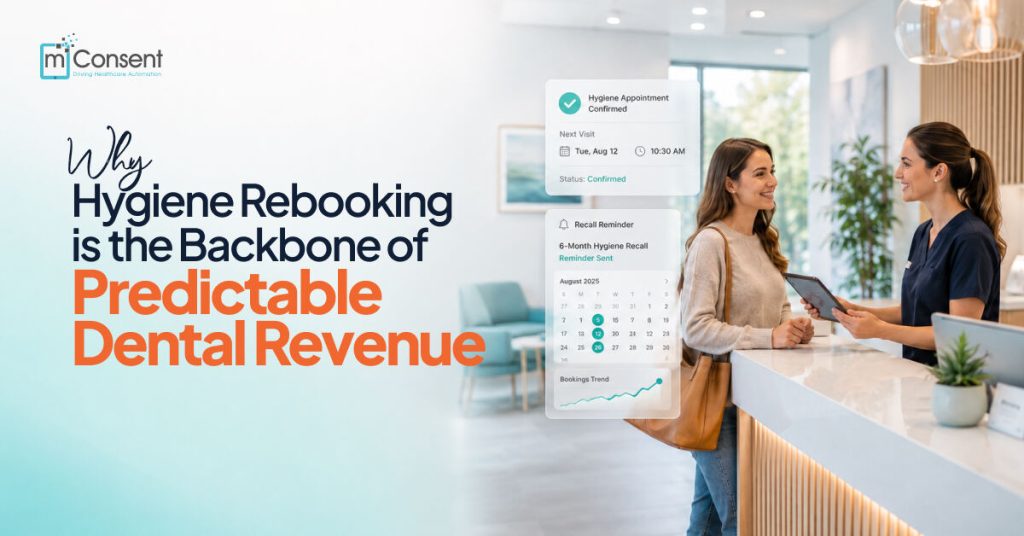




Most dental practices spend significant time and money trying to attract new patients.
They invest in advertising, SEO, social media campaigns, referral programs, and promotional offers all to achieve steady growth. Yet many practices overlook the most valuable revenue opportunity already sitting inside the office every single day.
The hidden truth is this:
Predictable dental revenue doesn’t begin with marketing. It begins with hygiene rebooking.
When hygiene patients don’t schedule their next visit, practices feel the ripple effect in every part of the business:
- Erratic timetables
- Revenue varies month to month
- Reduction in patient retention
- Treatment options vanish
- Empty chairs add to the operational stress
What seems like a simple front-desk task is actually one of the most important financial systems inside a dental practice.
Hygiene rebooking is not just about filling future appointments. It is the engine that drives long-term patient retention, recurring production, operational stability, and sustainable growth.
That’s why modern practices are investing in smarter systems like mConsent, a patient communication and recall platform designed to help practices automate hygiene rebooking, improve patient engagement, and create more predictable dental revenue.
Why Predictable Revenue Matters in Dentistry
Many dental practices have wide variations in production.
The month feels busy and productive. The next one looks a little slow. That uncertainty creates stress up and down the organization.
The Problem with Unpredictable Production
Without regular recurring appointments practices often experience:
- Revenue variations
- Seasonal lulls
- Last-minute schedule openings
- More pressure on collections
- Growth forecasting problems
When revenues are unpredictable, everything else becomes harder:
- Choices of staff are risky
- Expansion plans look shaky
- Cash flow becomes erratic.
- Stress of operations increases
Even very skilled clinical teams can find patient flow tricky to manage when unstable.
Predictability Creates Stability
Predictable revenue changes how a practice operates.
When schedules are consistently filled, practices gain:
- Better financial forecasting
- Improved operational confidence
- Easier hiring and staffing decisions
- Stronger long-term planning
- Greater investment flexibility
And the foundation of that predictability starts with hygiene.
Why Hygiene Is the Financial Engine of a Dental Practice
Hygiene is often underrated as it is regarded as a matter of routine.
But it’s hygiene appointments that bring in the steady stream of patients that keeps the whole practice afloat.
Hygiene Creates Recurring Revenue
Hygiene visits are not a one-time procedure; they are scheduled to occur repeatedly over time, making them among the most reliable sources of recurring production in a dental practice. Patients will often be seen every 3, 6 or 12 months depending on their oral health needs and treatment plans. This repetitive behavior creates a steady stream of dependable production, predictable scheduling, continuous patient engagement and predictable recurring dental revenue.
The practice creates future scheduling stability and reduces the risk of empty-chair time and patient attrition by having patients schedule their next hygiene appointment before leaving the office.
Hygiene Drives Future Treatment Opportunities
Routine hygiene visits also uncover future treatment needs.
During preventive visits, practices identify:
- Cavities
- Periodontal disease
- Restorative needs
- Cosmetic opportunities
- Larger long-term treatment plans
Without a strong dental hygiene recall system, patients drop out before those opportunities ever arise.
Losing hygiene retention doesn’t just mean losing cleanings; it often means losing future restorative production.
Hygiene Strengthens Patient Retention
Patients who consistently return for hygiene visits stay emotionally connected to the practice.
These patients:
- Build stronger trust with providers
- Feel more loyal to the office
- Are less likely to switch dentists
- Refer more friends and family
Practices looking to improve dental patient retention should start by improving hygiene consistency.
Hygiene Stabilizes Schedule Flow
Good hygiene rebookings provide better visibility of future production.
A well-run recall system helps practices:
- Cut empty chair time
- Keep schedules fuller
- Enhance operational planning
- Ease the pressure of last-minute planning
This degree of predictability results in a healthier business all around.
The Hidden Revenue Loss from Poor Hygiene Rebooking
When patients leave without scheduling their next visit, the financial impact is much larger than most practices realize.
When Patients Leave Without Rebooking
Practices lose:
- Future hygiene production
- Treatment opportunities
- Long-term patient value
- Schedule consistency
- Referral potential
And most of these losses happen silently over time.
The Real Financial Impact
One missed hygiene patient is not simply one missed cleaning appointment.
It may also mean:
- Missed restorative treatment
- Reduced treatment acceptance
- Lost referrals
- Lower lifetime patient value
- Permanent patient attrition
When multiplied across hundreds of patients annually, poor hygiene recall creates significant revenue leakage.
Why Patients Fail to Rebook Hygiene Appointments
To fix the problem, practices first need to understand why patients disappear.
Patients Feel Fine
Preventive care lacks urgency.
When patients are not experiencing pain or discomfort, they often delay scheduling.
Scheduling Feels Inconvenient
Busy schedules lead patients to postpone appointments “until later.”
Unfortunately, later often becomes never.
Practices Depend Too Much on Memory
Many patients fully intend to call back later.
But without reminders, they forget.
Follow-Up Systems Are Weak
We have inconsistent communication, so patients slip through the cracks.
Manual recall systems often fail because staff are overwhelmed.
Communication Feels Outdated
Modern patients increasingly prefer:
- Text messaging
- Digital scheduling
- Mobile convenience
Practices that rely solely on phone calls struggle to maintain engagement.
The Psychology Behind Successful Hygiene Rebooking
Patients are far more likely to book an appointment when the experience feels easy and personalized. Rebooking is successful when:
- Scheduling is convenient
- Communication is on time
- Increased value of preventive care
- Follow-up is prompt
- Patients get personalized reminders
Today’s patient engagement is based on convenience and consistency.
How Strong Hygiene Rebooking Creates Predictable Revenue
It Fills Future Schedules Automatically
When patients rebook before leaving the office, future schedules remain consistently filled.
This leads to:
- Fewer empty chairs
- Better production forecasting
- More consistent monthly revenue
It Increases Patient Lifetime Value
Patients who consistently return for hygiene appointments tend to stay with the practice longer.
Over time, these patients:
- Accept more treatment
- Spend more overall
- Refer others more frequently
This dramatically increases long-term profitability.
It Reduces Dependence on New Patient Marketing
It’s expensive to get new patients. It is much more profitable to retain existing patients. Robust hygiene recall systems support practices:
- Reduced marketing expenses
- Enhance repeat production
- Drive retention-led growth
It Improves Treatment Acceptance
Continuous hygiene visits build trust and foster communication. The higher the trust in the practice, the more likely patients are to accept treatment recommendations. It gets better:
- Case acceptance
- Consistency of production
- Long-term growth in revenue
It Creates Better Cash Flow Stability
Consistent hygiene scheduling helps:
- Predictable sets
- Regular monthly output
- Better operational planning
- Greater confidence in finances
And this stability is particularly valuable in periods of slower economic activity.
The Role of Automation in Modern Hygiene Rebooking
Manual recall systems often fail because front-desk teams are already overloaded.
Staff members become busy, follow-ups get delayed, and patients slip away unnoticed.
Automation Solves These Problems and Creates:
- Consistency
- Speed
- Convenience
- Better patient engagement
- Reduced staff burden
Practices that automate hygiene recall are better positioned to build scalable, recurring-revenue systems.
How mConsent Transforms Hygiene Rebooking
mConsent helps practices automate patient communication and strengthen recall performance through modern engagement tools.
Automated Hygiene Recall Reminders
mConsent hygiene reminders automatically send:
- SMS reminders
- Email notifications
- Recall follow-ups
- Appointment confirmations
This helps reduce patient drop-off while improving recall consistency.
Mobile-Friendly Communication
Today’s patients expect fast digital communication.
mConsent supports:
- Text messaging
- Mobile-friendly scheduling
- Convenient patient communication
This leads to:
- Faster responses
- Improved engagement
- Higher rebooking rates
Online Scheduling Convenience
Patients can:
- Book appointments online
- Reschedule easily
- Confirm digitally
Convenience increases appointment completion rates.
Personalized Patient Follow-Ups
mConsent allows practices to create:
- Customized reminders
- Personalized communication journeys
- Patient-specific follow-up workflows
This strengthens long-term patient relationships.
Real-Time Reporting & Recall Tracking
Practices can monitor:
- Hygiene rebooking percentages
- Recall performance
- Unscheduled patients
- Retention trends
This visibility supports smarter operational decisions.
See exactly how mConsent automates your hygiene recall.
The Financial Impact of Improved Hygiene Rebooking
Before Optimization
Many practices struggle with:
- Empty hygiene schedules
- Inconsistent monthly production
- High patient attrition
- Reactive scheduling
After Implementing Automated Recall Systems
Practices often experience:
- Higher recall rates
- Improved schedule consistency
- More recurring dental revenue
- Better patient retention
The result is a more stable and scalable practice.
Key Metrics Every Practice Should Track
Practices that focus on generating predictable dental revenue need consistent tracking of hygiene performance metrics. A key metric is the Hygiene Rebooking Rate, which measures the percentage of patients who schedule their next hygiene appointment before they leave the office.
Practices should also track Recall Effectiveness to see how many overdue patients return for care after follow-up communication. Monitoring the No Show Percentage is just as important; missed hygiene appointments will directly impact production and schedule efficiency.
Another important metric is the Patient Retention Rate . This metric shows patients’ long-term loyalty and how often they return.
To measure Recurring Revenue Stability, practices should measure the consistency of hygiene production contribution to monthly revenue. By tracking these numbers, practices can identify hidden revenue leaks early, increase the productivity of their operations, and build a more stable foundation for future growth.
Common Hygiene Recall Mistakes to Avoid
Many dental practices fail at hygiene recall due to common operational mistakes. Speed and timing are important factors in patient engagement. Response rates can be dramatically reduced if you wait too long to follow up with a patient after they leave the office. “One more challenge is that we are more dependent on phone calls alone, whereas nowadays people are more likely to want to communicate digitally, such as through texting and online booking.
Practices also lose rebooking opportunities when scheduling feels difficult or inconvenient, since convenience is a big driver of patient action. And without automation, follow-ups are inconsistent, patients fall through the cracks and long-term patient drop-off increases.
If your practice wants to automate hygiene recalls, look for systems that simplify communication, eliminate scheduling hassles, and deliver a superior experience for your patients and front-desk teams.
The Future of Predictable Dental Revenue
The future belongs to dental practices that use:
- AI-driven patient engagement
- Automated recall systems
- Intelligent scheduling workflows
- Customized communications
- Comprehensive patient communication platforms
Practices that embrace these technologies early will be in a stronger position to:
- Keep more patients
- Increase recurring revenue
- Enhance operational efficiency
- Curb front-desk overload
- more reliable measuring scale
Conclusion: Hygiene Rebooking Is the Foundation of Long-Term Practice Growth
The most successful dental practices do not leave hygiene scheduling to chance.
They build systems that:
- Keep patients engaged
- Keep schedules full
- Improve retention
- Create predictable revenue
Hygiene rebooking dental practice strategies are no longer optional in modern dentistry; they are foundational to long-term stability.
With mConsent, practices can:
- Automate hygiene recall communication
- Improve dental patient retention
- Increase recurring production
- Reduce schedule gaps
- Create more predictable dental revenue
Because the healthiest dental businesses are built on patients who consistently come back.
Build predictable revenue on patients who keep coming back.
Frequently Asked Questions
1. Why is hygiene in rebooking so important for dental practices?
Hygiene rebooking creates a recurring revenue stream, increases patient retention, and stabilizes future scheduling.
2. What is a good rebooking rate for hygiene?
High-performing practices often target hygiene rebooking rates of 85-95%.
3. How does automation improve hygiene memory?
Automation means staff don’t have to spend extra time and patients get consistent reminders and follow-ups.
4. Patients reschedule appointments?
Typical reasons are forgetfulness, scheduling conflicts, lack of urgency and inconsistent communication.
5. How does mConsent help improve hygiene retention?
With mConsent, practices can automate hygiene recalls, improve patient communication, streamline scheduling and track recall performance more effectively.