



Remember the “Clipboard of Doom”? That chunky, battered clipboard in your waiting room? The one covered in sticky notes and holding a hundred outdated forms? Your patients see it and feel a wave of dread. Your front desk staff see it and think of the 20 minutes of scanning and filing it will create.
We all know that the first touchpoint sets the tone. For too long, it’s set a tone of “hurry up and wait” for patients, and “paperwork pile up” for staff.
But that’s changing. A wave of clever new tech tools is about to make patient intake smoother, faster, and frankly, less annoying for everyone. The goal isn’t just to be high tech for the sake of it. It’s to remove friction so your team can focus on care, and your patients can feel heard from the moment they walk in.
I’ve been looking at what’s coming, and for every brilliant new tool, there’s one non-negotiable foundation: you need a clear, simple, and digital way to get a patient’s informed consent. Without it, even the shiniest tech hits a legal and ethical wall.
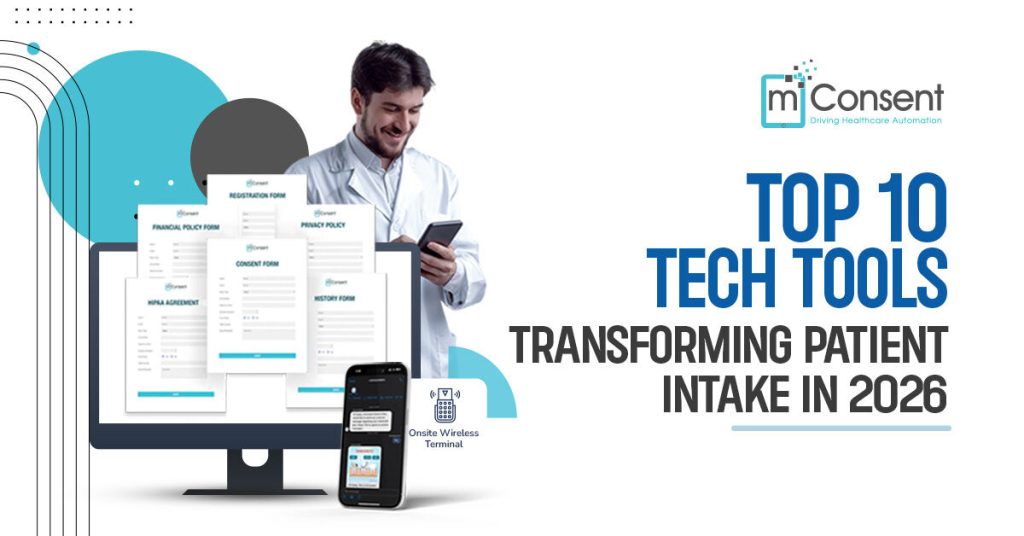
So, here’s my take on the 10 things that will transform your front desk in 2026, and the quiet, crucial role a system like mConsent plays in making it all work.
The Top 10 Intake Game Changers (And Why They Need Digital Consent)
1. The “Do It At Home” Welcome Packet.
Patients now expect to fill out forms online before they come. It’s convenient. But if they’re signing important consents on their phone, those forms need to be crystal clear and legally solid. A system like mConsent turns a confusing PDF into a guided, step by step process they can complete over coffee, so their check in is just a hello.
2. Forms That Think.
Why hand a sinus infection patient a form about dental surgery? Smart, “branching” forms only show patients the consents relevant to them. mConsent makes this happen, so patients aren’t overwhelmed by irrelevant fine print and your team isn’t explaining why a dermatology patient got an ophthalmology form.
3. The 10 Second Check-In (Seriously).
Fingerprint or facial recognition kiosks sound futuristic, but they’re here. They work because they securely pull up a patient’s pre built profile. That profile is only complete when all their consents, for treatment, for privacy, for billing, are already digitally signed and attached, ready to go.
4. No More “Insurance Surprise” Calls.
Real time insurance verification is a lifesaver. But to check benefits, you often need the patient’s permission to share info with the payer. Capturing that “OK to verify” consent digitally with mConsent during intake means your billing team never has to play phone tag to get paid.
5. Your New Front Desk Assistant (That Never Takes a Break).
A friendly chatbot can text patients a reminder to complete their intake. It can even answer simple questions. The best part? It can gently nudge them: “Don’t forget to review and sign your consent forms to speed up your visit!” This gentle push from mConsent means fewer incomplete charts.
6. Getting Records Without the Fax Machine.
Need records from a hospital or another doctor? You need the patient’s specific, signed OK to request them. A digital consent system like mConsent logs this permission securely and instantly, so you can get the information you need without a mountain of release forms to mail.
7. “My Smartwatch Said I Was Stressed During My Cleaning.”
More patients are using health trackers. If you want to use that data for their care, you need a very clear conversation and consent about how you’ll use it. mConsent provides the platform to have that conversation on record, building trust with transparency.
8. The QR Code Savior.
A patient walks in and scans a QR code on the front desk. It opens their intake on their phone. They realize they want the flu shot today after all. With mConsent, they can instantly review and sign that specific consent right on their device, no printing, no hassle.
9. Locking Down the Digital Vault.
All this digital data needs Fort Knox level security. A proper consent platform like mConsent is built with this in mind, using top tier encryption to protect every signature and piece of personal data, giving you and your patients peace of mind.
10. The End of the Silo.
All these tools need to talk to each other. Your scheduling software, your patient records, your billing. mConsent plugs into these systems, so when a consent is signed, it automatically files itself in the right patient chart and updates their status everywhere. No manual uploads. No lost forms.
Conclusion
All this amazing tech shares one simple need: a reliable, secure way to get a patient’s “yes.”
That’s what mConsent does. It’s not the flashy robot in the lobby. It’s the calm, organized system in the background that makes sure every “i” is dotted and every “t” is crossed, legally and ethically, before care begins. It turns the “Clipboard of Doom” into a silent, efficient partner that lets your practice run smoothly and your patients feel cared for from the very first click.
It turns out the future of patient care starts with a better beginning.
FAQ
1. How does mConsent modernize patient intake in 2026?
mConsent digitizes intake forms, consents, and check-in workflows to eliminate paper and reduce wait times.
2. What intake tools does mConsent replace?
mConsent replaces paper forms, manual consent signatures, clipboards, and front-desk data entry.
3. How does mConsent improve intake accuracy?
Smart digital forms ensure required fields are completed and reduce errors caused by handwriting or duplicate data entry.
4. How does mConsent improve the patient experience during intake?
Patients complete forms on their own devices before arrival, making check-in faster and stress-free.
“
“