


Technological developments have transformed the world; with this comes significant difficulty in remaining current. Insurance validation presents difficulties for many dental offices. Maintaining effectiveness in your operations with correct patient data is not simple.
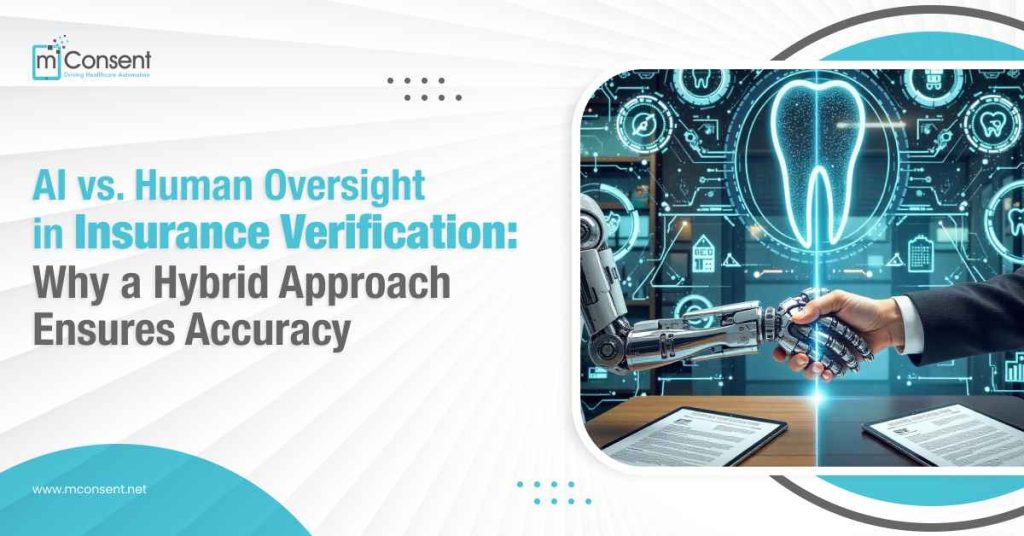
Moreover, since automation occasionally fails to meet expectations, methods should not depend on human labor; the best one is the hybrid approach.
Combining artificial intelligence-powered dental insurance verification systems with human supervision guarantees the accuracy, saves time, and increases patient satisfaction in clinics. Let’s look at the reason for the insurance verification advice of a hybrid model.
The Pain Points of Insurance Verification
Although necessary, insurance verification can be laborious and prone to mistakes in procedures. The main difficulties here highlight the necessity of a creative solution:
1. Time-Consuming and Labor-Intensive Process
Insurance calls are verified in several stages for every patient, including coverage, deductible policies, and report retrieval. This process is often so labor-intensive that practices must commit whole days.
Staff members must resort to making calls or waiting for faxes when reports are not easily accessible, slowing down activities. This too much time devoted to administrative chores lowers general output and compromises patient care.
2. High Staffing Costs
It costs money to have a committed in-house team member verify insurance. For this function, practices sometimes pay $3,000 to $5,000 monthly. This reliance raises overheads and causes operational bottlenecks should the person be absent for illness or time off.
3. Risk of Revenue Loss and Patient Dissatisfaction
Inadequate confirmation or errors can cause revenue loss. Missed components like deductibles or coverage limits could cause practices to not be financially covered in whole. Patients who discover unexpected costs could also get enraged, compromising their confidence in the practice. Establishing good ties with patients requires honest discussion about insurance details.
4. Limited Effectiveness of Basic Verification Software
Although many systems provide incomplete information—covering as little as 50% of the required data—many practices have embraced insurance verification tools.
Many times, staff members must manually augment this information by entering it into portals or making phone calls, undercutting the goal of automation and adding needless effort.
5. Inconsistencies and Errors in Data Entry
Naturally prone to mistakes are manual processes. Workers juggling many information sources may submit data mistakes, causing billing problems. These errors can erode patient confidence, throw off procedures, and cause sluggish payments.
6. Dependency on Unreliable Insurance Portals
Insurance portals often show partial information or suffer from downtime. These disruptions can cause workflow congestion on hectic days, forcing practitioners to devote more time to fixing problems. Depending on untrustworthy portals aggravates inefficiencies.
AI in Insurance Verification: A Game-Changer
AI-powered dental insurance verification software addresses many of these challenges by automating routine tasks and minimizing errors. Here’s how AI transforms the process:
- Real-Time Data Retrieval: Artificial intelligence quickly retrieves complete insurance data, lowering the demand for human intervention.
- Time Efficiency: Automating repetitious chores significantly reduces the verification time.
- Scalability: Practices can control more patient loads without straining their staff.
Accuracy: AI systems are made to find coverage gaps that human validation might miss, guaranteeing fewer billing shocks.
These benefits notwithstanding, artificial intelligence systems are not perfect. They could find it difficult to understand complex situations or fit with antiquated insurance systems. This restriction underlines the need for human supervision.
The Role of Human Oversight
While humans provide critical thinking and adaptation, artificial intelligence delivers speed and accuracy. Staff personnel with training are very important in:
- Validating Complex Cases: People can guarantee accuracy and evaluate conflicting events in particular circumstances.
- Verifying AI Results: Cross-checking and reviewing AI-generated data lets people spot and fix disparities.
- Overcoming Exceptions: When insurance portals suffer faults or downtime, people step in to escalate problems and preserve workflow continuity.
Arguments for a Hybrid Strategy
The hybrid approach—a blend of artificial intelligence and human oversight—is the most reliable method for insurance validation. Here, it addresses significant challenges:
1. Enhanced Efficiency
Artificial intelligence lets staff workers concentrate on difficult challenges by automating labor-intensive jobs. This split of work enables practices to see more patients without sacrificing accuracy or quality.
2. Cost Savings
By automating a significant portion of the process, practices can reduce the requirement for full-time staff members devoted solely to insurance verification. This reallocation of resources improves patient care and helps reduce overhead expenditures.
3. Enhanced Patient Satisfaction
Correct and forthright insurance data reduces billing surprises, builds confidence, and guarantees more seamless financial contacts. Patients value openness and efficiency, increasing their general satisfaction level.
4. Increased security
The hybrid strategy lowers the risks related to malfunctioning insurance systems. Artificial intelligence handles daily duties; humans control exceptions to ensure continuous flow and the least disturbance.
5. Reduction of Errors
While human oversight provides total validation, artificial intelligence lowers data entry errors by automating repeated tasks. This minimizes billing errors and workflow delays.
Choosing the Right Dental Insurance Verification Solution
Here are features to look for:
- Real-Time Data Retrieval: Real-time data retrieval should enable the program to grab thorough insurance data immediately.
- User-Friendly Integration: Easy adoption is ensured by flawless interoperability with practice management systems.
- Dedicated Support Teams: Providers should allow skilled staff members to manage exceptions and handle issues properly via committed support teams.
Choosing a partner with these abilities ensures that methods can ultimately benefit from the hybrid approach.
Conclusion: The Future of Insurance Verification
In the healthcare sector, correct and quick judgments are vital. Dental offices cannot rely just on simple software or hand techniques anymore.
For your practice, operations performed by artificial intelligence under human oversight provide the perfect mix. This offers many advantages, including cost reduction, operation simplification, and general patient satisfaction enhancement.
Using a hybrid strategy is not only strategic but also necessary as the ground of healthcare is constantly shifting. Those who invest in this solution now will be more positioned to meet patient needs and remain competitive. This is the time to use the hybrid approach since your practice and patients expect nothing less.
“
“