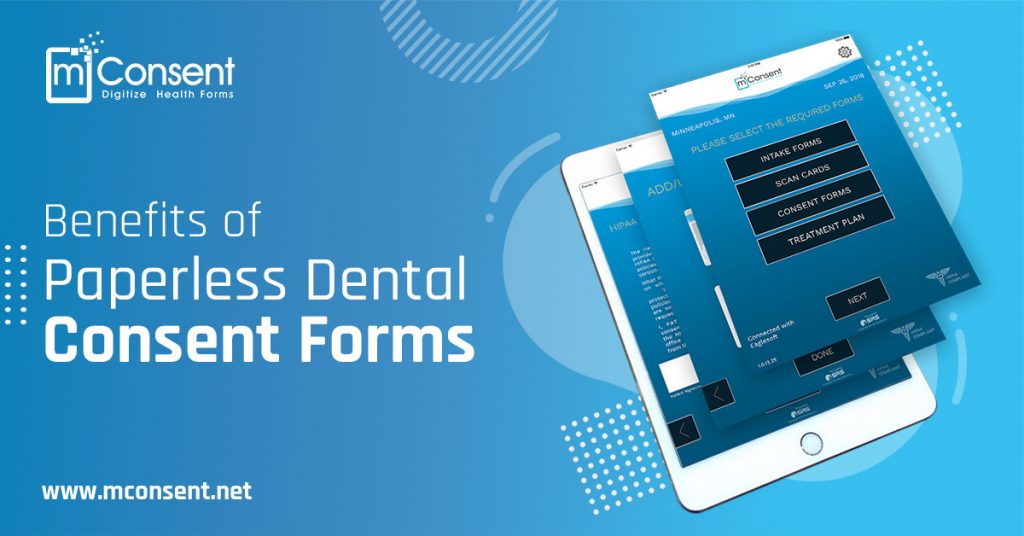




There are countless Benefits of Paperless Dental Consent Forms. As technology advances, dental offices can automate operational tasks and boost efficiency.
With the integration of paperless patient forms, redundant and tedious tasks can be virtually eliminated from office administrators’ already-busy schedules, freeing up time to focus on better one-on-one patient communication and top-quality care.
In recent years, the use of paperless dental consent forms has grown in popularity. This technology enables dental offices to develop, store, and manage digital permission forms, hence removing the need for paper forms. This article will examine the advantages of paperless dental consent forms.
Advantages of Paperless Consent Forms
One of the advantages of paperless consent forms is a significant improvement in time management, and creating happy patients. Dental receptionists are the primary source for setting first impressions. Giving them time to provide excellent patient relations sets the foundation for a positive patient experience.
In dental offices still using paper forms, receptionists spend most of their day performing time-consuming data entry, searching for missing files, and other paper-related tasks, leaving them with little time to provide patients with the attention and communication they need. Embracing paperless dental forms also eliminates the need for manual data entry, reducing entry errors and improving the speed of operations.

Digitizing patient intake forms, allows dental offices to streamline the entire intake process. Patients are given the convenience of being able to complete Paperless Consent Forms from home, or directly on an iPad in the office at the time of their appointment.
Once patients complete the forms and capture their ID, insurance card, medication list, and other documents, they can then electronically sign, and submit the forms. Submitted forms directly integrate with major practice management systems like Dentrix, Open Dental, and Eaglesoft software, making it easy for dentists to review and approve forms.
Read Also: How Often Should the Medical History Form Be Updated in a Dental Office
One of the commonly overlooked Benefits of Paperless Dental Consent Forms is the reduction in long-term expenses and the environmentally friendly nature of going paperless.
dental offices spend thousands of dollars annually on paper-related office supplies. By going paperless, there will be a huge reduction in the use of fax machines, copiers, ink cartridges, paper, and other paper-related items.
The benefits of paperless dental consent forms also include creating happy, productive staff, boosting patient satisfaction, and increasing office revenue. You can’t go wrong with Paperless Consent Forms. It’s a complete win-win situation for all.
Learn more about mConsent’s Paperless Consent Forms, along with other new features including Virtual Dental Consultation, Appointment Reminders, Digital Bill Pay, and Televisits.