
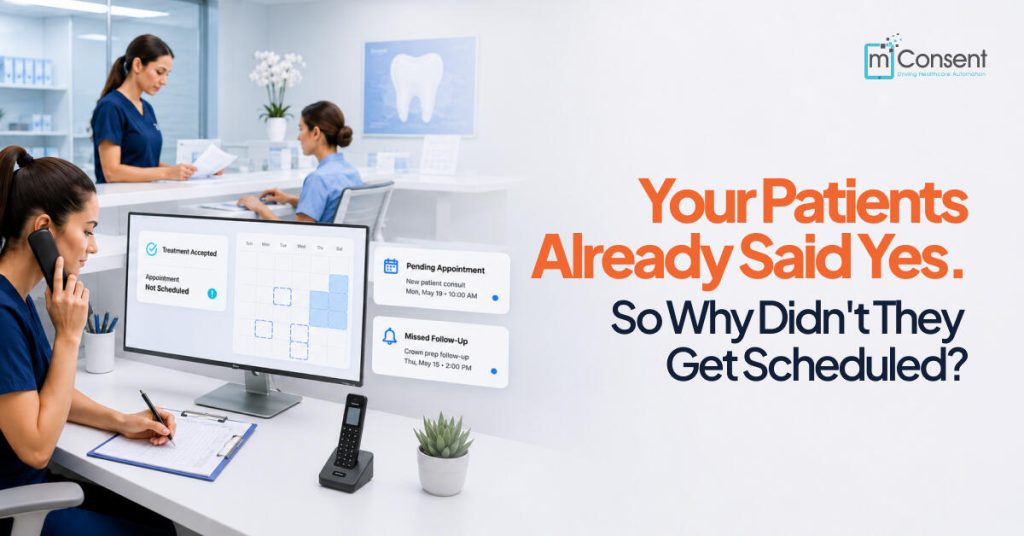




Somewhere in your practice management system right now, there’s a patient who agreed to a crown. Another who said yes to a root canal. They didn’t hesitate. They didn’t need convincing. They were ready.
And then nobody called them back.
That treatment is still sitting in your system, diagnosed, accepted, and quietly aging. Multiply it across your patient base, and most midsize practices are looking at somewhere between $200,000 and $500,000 in unscheduled treatment. Some practices cross seven figures. This isn’t hypothetical revenue. It’s care your providers already diagnosed and your patients already agreed to.
Leak number one is unscheduled treatment.
What Unscheduled Treatment Actually Is
It’s easy to misread this number, so let’s be precise about what it isn’t.
Unscheduled treatment is not a patient who said no. It’s not a case that needs re-selling or re-explaining. The dentist presented the plan, the patient agreed, and then, somewhere between the exam room and the front desk, it fell through the cracks. The front desk was slammed. The patient said they’d call back. Someone on the team said, “No problem, we’ll follow up next week.” The plan went into the system, and nobody touched it again.
That’s the entire problem in one sentence: a yes that nobody followed up on.
Pull the Report. Look at the Number.
Every practice management system like Dentrix, Eaglesoft, Open Dental has this report under office manager reports. Pull the last 12 months. Look at the dollar figure at the bottom.
The reaction is almost always the same: disbelief. Owners assume the number is wrong. It isn’t. That figure represents treatment your providers diagnosed, your patients accepted, and that your practice never got on the schedule for.
Why It Happens: Three Recurring Reasons
Nobody owns the list.
There’s no single person reviewing unscheduled treatment weekly and following up. The front desk is fielding calls. The treatment coordinator is buried in today’s patients. When everyone’s responsible, the honest translation is that no one is.
Patients leave without a booked appointment.
The visit ends, the patient reaches the front desk, and the exchange becomes “we’ll call you later” instead of a scheduled date. That follow-up call often happens three weeks later or never. In the past 60 days, most of those patients are effectively gone.
Follow-up stops at one attempt
When someone does follow up, it’s usually a single call. No answer, no callback attempt, no second touch. Meanwhile, the practice is spending real marketing dollars to bring in brand-new patients, while the people who already said yes get one unreturned phone call and silence.
This Isn’t a People Problem. It’s a Systems Problem
Here’s where most practices get the diagnosis wrong. When an owner sees the unscheduled treatment number for the first time, the instinct is to look for someone to blame: the front desk wasn’t paying attention, the treatment coordinator dropped the ball, the team isn’t “hungry enough” for production.
That instinct misses what’s actually happening.
None of the three reasons above is about effort. They’re about the absence of a system. A front desk person handling four phone lines, two check-ins, and an insurance question can’t also be the person who owns a 12-month follow-up list, not because they’re bad at their job, but because nobody built a job for it. A single phone call isn’t a weak follow-up strategy; it’s the only follow-up strategy that exists, because no sequence was ever defined.
This distinction matters because it changes what you fix. Telling your team to “try harder” on unscheduled treatment produces nothing; they’re already stretched across the tasks in front of them today. What produces results is removing the ambiguity: naming an owner, building a schedule-before-they-leave habit into checkout, and defining a follow-up sequence that runs whether or not anyone remembers to run it manually.
The practices with six-figure unscheduled treatment lists and the practices recovering 15-25% of theirs aren’t staffed differently. They’re not hiring better people. They’ve simply replaced “somebody should call these patients” with a process that doesn’t depend on somebody remembering.
The Part Most Practices Miss: It Compounds
Unscheduled treatment doesn’t sit still; it spreads.
A patient with an unscheduled crown becomes someone who feels awkward about booking their next hygiene visit because they know there’s unfinished business. So they skip the recall too. Now the practice hasn’t just lost the crown; it’s lost the hygiene visit, every future visit that follows, and every exam that might have caught a bigger problem early.
One unscheduled treatment plan can cost a patient for life. Multiply that by fifty, a hundred, two hundred patients, and the unscheduled list stops being a report; it becomes a slow, invisible pipeline of patients disappearing from the practice.
What the Practices That Fix This Actually Do
Nothing complicated. Just three habits, applied without fail:
Someone owns the list. One name, one person, reviewing the unscheduled treatment report every week, not “whenever there’s a slow afternoon.”
The schedule happens before the patient walks out. A booking six weeks out beats a promise to call back every time.
Follow-up is a sequence, not a single attempt. One typical cadence:
- Day 1: Text naming the specific treatment
- Day 3: Email with insurance coverage details
- Day 7: Text with open appointment times
- Day 10: Phone call
- Day 20: Final outreach tied to benefit timing
Run this consistently, and practices recover 15-25% of their unscheduled treatment within 90 days.
A $200,000 unscheduled list is fairly typical. Recover just 20% in 90 days, and that’s $40,000 in production, no new patients, no added marketing spend, no new hires. Just following through with people who already said yes.
Start Today
Pull your unscheduled treatment report. Look at the number. You won’t be able to unsee it.
This is leak number one of five. Next: broken appointments and why an empty chair costs far more than the appointment itself.
Curious what all five leaks add up to in your practice?