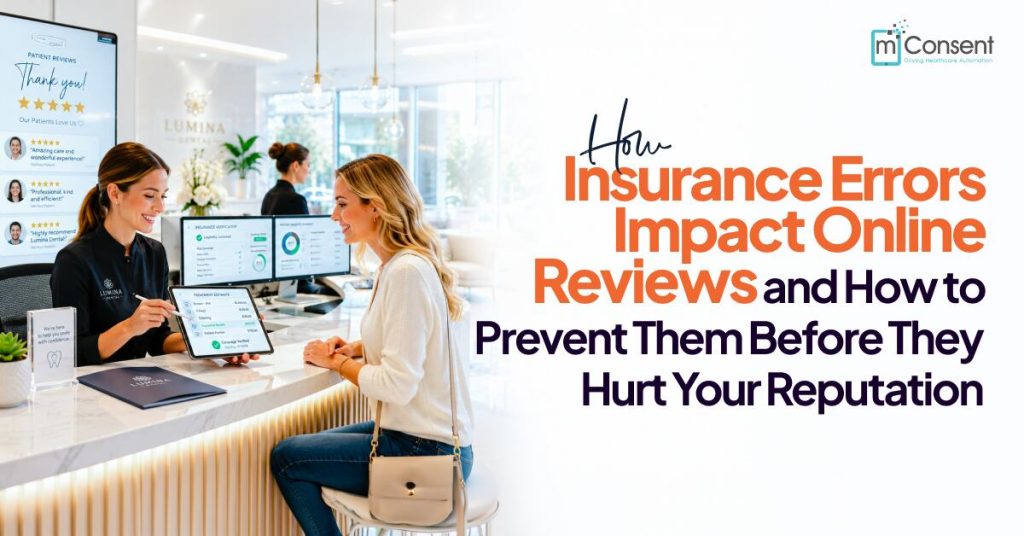




Introduction: The Silent Link Between Insurance Errors and Bad Reviews
A patient walks out of your dental practice smiling. The procedure went well, the staff was friendly, and everything seemed perfect.
Then, two weeks later, a bill arrives.
It’s higher than expected. Much higher.
Confusion sets in. The patient replays the conversation in their head, “Didn’t they say insurance would cover this?” That confusion quickly turns into frustration. And frustration? It often turns into a 1-star review.
This is the silent reality behind many insurance errors dental reviews.
Most dental practices assume negative reviews stem from poor clinical care. But in reality, the majority of negative reviews dental practice owners face are rooted in something far less visible, billing surprises and insurance misunderstandings.
Insurance errors don’t just affect collections. They directly impact your online reputation, patient trust, and long-term growth.
The good news? You can avoid these problems. With the right systems, automation, openness, and AI-driven workflows, practices can stop mistakes from ever getting to the patient.
Why Online Reviews Matter More Than Ever in Dentistry
The Power of Patient Perception
Today’s patients behave like informed consumers. Before choosing a dentist, they research, compare, and evaluate.
More than 90% of patients read online reviews before booking an appointment. That means your reputation is no longer built only inside your office; it’s built online.
Reviews have become the modern version of word-of-mouth marketing. One detailed review can influence dozens of potential patients.
The Revenue Impact of Negative Reviews
A single negative review doesn’t just hurt your rating; it can cost you real revenue.
When patients see repeated dental billing complaints, it raises a red flag. Even if your clinical care is exceptional, concerns about billing transparency can push them toward a competitor.
Each lost patient represents not just one missed visit, but the loss of lifetime value, cleanings, treatments, referrals, and long-term loyalty.
Google Reviews as a Growth Engine
Your visibility is directly affected by online reviews, especially on Google.
When patients search for dentists near them, your practice will show up higher in local SEO rankings if you get more positive reviews and higher ratings.
In short, more reviews mean more visibility, which means more bookings.
The Real Cause Behind Negative Reviews, It’s Not What You Think
Clinical Care vs. Administrative Experience
Patients rarely complain about the quality of treatment itself. Most dentists deliver excellent care.
Instead, complaints typically revolve around:
- Billing confusion
- Insurance coverage misunderstandings
- Unexpected out-of-pocket costs
These are the core drivers behind insurance claim errors dentistry complaints.
The Emotional Trigger
Money is emotional.
When patients receive an unexpected bill, they don’t just feel confused; they feel misled. Even if the mistake wasn’t intentional, the perception is the same: “I wasn’t told the truth.”
That perceived lack of transparency erodes trust instantly.
And once trust is broken, patients don’t stay silent; they share their experience publicly.
Common Insurance Errors That Lead to Bad Reviews
Inaccurate Insurance Verification
Incomplete or wrong verification is one of the most common reasons for mistakes in dental insurance reviews.
- Not checking eligibility correctly
- Waiting periods or exclusions that aren’t there
- Wrong breakdowns of benefits
Even small mistakes can cause big problems with billing.
Incorrect Cost Estimates
When practices underestimate patient responsibility or overpromise insurance coverage, it creates unrealistic expectations.
The result? Shock and frustration when the final bill arrives.
Delayed Claims Processing
Late claim submissions or lack of follow-up can delay payments and increase patient responsibility.
Patients don’t see the backend complexity, they only see the bill.
Lack of Communication
Many dental billing complaints stem from silence.
- No pre-treatment financial discussion
- No explanation of coverage
- No clarity on out-of-pocket costs
Without proactive communication, patients are left guessing.
Coordination of Benefits (COB) Errors
Handling multiple insurance plans incorrectly can result in claim denials or reduced payments.
This often leads to confusing and unexpected balances for patients.
How Insurance Errors Turn Into Negative Reviews
The Patient Journey Breakdown
Here’s what usually happens:
- The patient believes the estimate
- Insurance pays less than what was thought
- The patient gets a bill for the balance
- The patient feels like they were blindsided.
- A bad review is posted
This sequence is the basis for a lot of negative reviews that dental practice owners get.
Real Review Scenarios
You’ve likely seen reviews like:
- “They told me it would be covered… now I owe $300!”
- “Great dentist, but billing is a nightmare.”
Notice the pattern? The issue isn’t clinical care, it’s financial communication.
The Domino Effect
One bad review doesn’t exist in isolation.
It leads to:
- Reduced trust from new patients
- Lower appointment bookings
- Declining revenue
Reputation damage compounds over time.
The Hidden Cost of Insurance Errors
Your reputation will suffer: Bad reviews stay online. They change how people see things long after the problem is fixed.
Patient Churn: Patients who have problems with their bills are much less likely to come back, even if they liked the care.
Staff Burnout: The people who work at the front desk get the most complaints about dental bills. Being around angry patients all the time can make you stressed, tired, and make you leave your job.
Revenue Leakage: Insurance companies make mistakes that cost them money. Late payments and missed chances to get treatment
Why Traditional Processes Fail
Manual Verification is Prone to Mistakes: Workflows that are done by hand are slow and don’t always work. Mistakes by people are unavoidable.
No Real-Time Data: Insurance information changes all the time. Estimates get old quickly without updates in real time.
Disconnected Systems: When your PMS, billing, and communication tools don’t work together, there are gaps in the information.
Human Communication Gaps: Staff members who have been trained well can still forget to explain things or talk to each other in a way that makes sense.
How to Prevent Insurance Errors Actionable Strategies
Automate Insurance Verification
AI-powered dental insurance verification tools make sure that the information is correct and up to date.
Automation makes things more consistent and less likely to go wrong.
mConsent advantage: Checking things in real time cuts down on mistakes before they happen.
Provide Transparent Cost Estimates
Clarity builds trust.
- Share detailed treatment plans
- Break down insurance coverage
- Highlight patient responsibility
When patients understand costs upfront, surprises disappear.
Improve Patient Communication
Strong communication is the foundation of trust.
- Send automated updates
- Use simple, patient-friendly language
- Provide digital access to treatment details
Solutions that automate dental billing communication ensure patients stay informed at every step.
Collect Pre-Treatment Approvals
Documenting financial agreements protects both the practice and the patient.
- Use digital consent forms
- Capture eSignatures
- Confirm patient understanding
Track and Follow Up on Claims
Automation can monitor claims in real time.
- Identify delays early
- Resolve denials faster
- Keep patients informed
Train Front Desk Teams
Standardized communication reduces errors.
- Use consistent scripts
- Train staff to explain benefits clearly
- Focus on transparency
Turning a Potential Negative Review Into a Positive Experience
Proactive Communication: Don’t wait for problems to arise. Inform patients ahead of time.
Fast Issue Resolution: When issues occur, respond quickly and clearly. Speed matters.
Reputation Recovery: Get happy patients to tell others about their experiences. Responding to bad reviews in a professional way shows that you care and are responsible.
How mConsent Protects Your Online Reputation
End-to-End Patient Communication: Automated reminders, billing updates, and follow-ups ensure patients are never left in the dark.
AI-Powered Insurance Workflows: Advanced automation reduces insurance claim errors dentistry practices struggle with.
Digital Treatment Plans & Estimates: Patients can review costs at any time, improving clarity and confidence.
Integrated Payment Solutions (mPayr): A seamless, transparent payment experience reduces friction and confusion.
Review Generation Tools: Happy patients are prompted to leave reviews, helping reduce bad reviews dental practices fear.
The Competitive Advantage of Error-Free Billing
Practices that stop billing mistakes give you a big advantage:
- More positive reviews online
- More patients staying with you
- More trust and credibility
- Growing faster
Good dentistry gets people to come in. They keep coming back because of clear billing.
Conclusion
Insurance errors are more than operational issues, they are reputation risks.
They silently erode trust, trigger negative reviews, and limit growth.
But with the right approach, automation, transparency, and proactive communication, these problems can be eliminated.
When patients understand their costs, they feel confident. When they feel confident, they trust your practice. And when they trust you, they return and recommend you to others.
Don’t let preventable errors cost you patients and reviews. Transform your billing experience with mConsent today.
FAQs
1. How do mistakes by insurance companies affect dental reviews?
Patients get angry and leave bad reviews online when insurance mistakes lead to unexpected costs.
2. What do dental patients complain about the most when it comes to billing?
Unplanned costs that you have to pay out of your own pocket because your insurance estimates are wrong.
3. How can dental offices stop bad reviews about billing?
By making things more clear, automating verification, and making sure that everyone knows what to expect before treatment.
4. Why is it important to check insurance in dentistry?
It makes sure that cost estimates are correct and that claims aren’t denied or bills aren’t unexpected.
5. How does mConsent help lower the number of mistakes made by insurance companies?
mConsent uses automation, real-time verification, and tools for communicating with patients to cut down on mistakes and make things clearer.