




Pricing is where most dental membership plans succeed or fail. Price too high, and patients don’t see the value. Price too low, and you’re subsidizing preventive care out of your own margin. Get it right, and you’ve built a recurring revenue stream that also keeps patients coming back for the visits that lead to bigger treatment.
There’s no single “correct” number. The right price depends on your costs, your local market, and what you’re including. But there is a repeatable way to think through it. Here’s how to land on a price that works for your practice, not just one you copied from a competitor’s website.
Start With What It Actually Costs You
Before you pick a price, add up what the plan actually delivers. Most dental membership plans are built around two annual cleanings and exams, so start there:
- Your cost to deliver a standard cleaning and exam (chair time, hygienist pay, materials)
- Any additional included services (X-rays, fluoride treatments, an emergency visit allowance)
- The discount percentage you’re offering on other treatment
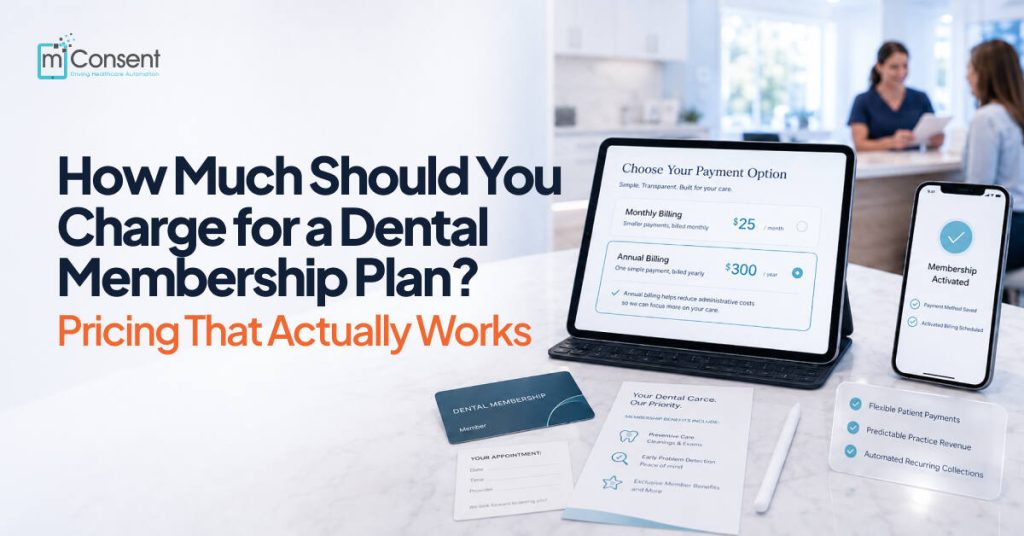
If two cleanings cost you a combined $150 to deliver, your membership price needs to clear that before it contributes anything to overhead or profit. A $25/month plan generates $300/year, comfortably covering that cost with room for the discount you’re extending on other treatment.
This is the mistake dental practices make most often: pricing the membership based on what feels attractive to patients, without first checking that the math holds up on your side.
Consider Tiered Pricing by Age or Need
A flat, one-size-fits-all price is simpler to manage, but it isn’t always the best fit. A common approach is a standard adult rate with a modestly discounted rate for children, since pediatric cleanings typically take less chair time and carry lower material costs.
You can extend this further with tiers for patients who need more frequent care. For example, a periodontal maintenance tier priced higher than the standard adult plan, reflecting the additional cleanings included.
The goal isn’t to build ten tiers. Two or three keeps it simple for your front desk to explain and for patients to understand, while still matching price to the actual cost of care.
Decide Between Monthly and Annual Billing
You’ll generally offer two billing structures:
- Monthly billing spreads the cost into smaller, more approachable payments. It’s usually the easier sell for new patients, especially ones coming from an insurance mindset where a chunky annual bill feels unfamiliar.
- Annual billing collects the full year upfront. It’s a stronger cash flow move for your practice and removes twelve separate transactions worth of card-decline risk, but it’s a bigger ask at the point of enrollment.
Many practices offer both and let the patient choose, sometimes with a small discount for paying annually to nudge people toward it. If you do this, make sure the annual price is high enough that you’re not worse off than if the same patient paid monthly for a full year.
Price In a Down Payment Even a Small One
A down payment, collected at enrollment, does two things: it covers your cost on that first visit if the member gets their cleaning before their next full billing cycle, and it filters out patients who aren’t serious about staying enrolled.
It doesn’t need to be large. Even a modest one-time fee at signup separate from the recurring charge meaningfully reduces the number of people who sign up right before a cleaning and cancel immediately after.
Build In a Reactivation Fee
Plan for what happens when someone cancels and later wants back in. A small reactivation fee protects against patients gaming the system by cancelling after they’ve used their included visits, then re-enrolling later once they need care again. It also simply reflects that there’s administrative work involved in restarting a membership: reactivating billing, confirming payment details, and reopening the record.
Don’t Undercut Your Fee-for-Service Rates
If you’re a fee-for-service practice, be careful that your membership discount doesn’t quietly turn into a discount rate that undercuts what you’d otherwise collect. The discount on additional treatment should be generous enough to feel meaningful to the patient, but not so steep that a member getting a filling costs you more in lost revenue than the membership fee brought in.
If your average member never had additional treatment beyond their included cleanings, would the plan still be profitable on its own? If yes, any treatment discount you extend is a genuine bonus for the patient rather than a loss for the practice.
Test Before You Commit Practice-Wide
Before offering your membership plan to everyone, test it with a small group. Over the first few months, keep an eye on:
- How many members use their included cleanings and exams
- How many payments fail or memberships are canceled
This helps you see if your pricing and plan structure are working before rolling it out to your entire patient base. It’s much easier to make changes when you have 10 members than when you have 200.
Where the Billing Side Comes In
Once you’ve settled on pricing and tiers, the harder part is often just running it, collecting the down payment and first month or year in a single transaction, saving the card on file, billing automatically on schedule, and catching failed payments before they turn into a lapsed membership you didn’t notice.
This is the operational side mConsent’s Membership module is built to handle: setting up your plan structure with monthly or annual billing, bundling a one-time charge (like a same-day cleaning) into the enrollment payment, and flagging failed or overdue payments on a dashboard so your team can follow up before revenue quietly falls through the cracks.
Pricing gets you a plan worth signing up for. The billing infrastructure behind it is what keeps that plan collecting reliably, month after month.
Want to see how mConsent handles the collections side of a membership program? Book a demo and we’ll walk through it.