

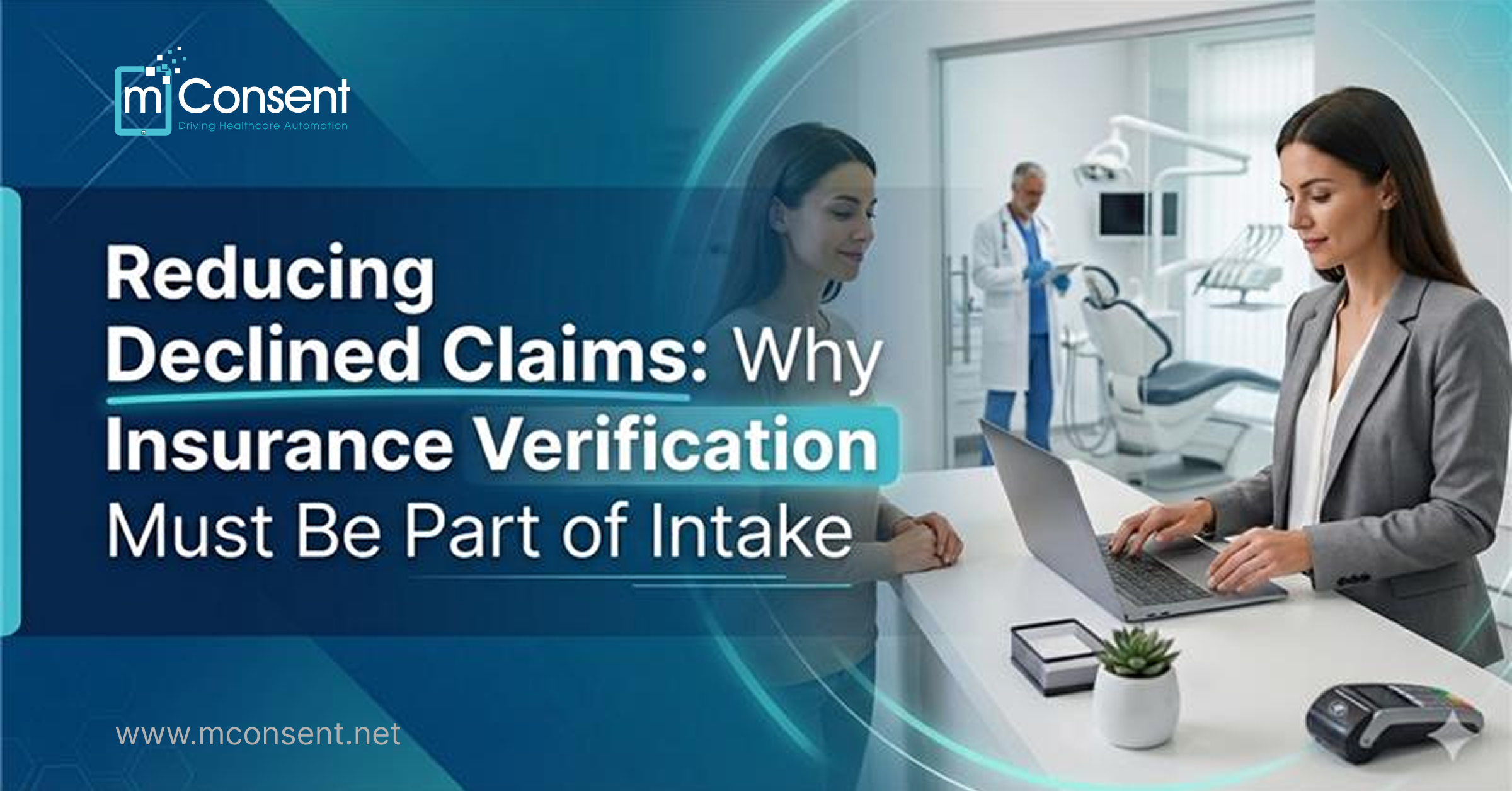
Clean claims are the key to healthy cash flow for dental practices. When claims are approved the first time, practices get paid faster, staff don't have to spend as much time chasing insurance companies, and patients don't get as many surprise bills. On the other hand, when claims are denied, it sets off a chain reaction: payments are late, teams are angry, and extra work is created for administrators.
One of the most common and preventable causes of claims issues begins long before a claim is submitted. It begins at intake.
Insurance verification during patient intake is a critical step that determines whether a claim is complete, accurate, and eligible for reimbursement. When eligibility, coverage limits, and benefit details are verified upfront, practices dramatically reduce the risk of rejections later.
Modern platforms like mConsent make this process seamless by embedding automated insurance verification directly into the digital intake workflow, turning what used to be a manual, error-prone task into a fast, reliable system.
What Is Insurance Verification in Dental Intake?
Before treatment starts, insurance verification checks the patient's insurance information. This includes checking:
- Active eligibility
- Covered procedures and limits on benefits
- Maximums and remaining benefits for the year
- Coinsurance, copays, and deductibles
- Exclusions and waiting periods
When verification is done during intake, practices know exactly what insurance will and won't cover, which makes the clinical and billing process easier.
The Problem With Traditional Verification
In the past, a mix of the following methods has been used to check insurance:
- Calling insurance companies
- Signing in to more than one payer portal
- Putting data into the PMS by hand
This method is slow, unreliable, and highly dependent on staff availability and training. Information can change between verification and treatment, details can be missed, and mistakes often go unnoticed until a claim is turned down.
Automated Verification Changes the Game
Automated insurance verification gets rid of a lot of this trouble. With tools like mConsent's insurance verification, practices can get real-time information on eligibility and benefits from a central dashboard in seconds, without having to make phone calls or enter data by hand.
The Problem: Declined and Denied Claims
Claim denials don’t just delay payments; they create ongoing operational strain.
How Denials Hurt Dental Practices
- Lost or delayed income: It can take weeks or even months to resolve reworked claims.
- More work for the staff: they have to look into, fix, and resubmit claims.
- Lower morale: Front desk and billing teams get frustrated when they keep getting denied.
- Patients are unhappy because they often receive surprise bills or explanations that don't match.
Common Reasons Dental Claims Are Declined
Many claims that were turned down have the same reasons for being turned down:
- Incorrect or out-of-date information about insurance
- Patient is not eligible on the day of service
- Limitations on coverage that weren't checked ahead of time
- Missing or wrong information about benefits
Most of the time, these problems are caused by not fully checking insurance information during the intake process. If intake doesn't get the right insurance information, billing teams have to deal with problems rather than prevent them.
Why Insurance Verification Should Happen During Intake
Embedding insurance verification into intake isn’t just a billing improvement; it’s a workflow upgrade that impacts the entire practice.
Catch Errors Early
Checking insurance before treatment lets practices determine right away whether someone is eligible. Before care is given, the issue can be fixed if a patient's insurance is inactive, limited, or doesn't cover a planned procedure.
This proactive approach reduces denials caused by incorrect information by a lot and saves money on rework later.
Improve Communication With Patients
When insurance details are verified upfront, practices can have clearer financial conversations with patients. Patients know what’s covered, what isn’t, and what their out-of-pocket costs will be.
This transparency builds trust, improves case acceptance, and reduces billing disputes later on.
Reduce Administrative Burden
Checking insurance by hand takes up a lot of time at the front desk. Staff often have to handle phone calls, portals, and paperwork while also checking people in and maintaining patient flow.
Automated verification, which mConsent offers, takes much of this work off staff's hands so they can focus on patient care instead of filling out forms.
How mConsent Integrates Insurance Verification Into Intake
mConsent brings insurance verification directly into the intake experience, making it faster, more accurate, and easier to manage.
Fast Real-Time Verification
mConsent verifies patient insurance eligibility and benefits in seconds, not hours. Real-time access means staff no longer wait on hold with insurance carriers or chase down missing details.
Integrated Into the Intake Workflow
Insurance verification isn’t a separate step; it’s part of the digital intake and check-in process. As patient information is collected, eligibility is verified automatically, eliminating duplicate data entry and disconnected workflows.
Works With Practice Management Systems
mConsent integrates seamlessly with leading PMS platforms like Dentrix, Eaglesoft, and Open Dental, ensuring verified insurance data flows directly into the system of record. This reduces transcription errors and maintains consistent records across platforms.
Accurate Eligibility Reports
Practices get clear summaries of who is eligible and what benefits they are entitled to right away. These reports take the guesswork out of things, help people file claims more clearly, and give teams confidence that they are using correct information.
Real Impact: Fewer Declined Claims
Higher First-Pass Acceptance
Claims submitted with verified eligibility and accurate benefit data are far more likely to be accepted on the first pass. Fewer rejections mean less follow-up and faster reimbursement cycles.
Better Cash Flow and Revenue Stability
Fewer denials mean more cash flow right away. Practices spend less time fixing claims and more time growing and caring for patients.
Increased Patient Satisfaction
Patients appreciate knowing their coverage details upfront. Clear expectations reduce surprise bills, improve trust, and strengthen long-term patient relationships.
Best Practices: Recommendations for Dental Practices
To get the most out of checking insurance, practices should:
- Check each patient's insurance when they come in, not just those who need costly treatments.
- Use automated verification tools to reduce mistakes made by hand.
- Use verification results and the PMS together to clarify claims.
- When there are exceptions, train the staff who take in new patients to check and confirm insurance information.
It should never be optional to verify during intake.
Conclusion
You can avoid paying for claims denials. In many cases, they happen because of avoidable gaps in intake, especially when it comes to insurance checks.
By adding insurance verification to intake, dental offices can do the following:
- Decrease the number of claims that are turned down or denied
- Reduce the time and money spent on administration and operations
- Make it easier for people to talk to you and be happy.
- Increase overall revenue performance
With modern tools like mConsent's insurance verification, it's easier than ever to check eligibility in real time, add data to existing systems, and send cleaner claims from the start.
Learn how mConsent's insurance verification feature can change how your dental office accepts new patients and handles claims.
FAQ
1. Why are dental insurance claims commonly declined?
Dental insurance claims are often declined due to incorrect patient information, inactive coverage, benefit limitations, missing documentation, or failure to verify eligibility before treatment.
2. How does insurance verification reduce claim denials?
Insurance verification confirms eligibility, coverage limits, deductibles, and exclusions before treatment, ensuring claims are submitted accurately and reducing preventable rejections.
3. When should insurance verification be completed?
Insurance verification should be completed during patient intake, ideally before the appointment or at check-in, to catch eligibility issues early.
4. What information is checked during dental insurance verification?
Verification typically includes active coverage status, procedure coverage, annual maximums, remaining benefits, deductibles, copays, waiting periods, and exclusions.
5. What happens if insurance is not verified before treatment?
If insurance isn’t verified, practices risk denied claims, delayed payments, increased administrative work, and patient dissatisfaction due to unexpected bills.
"![HIPAA Release Form – All you Need to Know [Instant Download]](https://mconsent.net/wp-content/uploads/2021/09/HIPAA-Release-Form-All-you-Need-to-Know-Free-Release-Form.jpg)