




Want to be certain that your Medical history forms are following required guidelines? Find out why medical history forms are important, and what essential elements must be included.

Why is a Medical History Form Needed?

Dentists and Healthcare professionals must know the medical background of a patient prior to proceeding with an examination. Without having important knowledge in advance, like pre-existing health conditions or allergies, undesired outcomes may arise later that can lead to legal repercussions.

Let’s discuss the elements of a Medical history form, and what should be included.

See mConsent in Action!

Digitize your medical history forms for seamless patient intake!

Elements of a Medical History Form
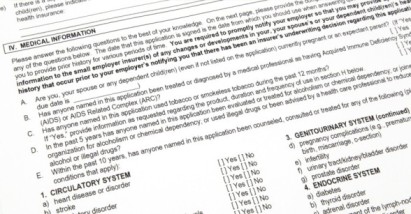
Elements of a Medical History Form

Medical history forms are composed of sections to gather vital patient information. Below are 3 important elements of the medical history form that practices will want to collect for each patient:

  • Patient’s Information 
  • Health & Medical History
  • Family Medical History

Patient’s Information

Patient’s information provides the practice with a profile to ensure general data is on file about the patient. Important information includes:

  • Patient’s Name
  • Guardian’s Name (if applicable)
  • Home address 
  • Birth Date
  • Emergency contact 
  • Phone number 
  • Email address
  • Marital and employment status

Health and Medical History

The health and medical history portion includes details about any previous or existing health or medical issues. The following information is collected, as it may be pertinent for a dentist or healthcare professional to be aware of prior to the exam:

  • Medications the patient is currently taking or has recently stopped
  • Allergies (food, medication, material, etc.)
  • Previous or existing health or medical conditions
  • If currently under care of a physician
  • Previous injuries 
  • Past hospitalizations or operations
  • Substance or tobacco use

Family Medical History

Family Medical History

Family medical history provides important details about family members with conditions, like diabetes or heart disease. Genetics can play a large role in determining a patient’s diagnosis, and helps dentists and healthcare professionals know what conditions to keep an eye out for.

Conclusion:

Medical history forms are an essential part of the intake process in any dental or healthcare practice. Knowing a patient’s pre-existing health and medical conditions, medications, allergies, etc, is important before the exam. Collecting pertinent information on the medical history form is easier when done digitally, syncing into your practice management software (PMS).

Find out how mConsent’s paperless forms simplify the process, improving accuracy, efficiency, and integrating into your PMS.


Important disclosures

The information in this article is for general informational and educational purposes only. Individual results vary by practice. Pricing and program terms are governed by the MSA at activation. mConsent operates as a Business Associate under HIPAA and executes a BAA with client practices.

General information. The information provided in this article is for general informational and educational purposes only and does not constitute legal, financial, compliance, or professional practice advice. mConsent makes no representations or warranties regarding the accuracy, completeness, or suitability of this content for any particular practice or circumstance. Individual results vary based on practice size, payer mix, patient demographics, geographic location, and other factors outside mConsent's control.

Performance benchmarks. Performance benchmarks and industry metrics cited in this article are derived from published third-party research and do not represent guaranteed outcomes for any individual practice. All commercial claims are subject to the terms of your Master Services Agreement (MSA). See mconsent.net/terms-and-conditions/ for details.

HIPAA compliance. mConsent operates as a Business Associate under HIPAA and executes a Business Associate Agreement (BAA) with each customer. Nothing in this article constitutes a representation of HIPAA compliance for any specific workflow, configuration, or use case. Customers are responsible for their own HIPAA compliance program and for ensuring their use of mConsent aligns with applicable regulatory requirements.

TCPA and text messaging. SMS and text-to-pay features referenced in this article require prior express written consent from each patient in compliance with the Telephone Consumer Protection Act (TCPA). Standard message and data rates may apply. Reply STOP to opt out. It is the customer's sole responsibility to obtain and document required consents and to comply with all applicable federal and state telecommunications regulations.

Trademarks. Dentrix® is a registered trademark of Henry Schein One, LLC. Eaglesoft® is a registered trademark of Patterson Companies, Inc. Open Dental® is a registered trademark of Open Dental Software, Inc. These trademark holders are not affiliated with mConsent and do not endorse, sponsor, or certify any mConsent product or service.

Forward-looking statements. This article may contain forward-looking statements about product features described as “designed to” achieve certain outcomes. Actual feature performance, availability, and results may differ. mConsent reserves the right to modify or discontinue features at any time. For current product capabilities, refer to official product documentation at mconsent.net.

Schedule A Demo →