



Somewhere between the exam chair and your bank account, revenue is slipping away.
Not because of theft. Not because of poor dentistry. But because of something far less obvious: dental insurance verification.
When benefits are incomplete, delayed, or rushed, small mistakes can turn into denied claims, unexpected patient bills, and hours of extra work for your front desk.
And the problem goes beyond the time spent checking benefits.
Consider a busy family dental practice in Indiana seeing 30-40 patients a day. Like many high-volume offices, the front desk was managing verification alongside phones, scheduling, check-ins, checkouts, and everything else that comes with keeping a practice running.
When verification isn’t standardized, even a simple patient question can mean stopping to search through charts for coverage details. When information is incomplete or inaccurate, the problem can follow the patient all the way to checkout.
That’s when a paperwork issue becomes a patient experience issue.
If a patient is told they’ll owe one amount and then hears a different number at checkout, they’re unlikely to blame the complexity of their insurance plan. They’re more likely to feel that the dental office gave them the wrong information.
Out-of-network plans add another layer of work. Phone calls, faxes, hold times, transfers, and limited benefit details can turn a single verification into a time-consuming task.
Multiply that across dozens of patients, and the cost becomes hard to ignore.
Insurance verification may look like an administrative task, but when it’s slow, inconsistent, or incomplete, it can quietly affect revenue, staff capacity, and patient trust.
And that raises a more important question: What happens when a practice changes the way it handles verification?
The Problem Nobody Puts on the Schedule
Ask any front desk team what takes up more time than it should, and insurance verification is probably high on the list.
For many dental offices, the process is fairly routine: check each patient’s benefits, save the information to the chart, and add notes about eligibility and coverage.
On paper, it works. But the problems usually show up later.
Without a consistent way to document and present benefit information, the clinical and front desk teams may have to dig through the chart when a patient has a question. And when verification is incomplete or information is entered incorrectly, the consequences can follow the patient all the way to checkout.
That’s where insurance verification becomes more than a paperwork problem.
If a patient is told they’ll owe one amount and then hears a different number at checkout, they’re not thinking about how complicated insurance can be. They’re thinking the dental office gave them the wrong information.
A simple insurance issue can quickly become a trust issue.
Out-of-network plans can make the process even harder. In-network benefits are often easier to verify, while out-of-network verification can involve phone calls, faxes, long hold times, and transfers from one representative to another the familiar “phone game.”
Even after all that time, the information may still be limited. Basic details such as frequencies, waiting periods, or specific coverage information can be difficult to confirm.
And this is where the time cost starts to become significant.
One verification might not seem like a big deal. But when a front desk team is doing this for dozens of patients every day, those calls, follow-ups, and chart updates can add up to hours of staff time each week.
For a busy dental office, that’s time being spent chasing insurance information instead of helping patients, keeping the schedule moving, and handling the work that actually needs someone at the front desk.
Why This Matters More When You’re Short-Staffed
Insurance verification becomes a much bigger problem when the front desk is already short-staffed.
In this case, one team member was going out on leave, the dental office had already experienced some turnover, and the remaining staff were stretched thin. There wasn’t enough time or people to keep up with everything.
That’s when tasks that seem manageable under normal circumstances can quickly become overwhelming. Insurance verification still needs to be done, but now the same people handling phones, check-ins, checkouts, scheduling, and patient questions are also spending hours tracking down benefit details.
And the work doesn’t get any easier because the team is busy.
Someone still has to verify the benefits, document the information, follow up on missing details, and make sure everything is accurate before the patient arrives.
Out-of-network plans can make this even more time-consuming, with phone calls, hold times, transfers, and limited information coming back from the carrier.
For a lean front desk, those hours add up quickly. A staff member who should be helping patients or keeping the day moving can end up spending a large part of the day chasing insurance information.
That creates a difficult trade-off. When the team is stretched too thin, accuracy can suffer, patient communication can become rushed, and the front desk has less time to focus on the people right in front of them.
Outsourcing wasn’t an immediate decision here. The practice was careful about handing any part of the patient experience to someone outside the office.
But when staffing became tight and the workload kept growing, the value of taking insurance verification off the front desk became much clearer.
Sometimes outsourcing isn’t about doing less. It’s about giving your team enough time to do the work that actually needs them.
What Changed When Verification Got Outsourced
Four months after outsourcing insurance verification, the biggest change wasn’t a complete overhaul of the front desk. It was much simpler: the team had better information, faster, and in a format that was easy for anyone to understand.
The benefits were organized in a clear, consistent breakdown instead of scattered notes or hard-to-follow information. Even someone new to the dental industry could look at the verification and quickly find the details they needed.
That matters more than it might seem.
If only your most experienced team member knows how to interpret insurance information, you haven’t really removed the bottleneck. You’ve made one person responsible for it.
Clear, standardized verification changes that. When the information is easy to read and understand, new hires can get up to speed faster, other team members can find answers without asking for help, and the front desk doesn’t have to depend on one person who knows where everything is.
But the biggest benefit may be what happens with the time that gets freed up.
Instead of spending that time on hold with insurance companies or chasing missing benefit details, staff can spend more time with patients. They can explain treatment plans, answer questions, and have a more productive conversation about what the patient’s care will actually cost.
That shift is easy to overlook because it doesn’t show up as a line item on a financial report.
But every hour spent on insurance calls is an hour that could have been spent helping a patient understand their treatment and feel confident moving forward.
Outsourcing verification isn’t just about getting the insurance work off your team’s plate. It’s about giving that time back to the people your team is there to serve.
Verification Is a Trust Problem, Not Just a Billing Problem
Insurance verification doesn’t just affect billing. It can affect how much patients trust your practice.
There’s often a gap between what happens in the treatment room and what happens at the front desk. A dentist explains the recommended treatment and what it involves. Then, at checkout, the patient gets into the details of insurance coverage, out-of-pocket costs, and what they’re expected to pay.
If those numbers or explanations don’t line up, the patient can start to question what they were told.
Accurate, timely insurance verification helps close that gap.
When the front desk has a clear breakdown of what the plan covers, what it doesn’t, and what the patient is expected to pay, they can reinforce the conversation that already happened in the treatment room instead of having to correct or explain conflicting information.
It also gives patients something concrete to take with them. A treatment plan based on verified benefits can show the recommended treatment, the estimated insurance coverage, and the patient’s expected portion, all in one place.
That makes it easier for patients to understand their options, discuss treatment with a spouse or family member, and make a decision without wondering whether the numbers will change later.
And that matters because trust doesn’t end when the treatment is explained. It’s built in the details, including what happens when the patient reaches the front desk.
A clear and consistent financial conversation can leave patients feeling confident about the care they’re receiving and confident enough to recommend the practice to someone they know.
Billing transparency may seem like a small part of the patient experience, but it can have a lasting impact on how patients see your practice.
The Mindset Shift Every Practice Owner Needs
Here’s a shift worth making, whether you outsource insurance verification or keep it in-house: Stop thinking of the front desk as a cost center. Start thinking of it as a revenue protection function.
Every missed verification, delayed claim, incorrect benefit detail, or unexpected patient balance creates an opportunity for revenue to slip through the cracks.
The process matters because what happens between the treatment room and the bank account can directly affect what the practice actually collects.
Timing matters, too.
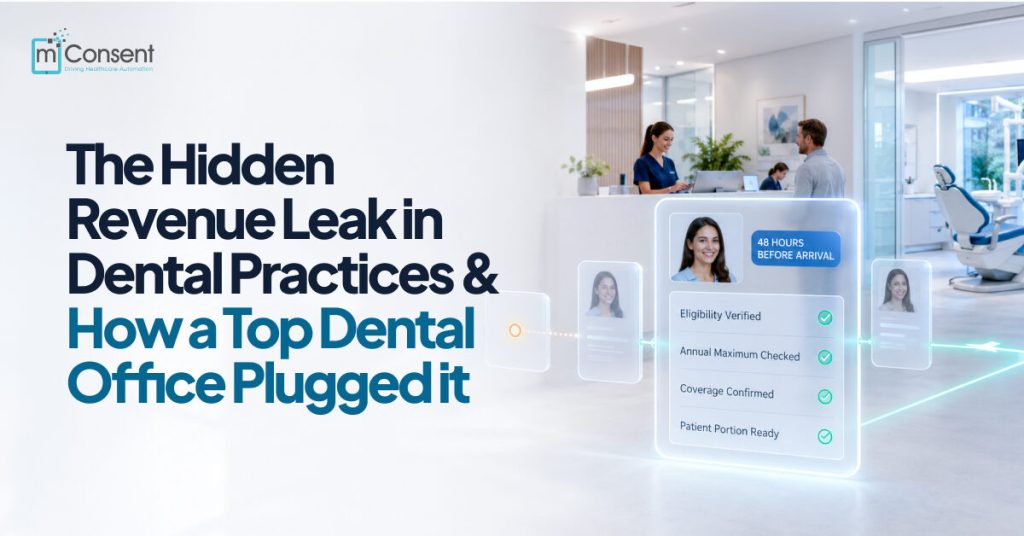
Verifying benefits at least 48 hours before an appointment gives the team time to catch problems before they become same-day surprises. A patient who has already reached their annual maximum, for example, can be identified ahead of time rather than discovering the issue when they arrive for treatment.
That extra time gives the team options. They can contact the patient, explain the situation, discuss payment expectations, or make other arrangements before an empty chair becomes the only outcome.
The goal isn’t a perfect process. No verification system will eliminate every mistake or every exception.
The goal is to catch problems earlier, make information easier to act on, and keep the front desk from spending hours chasing details that could have been handled in advance.
Fewer hours on phone calls and spreadsheets. More time with patients. Fewer surprises. And a tighter connection between the care you provide and the revenue you actually collect.
If Your Front Desk Is Drowning, This Is Your Sign to Switch
If your front desk is already stretched thin, asking the team to work harder isn’t a long-term solution.
When insurance verification is taking hours every week, creating billing surprises, or keeping experienced staff stuck on hold instead of helping patients, the problem isn’t necessarily the people doing the work. It may be the process.
A better system can take the pressure off by making verification more consistent, getting benefit information in front of the team sooner, and giving staff clear information they can actually use.
That’s where mConsent can help. Its Insurance Concierge service handles dental insurance verification for practices across the U.S., providing clear benefit breakdowns before appointments so your team can spend less time chasing insurance details and more time with patients.
If insurance verification is quietly taking time and revenue away from your practice, it’s worth finding out what that’s costing you.
See what a better verification process could look like for your practice. Request a free insurance verification audit and find out how much time your front desk could get back.