



Introduction: The Silent Revenue Leak in Your Front Office
The average dental practice verifies dozens of insurance plans every single day. On the surface, it feels like routine administrative work. In reality, it’s one of the biggest hidden revenue leaks inside your practice.
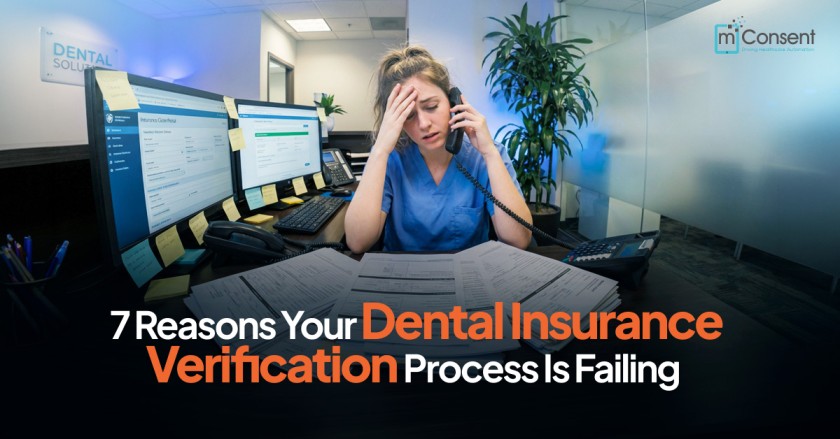
Manual insurance verification is time-consuming, error-prone, and wildly inconsistent. What seems like a simple eligibility check often turns into 20-minute hold times, partial answers from insurance reps, handwritten notes, and “we’ll fix it later” follow-ups.
And when verification fails, the consequences don’t just affect cash flow; they damage patient trust.
Insurance confusion leads to:
- Claim denials
- Underpayments
- Write-offs
- Increased A/R days
- Staff burnout
- Frustrated patients
If your front desk constantly feels behind, overwhelmed, or stuck on the phone, your insurance workflow may be the root of the problem.
Let’s break down what insurance verification should look like in 2026 and the 7 reasons most practices are still getting it wrong.
What Insurance Verification Should Look Like in 2026
Modern Expectations
In 2026, dental practices should expect:
- Real-time eligibility checks
- Accurate breakdown of benefits
- Automated plan interpretation
- Pre-visit cost transparency
- Integration with patient payments
- Digital documentation stored in the patient chart
Insurance verification should be proactive, automated, and predictable.
What’s Actually Happening in Many Practices
Unfortunately, many practices are still stuck in outdated workflows:
- Calling insurance companies manually
- Waiting on hold 20-40 minutes
- Tracking details in spreadsheets
- Writing handwritten notes
- Creating inconsistent benefit breakdowns
- Discovering coverage surprises at check-in
This gap between expectation and reality is where revenue loss happens.
The 7 Reasons Your Insurance Verification Process Is Failing
1. You’re Still Relying on Manual Phone Calls
The Problem
Manual verification depends on:
- Long hold times
- Inconsistent agent responses
- Misheard details
- No written proof
- Staff productivity loss
Every phone call introduces variability. Two different reps can give two different answers for the same plan.
The Hidden Cost
If a front desk team member spends 20 minutes verifying one patient:
- 15 patients per day = 5 hours lost daily
- That’s 25+ hours per week
- Over 100 hours per month for one location
That’s more than half of a full-time position spent just verifying insurance.
The Fix
- Automated real-time eligibility verification
- Digital documentation
- Instant benefit summaries
Automation eliminates hold times and standardizes information.
2. Incomplete Breakdown of Benefits
Eligibility is not the same as a complete benefits breakdown.
Common Mistakes
- Missing frequency limitations
- Overlooking waiting periods
- Not checking annual maximums
- Ignoring downgrade clauses
- Failing to confirm coordination of benefits (COB)
When these details are missed, claims get delayed or denied.
The Result
- Claims delayed for “missing information”
- Unexpected patient balances
- Angry post-treatment phone calls
- Write-offs to protect patient relationships
The Solution
- Standardized verification checklists
- AI-powered benefit parsing
- Automated plan interpretation
Verification must go deeper than “active coverage: yes.”
3. Verification Happens Too Late
Many practices verify at check-in or worse, chairside.
Reactive vs. Proactive Practices
Reactive Practices
- Verify at check-in
- Discover issues during treatment
- Collect less upfront
- Scramble for missing details
Proactive Practices
- Verify 48–72 hours before
- Resolve issues pre-appointment
- Provide accurate cost estimates
- Collect confidently at time of service
Consequences of Late Verification
- Treatment delays
- Reduced collections
- Rescheduling chaos
- Patient confusion
Verification should never be reactive. It should support smooth scheduling and confident treatment acceptance.
4. No System for Tracking Plan Changes
Plans for insurance change all the time, every year, and sometimes even every three months.
What Gets Missed
- Updated deductibles
- Coverage reductions
- New exclusions
- Employer plan switches
- Network participation changes
Without tracking, your team may rely on outdated information.
What Happens Without Tracking
- Claims denied as “out of network”
- Patients blame your practice
- Revenue gaps widen
- Staff morale drops
The Solution
- Automated eligibility rechecks
- Real-time plan updates
- Digital audit trail
To avoid surprises, modern verification systems automatically check plans again before appointments.
5. Lack of Integration Between Verification & Payments
One of the biggest problems in dental offices is that insurance verification and patient payments don’t always occur simultaneously.
Verification says: “Patient owes $320.”
But what happens next?
Front desk: Doesn’t collect at check-in.
Billing: Sends statement 30 days later.
Result:
- Higher A/R
- Collection delays
- Increased write-offs
The Modern Workflow
Verification → Estimate → Text-to-Pay → Pre-service collection
When insurance verification integrates with digital payments, patients receive accurate estimates before their appointment and pay before treatment begins.
That transforms cash flow instantly.
6. No Documentation Backup for Claim Disputes
When a claim is denied, critical questions arise:
- Can your team prove what was verified?
- Is there a time-stamped record?
- Can you reference the exact benefit breakdown?
Without documentation:
- Appeals fail
- Revenue is lost
- Team frustration increases
Insurance companies require documentation. If your team relies on handwritten notes or memory, disputes become uphill battles.
The Solution
- Digital verification records stored in the patient chart
- Downloadable eligibility reports
- Claim audit trails
Verification should create legal-grade documentation automatically.
7. Staff Burnout & Inconsistent Training
High turnover leads to inconsistent processes.
Every team member may:
- Verify differently
- Document differently
- Interpret plans differently
What Happens
- Errors multiply
- Patients receive conflicting estimates
- Confidence drops
- Stress increases
mConsent Insurance verification becomes dependent on individual knowledge rather than on systems.
The Modern Solution
- Automated verification workflows
- Standardized digital forms
- Reduced reliance on manual expertise
Automation protects your process from human inconsistency.
The Financial Impact of Failing Insurance Verification
Insurance verification failures don’t just create inconvenience, they create measurable financial instability.
Metrics to Track
- Days in A/R
- Claim denial rate
- Write-off percentage
- Pre-service collection rate
- Staff hours spent verifying insurance
Real Cost Example
If just 10% of claims are delayed:
- $50,000 monthly production
- $5,000 delayed
- $60,000 per year in unstable revenue
That doesn’t include lost staff time or patient dissatisfaction.
How AI & Automation Are Transforming Insurance Verification in 2026
Modern dental practices are adopting AI-powered systems to eliminate manual workflows.
Modern Capabilities
- Real-time eligibility API integrations
- AI interpretation of complex policies
- Automated breakdown of benefits
- Pre-filled treatment estimates
- Digital patient communication
The Benefits
- Faster check-ins
- Higher upfront collections
- Fewer denied claims
- Reduced A/R
- Less staff stress
Automation doesn’t replace your team; it empowers them.
How mConsent Fixes Insurance Verification Failures
mConsent Automated Insurance Verification
- Real-time eligibility checks
- Accurate benefit breakdowns
- Digital documentation stored automatically
Smart Treatment Estimates
- Transparent patient cost calculations
- Automated estimate sharing via text or email
- Improved case acceptance
Integrated Payment Collection
- Text-to-pay
- Mobile payment links
- Pre-service collections
Digital Documentation
- Time-stamped verification logs
- Stored eligibility records
- Easy support for claim disputes
Reduced Front Desk Workload
- Fewer phone calls
- Standardized ways of working
- Automation is taking the place of entering data over and over again
Your team can focus on the patient experience instead of chasing insurance companies.
Signs Your Practice Needs an Insurance Workflow Upgrade
- Staff spending 3+ hours per day on verification
- Frequent claim delays
- Patient complaints about unexpected balances
- High A/R
- Revenue unpredictability
- Burnout at the front desk
If even two of these sound familiar, your system needs modernization.
What a Streamlined Insurance Workflow Looks Like
- Patient schedules appointment
- Insurance automatically verified
- Benefits breakdown generated
- Treatment estimate created
- Estimate shared digitally
- Text-to-pay sent
- Payment collected pre-service
- Claim submitted with clean documentation
No surprises. No scrambling. No chaos.
Just predictable revenue and confident communication.
Conclusion
If your dental insurance verification process feels:
- Slow
- Inconsistent
- Stressful
- Revenue-draining
It’s not a staffing issue.
It’s a systems issue.
Modern dental practices are replacing manual verification with automation, improving cash flow, reducing denials, increasing upfront collections, and empowering front desk teams.
The practices winning in 2026 aren’t hiring more staff to fix insurance problems.
They’re upgrading their systems.
FAQ
1: Why is it so hard to check dental insurance?
Every plan has different rules about deductibles, waiting periods, frequency limits, exclusions, and coordination. Errors and inconsistencies are more likely when processes are done by hand.
2: How far in advance should you check your insurance?
48 to 72 hours before the appointment would be best. This gives you time to fix any mistakes and give accurate cost estimates.
3: Does automation really help lower the number of claims that are denied?
Yes. Accurate eligibility checks and written benefit breakdowns reduce incomplete claims and errors caused by missing information.
4: Can checking insurance help with collections?
Yes, for sure. When patients know how much they’ll have to pay out of pocket in advance, collections before the service go up significantly.
5: How does automation help keep workers from getting burned out?
It eliminates long phone calls, repetitive data entry, and workflows that aren’t always the same, so staff can focus on providing patients with a great experience.