



The Most Expensive Empty Chair Is the One You Could Have Prevented
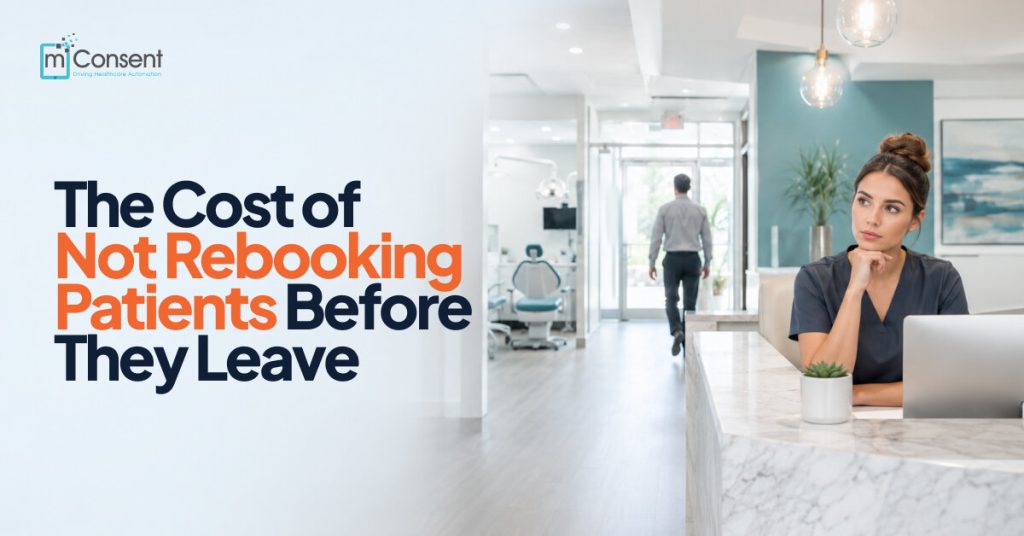
A patient finishes a hygiene visit. They feel great. They thank the team. They walk toward the front desk.
And then they hear the seven words that quietly drain dental practices every single day:
“Just call us when you’re ready.”
What happens next is almost always the same. Life gets busy. The patient forgets. Six months becomes eighteen. The recall list grows. The hygiene schedule gets thinner. And eventually, that patient, the one who was sitting in your chair just weeks ago, disappears completely.
This is the most overlooked revenue leak in dentistry. It doesn’t show up on a P&L as a line item. There’s no alert when it happens. But over the course of a year, it can quietly cost a practice six figures in lost hygiene production, missed treatment, and replacement marketing spend.
The best-performing dental practices don’t hope patients come back. They secure the next appointment before the patient walks out the door, and they back it up with systems that follow through when life gets in the way.
This is exactly where mConsent comes in. As a front-desk revenue platform built specifically for dental practices, mConsent helps offices close the rebooking leak with automated recall workflows, two-way patient communication, and scheduling tools designed for how dentistry actually runs.
In this guide, we’ll break down the real cost of skipping pre-checkout rebooking, why it happens, and the exact systems and habits the top practices use to fix it.
Want to see how much rebooking leakage is costing your practice right now?
Why Rebooking Is the Backbone of Predictable Dental Revenue
Rebooking sounds like a scheduling task. It isn’t. It’s a retention task and retention is what makes dental revenue predictable.
Here’s why rebooking matters far more than most practices realize:
- Recurring revenue depends on it. Future appointments are the only reason hygiene production stays stable month over month. A schedule with gaps in week three wasn’t built in week one.
- Hygiene retention drives lifetime value. With an average new-patient lifetime value of around $900, every patient who quietly stops coming back doesn’t cost you one visit; they cost you years of compounding revenue.
- Preventive care is the gateway to treatment. Most restorative opportunities are discovered during routine hygiene visits. No hygiene visit, no diagnosis, no treatment plan.
- It reduces your dependence on marketing. Replacing a lost patient costs 5-7x as much as retaining one. Practices with weak rebooking workflows end up spending more on Google Ads to fill chairs that should already be full.
- It protects against attrition. Patients who leave without a confirmed next appointment are statistically far more likely to drift to a competing practice within 12 months.
Every patient who leaves without rebooking creates uncertainty in your future revenue. Multiply that uncertainty by 30 patients a day, and you start to see the shape of the leak.
Why Dental Practices Fail to Rebook Patients Consistently
If rebooking is so obviously valuable, why do so many practices fall short of it? After working with thousands of practices, we consistently see the same six reasons for this:
- The front desk is overloaded. Between checking in new patients, answering phones, verifying insurance, and processing payments, rebooking falls to the bottom of the priority list.
- Teams feel uncomfortable “pushing” appointments. Some staff worry they’ll come across as salesy. So they soft-pedal: “Just give us a call when you’re ready.”
- The process is inconsistent. Some patients are asked, others aren’t. Some are rebooked, some aren’t. There’s no system, only personality-dependent execution.
- Practices assume patients will call back. They won’t. The data is clear: most don’t.
- Communication systems are outdated. Practices that still rely on postcards or one-way text blasts can’t compete with the way patients actually communicate in 2026.
- There’s no structured recall workflow. When rebooking fails at checkout, there’s nothing automated catching the patient on the back end.
Notice that none of these is individual failures. They’re system failures. And systems are something you can fix.
The Hidden Financial Cost of Not Rebooking Patients
Let’s get specific. What does this leak actually cost?
Lost Hygiene Revenue
Every empty hygiene slot is a direct loss of production. If a hygienist sees eight patients a day at an average production of $200 per visit, a single unfilled slot per day amounts to roughly $48,000 per hygienist per year in lost recurring revenue.
Reduced Patient Retention
The longer a patient goes without a confirmed next visit, the lower the probability they will ever return. Each unrebooked patient quietly chips away at your active patient base.
More Last-Minute Schedule Gaps
When rebooking is reactive, schedules get reactive too. Suddenly, your team is scrambling to fill openings 24 hours out, which means discounts, double-booking, or empty chairs.
Missed Treatment Opportunities
A patient who never comes back for their cleaning never gets diagnosed with the crown, the implant consult, or the perio treatment they need. The hygiene visit is the discovery engine for your restorative production.
Higher Marketing Costs
Practices with poor rebooking systems spend disproportionately on new-patient acquisition just to stay flat. That’s not growth; that’s running on a treadmill.
Increased Administrative Work
When patients aren’t rebooked at checkout, someone has to chase them later. Manual recall lists. Outbound calls. Voicemails. It’s expensive, slow, and demoralizing for front-desk teams.
Revenue Predictability Disappears
This is the one that quietly hurts the most. You can’t forecast, hire, or invest with confidence when 30% of your future schedule is a question mark.
Every unrebooked patient creates both an immediate financial loss and a long-term compounding one. mConsent helps practices recover this exact leak.
What Happens Psychologically When Patients Leave Without Rebooking
Understanding the patient side is just as important as understanding the practice side. Here’s what actually happens in a patient’s head between checkout and “we never saw them again”:
- Intention without action. Most patients fully intend to call back. But intention isn’t a system. Without a calendar invite or a confirmed appointment, that intention evaporates within 72 hours.
- Life takes over. Work deadlines. Kids’ schedules. Travel. Renovations. A dental appointment that wasn’t put on the calendar gets quietly de-prioritized into oblivion.
- Urgency fades. Right after a clean appointment, dental health feels handled. Six months later, the cleaning feels optional. Twelve months later, it feels uncomfortable.
- Anxiety builds with delay. The longer a patient waits, the more they suspect something might be wrong, which makes them less likely to come in, not more.
- Convenience wins. Eventually, a competitor with online scheduling, a location closer to them, or a friendlier reminder system picks them up.
None of this is about the patient not caring about their oral health. It’s about the absence of a system that turns intention into a confirmed appointment.
Why Rebooking Before Checkout Works So Effectively
Pre-checkout rebooking is the single highest-leverage moment in the entire patient lifecycle. Here’s why:
- The patient is already physically present. No phone tag. No “let me check my calendar” delay.
- The visit reinforces urgency. They just spent 45 minutes thinking about their teeth.
- Decisions feel low-friction in the moment. Scheduling six months out is almost frictionless when you’re standing at the desk. It’s a chore on a Tuesday night three weeks from now.
- Commitment changes future behavior. Once an appointment is on the calendar, the patient is psychologically anchored to it.
- It creates continuity. Pre-booking signals to the patient: “We’re expecting you. You’re part of this practice.”
Miss this window, and you’re not just rescheduling later; you’re working uphill against time, distraction, and inertia.
The Biggest Mistakes Practices Make During Checkout
Even well-intentioned teams sabotage their own rebooking rates with habits like these:
- Defaulting to “Just call us when you’re ready”
- Treating rebooking as optional rather than standard
- Rushing checkout when the lobby gets busy
- Offering only narrow scheduling windows (“we’re booked for the next two months”)
- Skipping the why makes patients need to understand the value of their next visit
- Relying on follow-up systems that ping the patient once and disappear
- Sending generic reminders that get lost in promotional inbox folders
Most of these aren’t training problems. They’re workflow problems, and they can be solved with the right system.
How to Create a Strong Rebooking Culture in Your Practice
Building a rebooking culture isn’t about pressuring patients. It’s about making the next appointment the default outcome of every visit. Here’s how the top practices do it:
- Make rebooking a standard, non-negotiable step. Every patient gets asked. No exceptions. No, “they seemed busy.”
- Train your front desk with confidence-building scripts. Replace “Would you like to schedule your next cleaning?” with “Dr Smith recommended we see you again in six months. Let’s get you on the schedule before you leave.”
- Simplify the conversation. Two options are better than ten. “Morning or afternoon? Tuesday or Thursday?”
- Educate patients on the value of preventive care. When patients understand why every six months matters, they stop treating cleanings as optional.
- Track rebooking percentage as a KPI. What gets measured gets improved. Top practices target 90%+ pre-checkout rebooking for hygiene.
- Back the conversation with automated systems. Even your best team will miss patients on their busiest day. Automation is the safety net.
The Role of Automation in Improving Rebooking Rates
Even the best-trained team can’t manually catch every patient, every day, with consistent communication. That’s not a people problem, it’s a bandwidth problem.
This is where automation transforms outcomes:
- Consistency at scale. Every patient gets the same recall communication, regardless of which day they came in or who was at the desk.
- Front-desk relief. Your team stops being a manual reminder system and starts being a relationship layer.
- Patient-side convenience. Patients can confirm, reschedule, or rebook from their phone in under 30 seconds, without playing phone tag.
- No patient falls through the cracks. Recall lists run themselves. Lapsed patients get re-engaged automatically.
- Schedule density improves. Gaps get filled by automated waitlist offers before they become empty chairs.
The goal isn’t to replace the human conversation at checkout. It’s to make sure that when checkout doesn’t capture the rebook, the system does.
How mConsent Helps Practices Improve Rebooking Rates
mConsent is built around a single idea: the front desk is where most dental revenue is won or lost. The rebooking leak is one of the five revenue leaks we help practices close.
Here’s how mConsent supports rebooking, end-to-end:
- Automated recall workflows that re-engage patients at their scheduled appointments, without your team manually chasing lists.
- Two-way patient communication so patients can text back, confirm, or reschedule in real time.
- Smart appointment reminders that adapt to patient behavior, no more single-shot reminders lost in spam folders.
- Mobile-friendly scheduling links that turn a reminder into a confirmed appointment in two taps.
- Workflow automation that flags patients who left without rebooking and routes them into the right follow-up sequence.
- Personalized engagement based on visit history, treatment status, and patient preferences.
- Centralized communication so SMS, email, and recall live in one inbox, not five tabs.
- HIPAA-compliant messaging with BAA included, deeply integrated with Dentrix, Eaglesoft, Open Dental, and Dolphin.
mConsent doesn’t replace your front desk. It gives them the system they’ve always needed to stop revenue leakage at checkout.
See mConsent’s recall and rebooking workflow in action.
[ Book your demo ]
The Connection Between Rebooking and Patient Retention
Strong rebooking systems are really retention systems wearing a different name. Consider what happens when patients rebook consistently:
- They stay with your practice for years, not visits.
- They become more loyal because every visit reinforces the relationship.
- They build trust through consistent communication.
- They develop habits and dental habits are sticky.
- They stop drifting toward competitors with better front-desk systems.
The reverse is also true. Every unrebooked patient is a retention risk in disguise.
How Rebooking Improves Overall Practice Efficiency
Beyond revenue, strong rebooking workflows quietly transform how your entire practice runs:
- Predictable schedules that let you staff, forecast, and hire with confidence.
- Fewer last-minute holes in the hygiene column.
- Less manual recall work for the front desk.
- Faster checkout flow because the system supports the team, not the other way around.
- More stable cash flow, even in slower seasons.
- Lower team stress by eliminating Monday morning scrambling to fill Tuesday.
This is what operational health looks like, and it starts at the rebooking step.
Before vs. After Optimizing Your Rebooking Workflow
| Before Modern Rebooking Systems | After mConsent |
| Patients disappear after visits | Patients leave with confirmed next appointments |
| Hygiene schedules get patchy | Hygiene stays consistently booked |
| Recall is manual and inconsistent | Recall runs automatically |
| Team chases overdue patients | System re-engages them in the background |
| Empty chair gaps increase | Gaps get filled before they happen |
| Revenue is unpredictable | Revenue becomes recurring and forecastable |
10 Proven Strategies to Improve Rebooking Before Checkout
- Ask every single patient before they leave. No exceptions.
- Make rebooking part of the checkout SOP. Same step every time.
- Offer flexible appointment options. Early mornings, evenings, Saturdays if you have them.
- Simplify the conversation. Two choices, not twenty.
- Educate patients on the value of preventive care in plain language.
- Use automated recall systems as the safety net.
- Maintain ongoing communication between visits, not silence.
- Personalize engagement based on visit type and history.
- Track rebooking metrics weekly. Make it visible.
- Automate the administrative work so your team can focus on patients.
The Future of Dental Recall and Rebooking Systems
Recall is evolving. The practices that will dominate the next five years are already moving toward:
- AI-powered patient recall that predicts who needs outreach and when
- Predictive scheduling automation that fills gaps before they appear
- Intelligent engagement that adapts messaging to patient behavior
- Fully digital recall workflows with zero manual chasing
- Personalized retention systems that treat each patient as an individual
mConsent is built for this future, combining smart automation with deep expertise in dental workflows. Not generic SaaS. Dental-specific systems are built around how the front desk actually works.
Conclusion
The patients who walk out of your practice without a confirmed next appointment are not just unscheduled. They’re statistically less likely to ever come back. And every patient who doesn’t come back is recurring revenue, treatment opportunity, and lifetime value walking out the door.
The shift is straightforward: from reactive recall chasing to proactive retention systems.
With smarter workflows and automated communication tools from mConsent, dental practices can dramatically improve rebooking rates, strengthen patient retention, and build predictable, recurring revenue that makes growth feel inevitable rather than stressful.
Ready to Close Your Rebooking Leak?
You don’t have to guess how much rebooking leakage is costing your practice. In a free 15-minute demo, our team will walk you through:
- A live look at mConsent’s recall and rebooking workflow
- How to map your practice’s specific revenue leaks
- What your team’s day looks like after automation handles the chase
[ Book Your Free Demo ]
No long-term contracts. No setup pressure. Just a clear picture of what stopping the leak is worth to your practice.
Frequently Asked Questions
1. Why is rebooking patients before checkout important?
Pre-checkout rebooking is the single highest-leverage moment for patient retention. Patients are already engaged, the visit’s value is fresh, and scheduling friction is at its lowest. Practices with strong pre-checkout rebooking workflows see significantly better hygiene retention, more stable schedules, and more predictable recurring revenue.
2. What happens when patients leave without scheduling their next visit?
Most patients fully intend to call back, but life gets in the way. Within weeks, the intention fades. Within months, urgency drops. Many never return, drifting toward competing practices with better follow-up systems.
3. How can dental practices improve their rebooking rates?
By making rebooking a standard step in checkout, simplifying the conversation, training the front desk with confident scripts, tracking rebooking as a KPI, and using automation as a safety net to catch any patient who slips through.
4. How does mConsent help improve rebooking and recall workflows?
mConsent automates recall, sends smart reminders, enables two-way patient communication, and integrates directly with your PMS (Dentrix, Eaglesoft, Open Dental, Dolphin). The result: fewer empty chairs, less manual chasing, and stronger recurring revenue.
5. Why are automated recall systems important for patient retention?
Even your best team will miss patients on busy days. Automated recall ensures that every patient stays consistently connected to the practice, on schedule, without burning front-desk time. It turns a manual chore into a background system.
6. Is mConsent HIPAA-compliant?
Yes. mConsent is fully HIPAA-compliant with a BAA included, and is trusted by 5,000+ dental practices across the U.S.