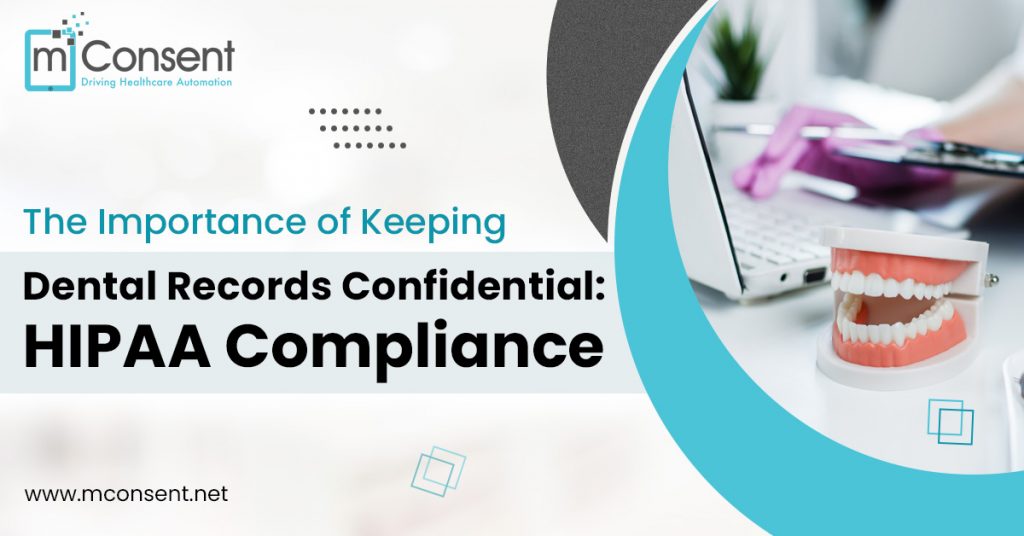



In the current era of digital technology, safeguarding patient confidentiality and privacy holds paramount significance for dental practices. HIPAA establishes the guidelines for protecting confidential patient data, such as dental records. This blog post delves into the critical nature of maintaining the confidentiality of dental records and the necessity of adhering to HIPAA regulations.
Patient privacy is a fundamental aspect of healthcare, and dental practices have a responsibility to protect the confidentiality of dental records. These records contain personal details, medical history, treatment plans, and financial information, all of which must remain secure and inaccessible to unauthorized individuals.
By upholding the confidentiality of dental records, patients can trust that their sensitive information will not be improperly disclosed or used.
HIPAA compliance is essential for dental practices to adhere to in order to maintain the privacy and security of patient information. HIPAA provides a comprehensive framework that outlines administrative, physical, and technical safeguards that dental practices must implement to protect patient privacy.
Compliance with HIPAA regulations not only ensures the confidentiality of dental records but also helps dental practices avoid legal repercussions, financial penalties, and reputational damage. By prioritizing HIPAA compliance, dental practices can demonstrate their commitment to patient privacy and build trust with their patients.
 HIPAA establishes a set of regulations and guidelines that healthcare providers, including dental practices, must follow to safeguard patient information. It requires implementing administrative, physical, and technical safeguards to protect patient privacy. Adhering to HIPAA compliance not only protects patient privacy but also helps dental practices avoid legal consequences, reputational damage, and financial penalties.
Compliance with HIPAA Health Insurance Portability and Accountability Act regulations is of utmost importance for dental practices to ensure the privacy and security of patient information. HIPAA establishes standards for the protection of sensitive healthcare data, including dental records, and mandates administrative, physical, and technical standards to safeguard patient privacy.
By adhering to HIPAA regulations, dental practices demonstrate their commitment to maintaining the confidentiality of patient information, mitigating the risk of data breaches, and avoiding legal and financial consequences. Compliance with HIPAA regulations not only protects patients’ privacy rights but also instills confidence in the dental practice, fostering trust and enhancing the overall patient experience.
HIPAA establishes a set of regulations and guidelines that healthcare providers, including dental practices, must follow to safeguard patient information. It requires implementing administrative, physical, and technical safeguards to protect patient privacy. Adhering to HIPAA compliance not only protects patient privacy but also helps dental practices avoid legal consequences, reputational damage, and financial penalties.
Compliance with HIPAA Health Insurance Portability and Accountability Act regulations is of utmost importance for dental practices to ensure the privacy and security of patient information. HIPAA establishes standards for the protection of sensitive healthcare data, including dental records, and mandates administrative, physical, and technical standards to safeguard patient privacy.
By adhering to HIPAA regulations, dental practices demonstrate their commitment to maintaining the confidentiality of patient information, mitigating the risk of data breaches, and avoiding legal and financial consequences. Compliance with HIPAA regulations not only protects patients’ privacy rights but also instills confidence in the dental practice, fostering trust and enhancing the overall patient experience.
 The confidentiality of people is significantly put at risk by the compromise of patient data, and dental facilities may suffer severe consequences as a result. Patients may suffer serious repercussions as a result of illegal access, hacking, or unintentional publication of dental records, including identity theft, financial fraud, and other negative events.
By abiding by HIPAA rules and putting the right security measures in place, dental practices may successfully lower the risk of data breaches and protect patients from potential harm.
Mitigating data breach risks is a paramount concern for dental practices to protect patient privacy and maintain the security of sensitive information. Implementing robust security measures and protocols is essential in reducing the likelihood of data breaches.
This includes using secure data encryption, implementing firewalls and intrusion detection systems, regularly updating software and systems, conducting thorough risk assessments, and providing staff training on data security best practices.
By proactively addressing data breach risks, dental practices can minimize vulnerabilities, detect and respond to potential threats in a timely manner, and ensure the confidentiality and integrity of patient information. Such efforts not only safeguard patients’ sensitive data but also enhance the reputation and credibility of the dental practice.
The confidentiality of people is significantly put at risk by the compromise of patient data, and dental facilities may suffer severe consequences as a result. Patients may suffer serious repercussions as a result of illegal access, hacking, or unintentional publication of dental records, including identity theft, financial fraud, and other negative events.
By abiding by HIPAA rules and putting the right security measures in place, dental practices may successfully lower the risk of data breaches and protect patients from potential harm.
Mitigating data breach risks is a paramount concern for dental practices to protect patient privacy and maintain the security of sensitive information. Implementing robust security measures and protocols is essential in reducing the likelihood of data breaches.
This includes using secure data encryption, implementing firewalls and intrusion detection systems, regularly updating software and systems, conducting thorough risk assessments, and providing staff training on data security best practices.
By proactively addressing data breach risks, dental practices can minimize vulnerabilities, detect and respond to potential threats in a timely manner, and ensure the confidentiality and integrity of patient information. Such efforts not only safeguard patients’ sensitive data but also enhance the reputation and credibility of the dental practice.
1. Protecting Patient Privacy
Maintaining confidentiality is an essential element of healthcare, and this principle applies equally to dental practices. Dental records encompass a comprehensive range of information, including personal identification particulars, medical history, treatment strategies, and financial data. By maintaining the confidentiality of dental records, patients can have confidence that their sensitive information is safeguarded and shielded from unauthorized access or disclosure. Ensuring the confidentiality of patient information is an essential obligation for dental establishments. The concept of patient privacy pertains to the entitlement of individuals to maintain the confidentiality of their personal information and limit its accessibility solely to authorized parties. Ensuring patient privacy is not only a legal and ethical obligation for dental practices, but it also serves as a display of respect for patient autonomy and helps to uphold trust within the patient-practitioner relationship. The preservation of patient confidentiality encompasses several facets, such as the secure management of dental records, restricting entry to sensitive data, and guaranteeing appropriate consent protocols. It is imperative for dental practices to establish comprehensive policies and procedures aimed at safeguarding patient privacy. This may involve the implementation of secure storage systems, the employment of encryption for electronic records, and the training of staff on privacy protocols. Furthermore, it is imperative for dental establishments to acquire informed consent from their patients prior to divulging or distributing their personal information. This process guarantees that patients are fully aware of the manner in which their data will be used and disseminated.2. Compliance with HIPAA Regulations
HIPAA establishes a set of regulations and guidelines that healthcare providers, including dental practices, must follow to safeguard patient information. It requires implementing administrative, physical, and technical safeguards to protect patient privacy. Adhering to HIPAA compliance not only protects patient privacy but also helps dental practices avoid legal consequences, reputational damage, and financial penalties.
Compliance with HIPAA Health Insurance Portability and Accountability Act regulations is of utmost importance for dental practices to ensure the privacy and security of patient information. HIPAA establishes standards for the protection of sensitive healthcare data, including dental records, and mandates administrative, physical, and technical standards to safeguard patient privacy.
By adhering to HIPAA regulations, dental practices demonstrate their commitment to maintaining the confidentiality of patient information, mitigating the risk of data breaches, and avoiding legal and financial consequences. Compliance with HIPAA regulations not only protects patients’ privacy rights but also instills confidence in the dental practice, fostering trust and enhancing the overall patient experience.
3. Building Patient Trust
Maintaining the confidentiality of dental records plays a crucial role in building and maintaining patient trust. When patients feel confident that their personal information is handled securely and with respect for their privacy, they are more likely to establish long-term relationships with dental practices. Trust is the foundation of a successful patient-practitioner relationship and promotes open communication and cooperation. Building patient trust is crucial for dental practices to establish long-term patient-practitioner relationships and ensure positive healthcare experiences. Protecting patient privacy and confidentiality plays a significant role in building this trust. By implementing secure systems, following privacy protocols, and adhering to legal and ethical standards, dental practices demonstrate their commitment to safeguarding patient information. When patients have confidence that their personal data is handled with utmost care and respect, they feel more comfortable disclosing sensitive information and engaging in open and honest communication. This trust creates a foundation for effective collaboration, improved treatment outcomes, and patient satisfaction, ultimately leading to patient loyalty and positive word-of-mouth referrals.4. Mitigating Data Breach Risks
The confidentiality of people is significantly put at risk by the compromise of patient data, and dental facilities may suffer severe consequences as a result. Patients may suffer serious repercussions as a result of illegal access, hacking, or unintentional publication of dental records, including identity theft, financial fraud, and other negative events.
By abiding by HIPAA rules and putting the right security measures in place, dental practices may successfully lower the risk of data breaches and protect patients from potential harm.
Mitigating data breach risks is a paramount concern for dental practices to protect patient privacy and maintain the security of sensitive information. Implementing robust security measures and protocols is essential in reducing the likelihood of data breaches.
This includes using secure data encryption, implementing firewalls and intrusion detection systems, regularly updating software and systems, conducting thorough risk assessments, and providing staff training on data security best practices.
By proactively addressing data breach risks, dental practices can minimize vulnerabilities, detect and respond to potential threats in a timely manner, and ensure the confidentiality and integrity of patient information. Such efforts not only safeguard patients’ sensitive data but also enhance the reputation and credibility of the dental practice.