


Dental offices interact with patients in various ways in today’s rapidly changing digital world. Online scheduling and artificial intelligence are enabling digital input and communication, therefore strengthening the link and efficiency of the dentistry field. Nevertheless, the preservation of patient privacy is a significant expense associated with this convenience.
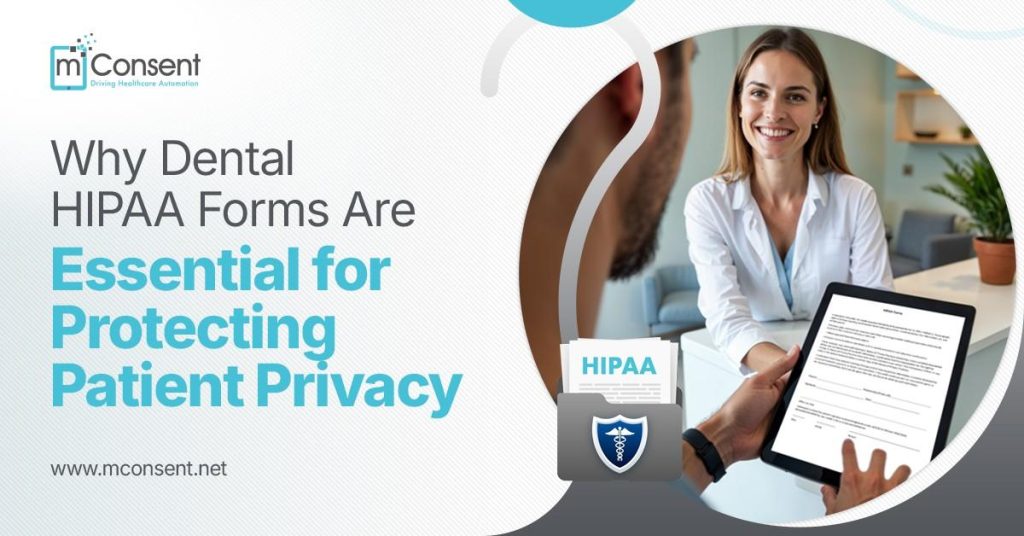
The Health Insurance Portability and Accountability Act (HIPAA), a federal law that governs the collection, storage, and disclosure of personal health information (PHI), serves as the fundamental framework for this obligation. HIPAA is not only legally mandated for dental clinics, but it is also crucial for maintaining and enhancing patient confidence. HIPAA forms are indispensable in this scenario.
Let’s discuss the various forms you need, the importance of dental HIPAA forms, and how digital technologies like mConsent can enhance patient interactions while streamlining compliance.
What Are Dental HIPAA Forms and Why Do They Matter?
By specifically outlining how a patient’s personal health information will be used, maintained, and shared, official paperwork aims to protect their rights and ensure transparency. Dental HIPAA forms serve several functions and are required by law.
- Transparency: They inform patients about what to expect when disclosing sensitive information.
- Consent: They enable patients to decide how their information is handled.
- Protection: They lower liability concerns and enable dental offices to remain compliant.
These documents essentially establish a mutual agreement wherein patients are assured that their data is treated carefully and dental practitioners follow clear ethical guidelines.
The Importance of Patient Privacy in Dentistry
Every dental appointment involves disclosing extremely sensitive information medical histories, insurance data, billing information, and maybe even psychological or emotional elements connected to dental fear.
If this information is compromised, the consequences are severe:
- Identity theft
- Financial fraud
- Legal complications
- Loss of patient trust
- Heavy HIPAA violation penalties
In a world where data breaches are more common than ever, maintaining strict privacy standards is not just a recommendation it’s a necessity.
Every facet of dental practice reflects the seriousness with which privacy is taken into account. Patients feel safe, listened to, and appreciated, so peace of mind is essential.
Four Essential Dental HIPAA Forms Every Office Needs
While HIPAA compliance involves many moving parts, a few key forms form the backbone of your privacy policy:
Notice of Privacy Practices (NPP)
This document informs patients about their privacy rights and how their protected health information (PHI) may be used and disclosed. Patients should get a copy and sign acknowledgment. It’s the first phase toward openness.
Patient Consent Form
This form grants permission for the practice to use and disclose protected health information (PHI) for treatment, billing, and operational purposes. It also sets the tone for a respectful, collaborative relationship with your patients.
Authorization Form
When PHI is needed for non-standard purposes, such as marketing or academic research, additional authorization is required. It ensures patients have control over any extra use of their information.
Acknowledgment of Receipt
This indicates that the patient has fully absorbed the NPP. Although it may seem like a formality, in the case of a compliance audit, this document is vital.
Paper vs. Digital Forms: The Case for Going Paperless
If you still use paper HIPAA forms, you most certainly run into these difficulties:
- Misplaced or lost records
- Errors with manual filing
- Time-intensive storing and scanning
- Challenges accessing past forms
- Weaknesses in actual storage
Going digital eliminates these issues and brings significant benefits:
- Secure encryption protects sensitive data
- Instant access across your dental team
- Faster form completion patients can fill out forms from home
- Reduced physical clutter and storage needs
Solutions like mConsent’s Digital Intake System take things a step further. Patients can complete HIPAA forms and other intake documents online or via in-office kiosks or iPads. This makes the process smoother, faster, and far more secure.
How mConsent Supports HIPAA Compliance Seamlessly
Dental professionals wear many hats, but navigating complex privacy regulations shouldn’t be one of them. That’s where platforms like mConsent shine. The all-in-one Dental Service Software integrates HIPAA compliance into the entire patient journey.
Here’s how mConsent helps:
- Secure Digital Intake: Patients complete their HIPAA forms digitally before entering the clinic. No clipboards, no waiting rooms full of paperwork just fast, secure, and convenient onboarding.
- Secure Patient Messaging: Through 2-way texting and patient messaging, mConsent ensures that all communication remains private and HIPAA-compliant. Whether it’s a follow-up or a treatment reminder, your staff can interact with patients safely and effectively.
- Smart Scheduling and Reminders: Appointment scheduling and reminders are not just convenient they also help maintain compliant communication workflows. mConsent automates these tasks with privacy in mind, reducing human error and unauthorized access.
- AI Dental Receptionist (Zaha.AI): Zaha.AI provides automated, HIPAA-compliant responses to patient queries 24/7. This virtual receptionist ensures that patient questions are handled promptly, without compromising data security.
Beyond Forms: Staff Training Matters Too
Even with the best forms and systems in place, human error remains a top cause of HIPAA violations. That’s why staff training is essential. Every team member front desk, assistants, hygienists, and dentists must understand:
- How to explain HIPAA forms clearly to patients
- When to request updated consent
- How to recognize and report red flags
- Proper digital and physical storage protocols
By combining digital tools with regular staff education, you create a culture of accountability and care.
Real Impact: HIPAA Compliance Builds Trust
Let’s not forget the emotional side of dentistry. Patients walk into your clinic with more than just dental concerns they bring fears, hopes, and expectations. When they see that you respect their privacy, it calms their nerves and builds loyalty.
Here’s what patients notice:
✅ Their forms are easy to fill out no stress, no delays
✅ Communication is timely, respectful, and secure
✅ They have control over their data
✅ Their practice feels modern, organized, and professional
This kind of experience doesn’t happen by chance. It comes from choosing the right systems like mConsent and putting patient privacy at the heart of your practice.
HIPAA Mistakes to Avoid
To wrap things up, here are a few common HIPAA pitfalls that dental practices should steer clear of:
- Sharing patient information without proper authorization
- Using non-secure email or texting platforms
- Storing physical files in unlocked cabinets
- Failing to update or collect consent forms regularly
- Not training new hires on HIPAA requirements
Avoiding these missteps isn’t difficult but it does require awareness, intention, and the right tools.
Final Thoughts: Make Privacy Part of Your Brand
Protecting patient data is one of the most effective ways to demonstrate your concern in a society where trust is crucial. Dental HIPAA forms are more than just documents; they are confidentiality commitments. Assurances that “We respect your privacy.” We uphold your rights. We are here to keep you safe.
And when such assurances are supported by intelligent technology such as mConsent, you’re not just fulfilling legal obligations but also making an impression on patients that they will remember and value. The time to modernize is now if your clinic is still using antiquated workflows, jumbled files, or paper forms. Select a patient interaction platform that prioritizes care, privacy, and compliance.
Select mConsent. One secure form at a time, you can help your patients gain the confidence they deserve.
Ready to Digitize Your HIPAA Compliance?
Explore how mConsent’s Digital Intake and Engagement Solutions can simplify operations, enhance security, and elevate patient satisfaction at every step.
Schedule a Free Demo or visit www.mconsent.net today.
“
“