



Why Insurance Benefit Clarity Matters Before Treatment
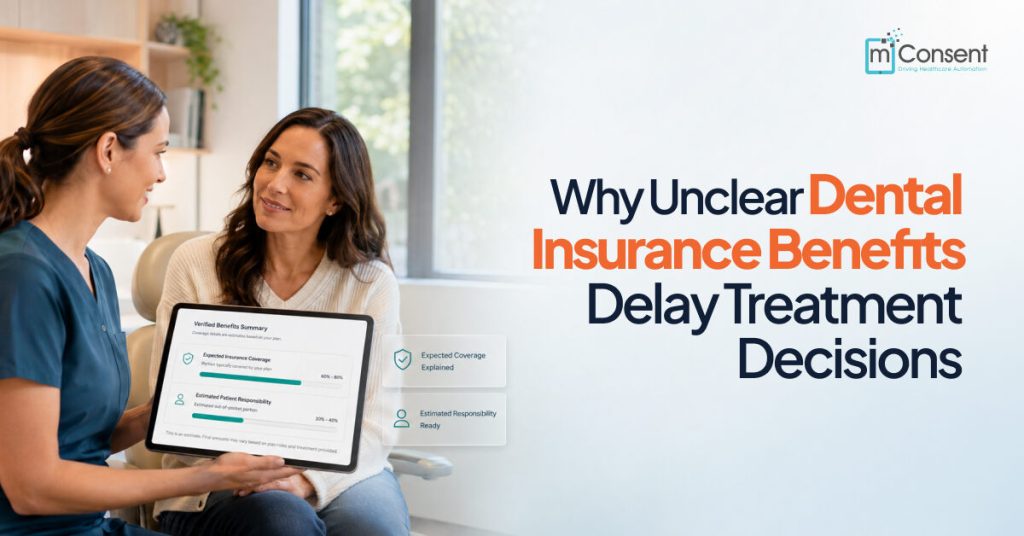
A patient nods along as you explain the treatment plan, then asks the question that stops everything: “How much will my insurance actually cover?” If your team can’t answer right away, the conversation stalls. The patient doesn’t say no; they don’t say yes. They want time to “think about it,” which usually means waiting for a call that may not come for days.
Clinical recommendations only get a patient halfway to a decision. The other half is financial: Is the procedure covered? How much will insurance pay? What’s the deductible? Has the annual maximum been reached? What will they owe out of pocket? Without fast access to this information, those questions go unanswered, and the decision gets pushed to “later.”
The problem: When insurance benefits are unclear, patients delay decisions because they don’t understand their potential financial responsibility. A typical workflow looks like this: a patient needs treatment, staff checks insurance, the benefits come back unclear or incomplete, staff researches further, the patient waits, cost stays uncertain, and the decision gets delayed.
Dental Insurance Verification offers a better path: verify, understand benefits, explain coverage, discuss costs, support the decision. The goal isn’t to promise an exact number from verification alone; it’s to give your team better information earlier, so financial conversations happen with confidence instead of guesswork.
Why Dental Insurance Benefits Can Be Difficult to Understand
Dental insurance is genuinely confusing, even for people who work with it daily. Patients often run into terms like deductible, coinsurance, annual maximum, coverage percentage, waiting period, frequency limitation, exclusion, downgrade, in-network, and out-of-network in a single conversation. Even when coverage information is available, interpreting what it means for a specific procedure takes extra work.
For your front office, the challenge multiplies: locating insurance details, logging into the payer portal, verifying eligibility, reviewing benefits and deductibles, checking limitations, documenting it all, then translating it into language the patient understands. When that process runs long, the treatment conversation gets delayed too.
How Unclear Insurance Benefits Delay Treatment Decisions
Patients hesitate when they don’t know their potential financial responsibility. Staff need extra time to research benefits mid-conversation when information isn’t readily available, which stretches discussions out. If answers aren’t ready during the visit, patients wait and often postpone treatment rather than commit to an unclear cost, which usually means more follow-up calls afterwards. It also chips away at patient confidence: clear information helps people feel in control of their decision, while uncertainty does the opposite.
The Hidden Cost of Unclear Insurance Benefits
The impact doesn’t stop at patient hesitation; it ripples through the whole practice. Staff spend more time researching insurance instead of handling other priorities. Patients wait for answers about coverage and cost, which shapes how they remember the visit. Clinical and financial conversations take longer to align, extra follow-ups pile onto the day, and patients are less prepared to commit when the financial picture is fuzzy, which can slow treatment acceptance and, with it, treatment revenue. All of that becomes administrative load that never shows up on a treatment plan.
The Connection Between Insurance Verification and Treatment Decisions
Dental insurance verification isn’t just a back-office billing task; it directly supports the financial conversation before a patient agrees to treatment.
Without timely verification, the sequence runs: treatment recommended → patient asks about insurance → benefits unclear → staff researches → patient waits → decision delayed. With better visibility, it runs: treatment recommended → insurance already verified → staff explains coverage and costs → patient understands the options → patient decides.
Better access to insurance information lets your team start the financial conversation earlier, before the patient has begun to hesitate.
The Role of Dental Insurance Verification Before Treatment
Dental insurance verification is how practices obtain a patient’s coverage details before treatment begins, reviewing eligibility, coverage, deductibles, annual maximums, coverage percentages, waiting periods, frequency limitations, and other benefit restrictions. Timing makes it useful: verifying benefits before treatment gives your team a chance to share relevant information before the patient decides, reducing uncertainty and smoothing the entire treatment-planning process.
How Dental Insurance Verification Helps Patients Make More Informed Decisions
Makes benefits available earlier
Without verification, staff may not even know whether coverage is active. With streamlined verification, your team accesses relevant information before the treatment discussion instead of scrambling during it.
The old sequence (discussion → insurance question → research → waiting → financial discussion) becomes: verification, benefits information, treatment discussion, financial conversation, in that order. This is exactly where Insurance Concierge fits in: it streamlines insurance verification so your team can access eligibility and benefits information earlier in the workflow, before the patient is asking questions you don’t have answers to yet.
Helps staff explain coverage and costs earlier
With verified information in hand, staff can speak to whether coverage is active, whether a procedure may be covered, deductible status, and frequency restrictions. Verification doesn’t guarantee the exact final amount; claims processing and plan rules can still shift the number, but better information earlier means a far more informed estimate than a promise to call back later.
Reduces waiting time for answers
Manual verification means logging in, searching, reviewing, and explaining a process that stretches out the moment a patient asks about cost.
Automated dental insurance verification shortens this by surfacing information before the question even comes up, so the front desk spends less time hunting for details and patients get faster answers.
Reduces financial uncertainty
Patients delay treatment when they don’t understand what insurance covers and what they’ll owe themselves. Better information lets your team clearly lay out eligibility, covered benefits, deductibles, maximums, and limitations not a guaranteed dollar figure, but enough for patients to decide.
Helps patients decide with confidence
Faster verification isn’t the end goal; it’s the means to a bigger one. When benefits are available earlier, the visit can focus on the treatment, options, coverage, estimated responsibility, and next steps, instead of chasing down eligibility data. Unclear benefits and uncertainty, which delay decisions, become verified benefits and clearer communication, which lead to more informed decisions.
How Automation and AI Improve Benefit Visibility
Automation cuts the repetitive legwork out of getting insurance information. A manual workflow moves from patient information to the payer portal, to an eligibility search, to benefits research, to documentation, to staff review a long chain with delay built into every link. An automated workflow compresses that into: information in, verification runs, benefits come back, staff reviews, faster conversations, easier access to routine information, less portal research, and financial conversations that start earlier.
AI dental insurance verification pushes this further by processing routine tasks, organizing information, and surfacing the benefit details that matter, while flagging anything that needs a closer look. AI should support your team’s workflow, not replace their judgment; complex situations still deserve human review and, when needed, direct payer confirmation.
Before vs. After: Insurance Benefits and Treatment Decisions
In a traditional workflow, the patient asks about insurance, staff searches manually, information takes time to obtain, uncertainty lingers, follow-up is often required, and decisions get delayed. In a streamlined workflow, benefits are verified earlier, automation supports the routine checks, staff can start the financial discussion right away, and patients can make more informed decisions on the spot. The shift: verify earlier, access benefits faster, explain coverage sooner, reduce uncertainty, support informed decisions.
How Much Faster Can Treatment Decisions Become?
Resist claiming automated verification cuts decision time by a universal percentage; the impact depends on patient volume, payer mix, benefit complexity, existing processes, and staff workload. Instead, measure your own opportunity: time to verify benefits, patient wait time, insurance-related follow-ups, treatment plans delayed by benefit questions, and time between presentation and decision. If your practice spends significant staff time researching benefits after treatment has already been presented, moving verification earlier is where the delay is most likely to shrink.
Where This Fits in the Patient Journey
Insurance verification touches more of the journey than it might seem: confirming eligibility before the appointment, informing treatment planning, supporting the financial discussion, addressing questions before treatment, and supporting billing and claims afterwards. The broader journey schedule- verify, plan, explain, decide, treat, bill runs smoother when verification connects the clinical side to the financial side early.
Best Practices for Making Benefits Available Before Treatment
Verify insurance before the appointment, not after the patient is in the chair. Review more than eligibility: benefits, deductibles, maximums, and limitations. Keep information current with regular reverification, explain it in plain language, set expectations that estimates aren’t guarantees, flag complex cases for staff review, and automate the routine work so your team’s time goes toward conversations that need a person.
Why Insurance Benefit Clarity Matters to Dental Practices
Clearer insurance information supports both the patient experience and how efficiently the practice runs: less uncertainty and more informed decisions for patients, less manual research and faster financial conversations for staff, smoother treatment planning and more efficient workflows for the practice. Insurance verification isn’t just an administrative task; it’s part of how treatment decisions actually get made.
Conclusion
Unclear dental insurance benefits create uncertainty at one of the most important moments in the patient journey: the treatment decision itself. When patients don’t understand their potential coverage or financial responsibility, they need more information before they’re willing to move forward. If that information isn’t ready, the decision gets pushed to another day.
Dental Insurance Verification moves that information-gathering process earlier, where it can actually do some good. With automated verification, your team can make benefits available sooner, explain coverage and costs earlier, cut down on time spent researching routine information, reduce financial uncertainty, and help patients make more informed treatment decisions.
The workflow becomes: automated dental insurance verification → faster access to eligibility and benefits information → earlier financial communication → greater clarity around coverage → more informed treatment decisions.
Insurance Concierge helps dental practices streamline insurance verification so teams can access relevant eligibility and benefits information earlier, explain coverage and treatment costs sooner, and help patients make more informed treatment decisions.
Make Insurance Benefits Available Before Treatment
FAQ
1. How does dental insurance verification help with treatment decisions?
Dental insurance verification gives teams earlier access to eligibility and benefits information, helping them explain relevant coverage and potential financial considerations before patients make treatment decisions.
2. Why do unclear insurance benefits delay dental treatment?
Patients may hesitate when they don’t understand whether treatment is covered or what their potential financial responsibility could be. Additional research can also delay the conversation.
3. What insurance benefits should be verified before treatment?
Practices may verify eligibility, coverage, deductibles, annual maximums, waiting periods, frequency limitations, coverage percentages, and other relevant plan restrictions.
4. Can dental insurance verification software help patients make faster decisions?
It can help by streamlining routine verification and making relevant insurance information available to staff earlier, supporting faster and more informed financial conversations.
5. What is automated dental insurance verification?
Automated dental insurance verification uses technology to streamline eligibility and benefits verification, reducing repetitive manual portal searches, calls, research, and data entry.
6. How can AI dental insurance verification improve benefit visibility?
AI dental insurance verification can help automate routine tasks, organize insurance information, and surface relevant benefit details so staff can review information more efficiently.