
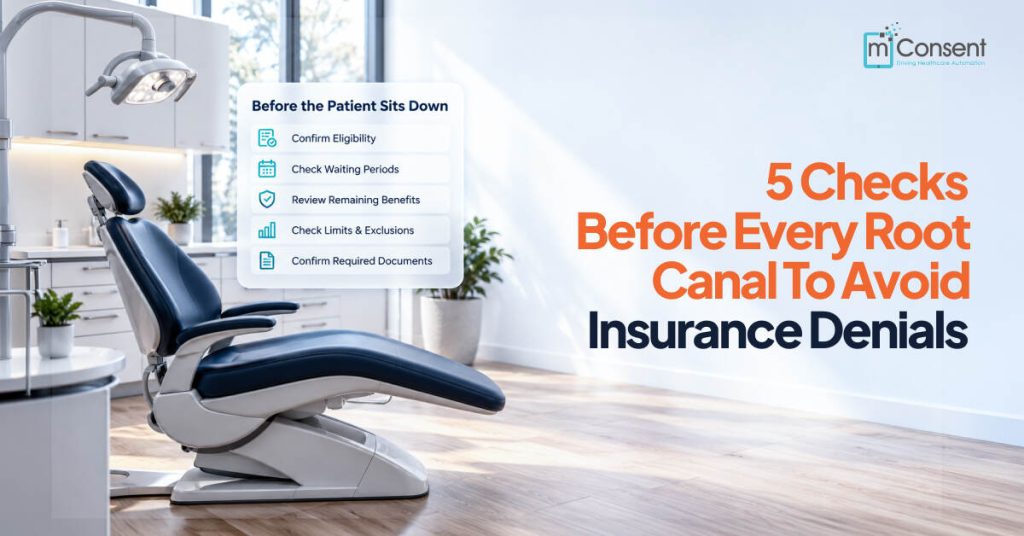




Active Coverage Doesn’t Always Mean Endo Is Covered
A patient is referred for an emergency root canal. Their insurance portal shows “active coverage,” so the appointment is scheduled.
But active coverage alone doesn’t tell you whether the specific procedure is payable.
A dental plan may have a waiting period, frequency limitation, missing-tooth provision, annual maximum issue, or other plan-specific restriction that affects reimbursement. In an endodontic case, those details can change what the plan pays and what the patient may owe.
Insurance issues are already a major concern for dental practices. In the ADA Health Policy Institute’s Q4 2025 report, 55.3% of dentists identified insurance including low, delayed, or denied reimbursement as a top challenge heading into 2026.
That’s why root canal insurance verification needs to go beyond checking whether a patient is “covered.” The verification should establish whether the plan provides benefits for the procedure and identify the specific limitations that could affect payment.
Why “Active Coverage” Isn’t Enough for Endo
Most dental insurance eligibility verification confirms that a plan exists and the patient is on it. That’s the starting point, and root canals carry far more variables than a cleaning or an exam. Delta Dental classifies root canals as a major service, usually covered at 50% to 80% after the deductible and subject to the plan’s annual maximum. The crown that often follows is a separate major procedure with its own coverage percentage.
A single status line leaves most of the answer missing: how much deductible is left, how much of the maximum remains, whether a waiting period applies, and whether the referring office already used some of the patient’s limits.
Check 1: Eligibility on the Date of Service
Coverage is determined on the day treatment happens, not the day someone checked. The ADA notes that preauthorizations and predeterminations are based on eligibility and remaining benefits at the time they were issued. If the patient loses coverage before treatment, the benefits change with it.
This matters more than most teams expect. The American Association of Endodontists points out that employers often pay premiums two to three months in arrears, so coverage can be canceled retroactively. When a claim is denied because the patient was terminated, there’s usually nothing to appeal, and the balance becomes the patient’s.
Before the root canal, confirm:
-
- The patient and subscriber details match the plan exactly
- The plan’s effective date and any termination date
- The plan type (PPO, DHMO or indemnity) and your network status for that specific plan
- A record of the check, including date, source, rep name and reference number, saved until the claim is paid.
Check 2: Dental Insurance Waiting Periods and How the Plan Classifies Endo
Dental insurance waiting periods catch new patients more than anyone else. Delta Dental notes that major services commonly carry waiting periods of 6 to 12 months. A patient can have an active plan, pay premiums every month and still have no benefit for a root canal yet.
Classification changes the math. Some plans put root canals under basic services, and others put them under major. That one category decides which waiting period applies and what percentage the plan pays.
Before treatment, confirm the plan’s effective date, when the waiting period for endo ends and whether it was waived. Some plans waive waiting periods when the patient had comparable coverage that ended within the past 30 to 60 days, but that isn’t automatic, so ask the payer directly.
Check 3: The Dental Insurance Deductible and Remaining Annual Maximum
The dental insurance deductible and the dental insurance annual maximum decide what the patient actually owes. Check both as remaining amounts, not plan totals.
This is where endo gets tricky. The root canal and the crown count toward the same annual maximum. If a patient has $700 left for the year and the root canal uses most of it, the crown may end up almost entirely out of pocket. Telling the patient that before treatment is a much easier conversation than explaining it after.
Specialist offices have one more blind spot. The referring dentist may have claims in process that haven’t posted yet, so the remaining maximum you see can be higher than what’s really available. If the patient has a second plan, confirm which one is primary. The ADA notes that secondary plans usually won’t process a claim until the primary has paid, and often need the primary’s explanation of benefits.
Check 4: Dental Insurance Frequency Limitations and Exclusions
Dental insurance frequency limitations are the check most likely to be skipped on a referral, because the history lives in another office’s records.
Look for:
-
- Exam and X-ray limits. If the referring dentist already billed an exam or periapicals, yours may be denied because the frequency was already met.
- Retreatment limits. Plans often limit retreatment (D3346 to D3348) within a set period after the original root canal, and the AAE notes these claims are frequently denied as “too close” to prior treatment.
- Same-day bundling. When emergency palliative work and the root canal happen on the same day, many plans treat the emergency visit as part of the root canal.
- Plan exclusions. Dental insurance exclusions, alternate benefit provisions and pre-existing condition rules can reduce or remove the benefit even when the procedure is listed as covered.
Check 5: Pre-Authorization, Referral and Documentation Rules
Some plans won’t pay for a root canal unless the paperwork was right before treatment started.
According to the ADA, many DHMO plans require preauthorization before a patient is referred to a specialist. Most PPO and indemnity plans don’t require it but offer a voluntary predetermination. Either way, the ADA is clear that a preauthorization isn’t a guarantee of payment. The claim can still be denied if the patient is no longer eligible, the maximum has been paid or time limits have passed. The ADA recommends submitting predeterminations for complex, costly procedures as close to the treatment date as possible. A predetermination issued in one plan year for treatment that starts in the next is a known risk.
Documentation belongs in this check too. For Delta Dental PPO and Premier claims, a pre-operative periapical X-ray is required with pre-treatment estimates for root canals (D3310 to D3330), and both pre- and post-operative periapicals are required with the completed claim. The post-op image has to show the completed root canal, including the apex. Knowing each payer’s requirements before the patient is seated means the claim goes out complete the first time.
A Quick Pre-Root Canal Checklist
-
- Eligibility confirmed for the date of service, with network status and a saved record
- Waiting period cleared and endo classification (basic or major) confirmed
- Remaining deductible and annual maximum checked, including room for the crown
- Frequency history from the referring office, retreatment limits and exclusions reviewed
- Preauthorization, referral and X-ray requirements met for this payer
Where Verification Software Falls Short on Endo Cases
Dental insurance verification software is good at pulling eligibility quickly, and automated dental insurance verification can save your team a lot of portal logins. AI dental insurance verification tools are also getting better at reading payer responses and flagging missing fields.
The gap is in the details endo depends on. Payers don’t always return complete benefit data electronically. Procedure-specific limits, waiting-period classification and history from another office often still take a phone call or a manual portal search. When the tool can’t find the answer, the task goes back to your front desk, usually while the patient is waiting.
Dental insurance verification automation works best when someone finishes the job after the software stops.
How Insurance Concierge Handles Root Canal Insurance Verification
mConsent Insurance Concierge is a managed dental insurance verification service built for endodontic practices. A dedicated team of experienced agents, led by a US-based director, works through portals, payer calls and fax-backs so your staff doesn’t have to.
For scheduled appointments, the team completes eligibility checks and full benefit breakdowns 24 to 48 hours before the visit and posts them directly to the patient record in your PMS, including PBS Endo, Dentrix, Eaglesoft, Open Dental and Dolphin. Each breakdown covers root canal insurance coverage and retreatment details, procedure-specific limits, deductibles, annual maximums, coverage percentages, frequency limits, waiting periods, remaining benefits and secondary coverage. When coverage changes, the team re-verifies before the visit. For urgent referrals, the team helps close verification gaps when your staff is tied up.
Run the Five Checks Before the Patient Sits Down
Every one of these checks can be answered before treatment starts. When they aren’t, the answer shows up later as a denial or a bill the patient didn’t expect. Consistent root canal insurance verification keeps that from happening and lets your team spend the visit on the patient.
Stop guessing on endo benefits. See your verification gap.